Neonate vs. Infant: Key Differences Every Parent Should Know
A neonate is a newborn who’s 28 days old or younger.
When I brought my son home, I felt like I needed a medical degree just to read his discharge papers. One page said neonate care, the next said infant milestones. I was lost.
Here’s the way I understand it now: they describe different stages of your baby’s early life. Knowing the difference helps you understand what your baby needs and makes those early weeks feel a little less overwhelming.
What Is a Neonate?
A neonate is a newborn baby who’s 28 days old or younger. To be honest, I first thought it was just a cute nickname. Turns out, it’s actually a medical term for a very delicate time, when your baby is still adjusting to life outside the womb, During this stage, they:
- Rely on instincts: The first time my baby’s arms flew out in his sleep, I nearly jumped out of my skin. I thought something was wrong. Turns out? It was just the Moro reflex totally normal, but terrifying for a new dad
- Communicate by crying: Right now, crying is their only way to share needs, whether it’s hunger, discomfort, or simply wanting to be held.
- Need frequent feeding: Their stomachs are tiny. You’re looking at feeding every 2 to 3 hours. Yes, even at 3:00 AM.
- May face unique health risks: Because their immune system is just getting started, they’re vulnerable to jaundice, breathing difficulties, infections, and feeding challenges especially, if born prematurely.
When my son was born, the word neonate sounded confusing and a little scary to me. It felt like such a big medical term. But our pediatrician smiled and explained it in the simplest way: it just means the first 28 days of a baby’s life.
That moment made me realize how much of parenting is learning on the job.
That small explanation instantly put me at ease and helped me understand why doctors are extra careful and attentive during those early days.
What Is an Infant?
Once your baby turns one month old, they’re officially called an infant, marking a beautiful new phase of growth and discovery. All neonates are infants, but not all infants are neonates; think of neonate as a sub-category.
Here’s what felt different to us as he grew, Here’s what changes as your baby enters the infant stage:
- Sleep patterns shift: Infants typically need 12 to 14 hours of sleep, distributed across day and night naps.
- Personality Emerges: Around 3 to 4 months, you get that first real social smile. It’s a game changer. Suddenly, you aren’t just running on milk and diapers, you really feel like a dad.
- Development accelerates: By 3 to 4 months, your baby may recognize you, smile, and begin babbling. By 6 months, most can sit with support. Crawling and standing happen closer to 9 to 12 months, with first steps often appearing around their first birthday!
- Immunity gets stronger: Infants become more curious and mobile, which means they explore, touch, and sometimes taste everything in sight. Their immune systems are better equipped than neonates, but infections and food allergies are still common.
- Diet evolves: Infants under 6 months thrive exclusively on breastmilk or formula. After that milestone, many babies start purees and soft foods alongside milk but always check with your pediatrician before introducing new foods this is what we did for our kids.
- Teething begins: Irritability and discomfort due to teething are major themes during infancy.
All these medical terms and milestones are important. But in real life, what stays with you are the small, human moments that make it all feel real
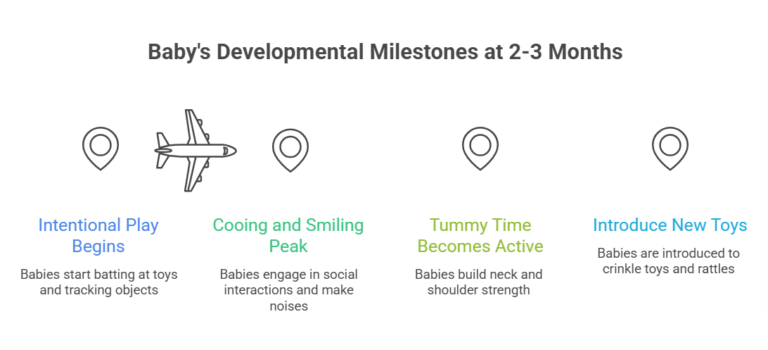
Development accelerates quickly during the infant stage. One of the first things you’ll notice is your baby finding their voice. If you’re curious about those first sweet sounds, check out our guide on when babies start cooing and what it means for their development.
Neonate vs Infant
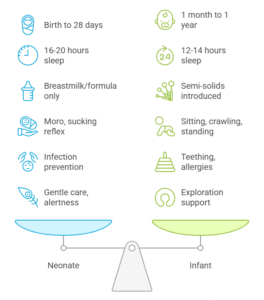
| Basis | Neonate | Infant |
|---|---|---|
| Age Range | Birth to 28 days | 1 month to 1 year |
| Sleep | 16 to 20 hours/day | 12 to 16 hours/day, longer nights + naps |
| Nutrition | Breastmilk or formula only | Around 6 months: Purees/Semi-solids + breastmilk/formula |
| Key Reflexes/Skills | Moro, sucking reflex | Sitting, crawling, standing, babbling, early words |
| Health Focus | Infection prevention, feeding support | Teething, allergies, new foods, continued immune development |
| Parental Approach | Gentle care, alertness to warning signs | Exploration support, baby-proofing environment |
Why Does the Distinction Matter?
Recognizing whether your little one is a neonate or infant helps you:
- Track your baby’s development milestones more accurately.
- Provide age appropriate nutrition, sleep routines, and safety.
- Watch for health risks unique to each stage.
- Feel confident as you communicate with your pediatrician, knowing the right terms!
If there’s one thing I’ve learned: every baby moves at their own pace. Celebrate the small wins, and when in doubt, call your pediatrician
Have questions about your baby’s development and care? Share them in the comments below let’s support each other in this parenting journey!
Frequently Asked Questions
Is a 1-month-old a neonate or infant?
- Infant.
Can a baby be both neonate and infant?
- All neonates are infants, but not all infants are neonates.
Why do doctors use the term neonate?
- Because the first 28 days have unique medical risks.
Is premature baby still called a neonate?
- Yes, but they may stay under neonatal care longer.
When should I worry about my neonate?
- Poor feeding, fever, breathing difficulty, extreme sleepiness, etc.