
How Many Words Should a Toddler Say? (By Age)
This blog post about how many words should a toddler have, gives you clear, research backed milestones, practical vocabulary building tips, and reassurance so you can support your child with confidence.
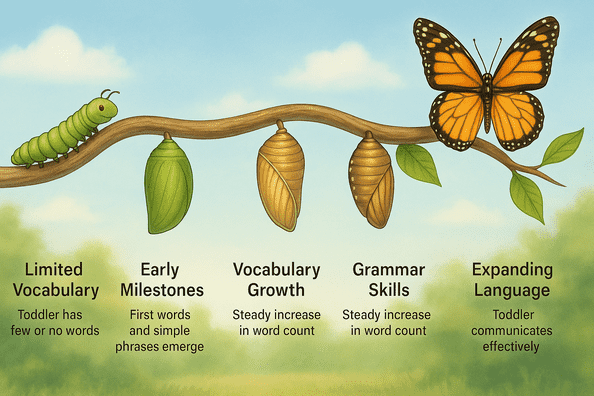
Toddler Speech Development Stages: The Caterpillar to Butterfly Path
In the same way, Language growth really is like nature slow, steady, and full of transformation.
- Limited Vocabulary (Caterpillar Stage): At first, your toddler might only have a word or two or just babbles. But trust me, the groundwork is being laid.
- Early Milestones (First Cocoon): Suddenly you hear mama or dada. These early words are short but magical.
- Vocabulary Growth (Second Cocoon): Words start stacking up more juice, ball go, bye bye. Each one feels like a mini breakthrough.
- Grammar Skills (Emerging Butterfly): Two word combos turn into little sentences. Sure, grammar is choppy, but “want cookie” gets the point across.
- Expanding Language (Butterfly in Flight): Finally, full sentences appear. Your toddler can finally share their thoughts, needs, even little stories.
And every little talker starts with a coo
- Cooing : soft ooh’s & ahh’s at 6 weeks
- Babbling: ba-ba & ma-ma sounds at 4 to 6 months
- Growing : first 1-5 words emerging
- Cocoon: real first words taking shape
- Emerging : two-word phrases blooming
- In Flight : full sentences soaring!
A Real Life Example From Our Home
At 16 months, my son Eeshaan started saying “butt” every time he saw a butterfly. The pronunciation wasn’t perfect but the meaning was completely clear. He was seeing something, remembering it, and using his own version of the word to tell us about it. That’s not a mistake. That’s language developing exactly the way it should.
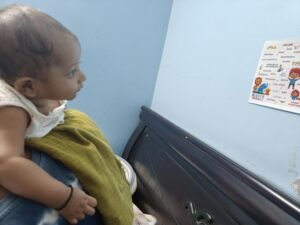
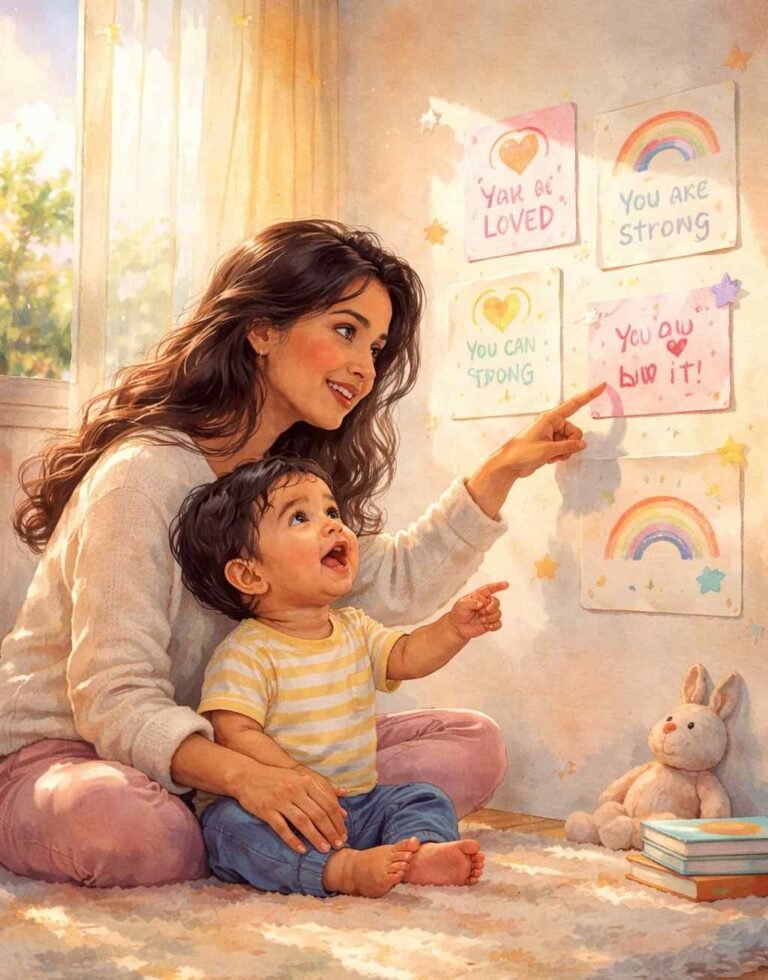
(The photo above is Eeshaan at 3 months, already locked onto the affirmation cards on our wall. Long before he could say a single word, he was watching, absorbing, and taking it all in. It starts earlier than you think.)
How Many Words Should a Toddler Know and by When
Every child is unique Because of this language develops at different rates. Still, experts recommend looking for these benchmarks milestones reflect the minimum number of words 90% of children say at a given age:
Speech development chart by age
- Here’s a clear speech development chart by age showing how many words toddlers commonly say from 12 to 36 months.
- This chart is only a general guide. Every baby develops at their own pace, and small delays don’t always mean a problem.
Toddler vocabulary by age
| Age (Months) | Expected Minimum Words | Typical Range |
|---|---|---|
| 12 | 0–2 | Mostly gestures |
| 15 | 2–10 | Up to 2–100 |
| 18 | 3–18 | 20–100+ |
| 24 | 50 to 60 + 2-word combos | 100–200+ |
| 30 | 260 + short sentences | Telling short stories |
| 36 | Hundreds + full sentences | Follows 2-step instructions |
What’s the Right Word Count for Toddlers?
By 2 years, many toddlers use up to 100 words and can combine them. By age 3, kids may have hundreds of words and can often be understood by most adults.
How Do You Track Your Toddler’s Words?
- Consistent, meaningful sounds (woof, vroom, mama”)
- Words from any spoken language (multilingual kids count words in all languages)
- Repeated labels for familiar people, items, and pets
Simple Ways to Increase Your Toddler’s Vocabulary
Giving kids the best start is easier than you think! These evidence based strategies work wonders:
None of these require a special curriculum, flashcards, or a schedule. Most of them happen in the middle of ordinary days if you know what to look for.
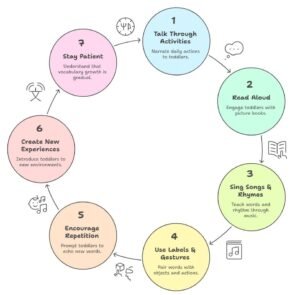
- Talk Through Routine Activities: narrate your actions like a running commentary. Now we’re putting on your blue socks. One foot.. where’s the other foot? It sounds silly out loud. It works anyway. Toddlers learn words from hearing them in context, not from being drilled.
- Read Aloud Every Day: it doesn’t have to be long. Even ten minutes with a picture book counts. Point at things, name them, ask what’s that? even when you know they know. The back and forth matters more than the book itself
- Sing Songs & Say Rhymes: Simple lyrics and nursery rhymes teach words, sounds, and rhythm and they are fun.
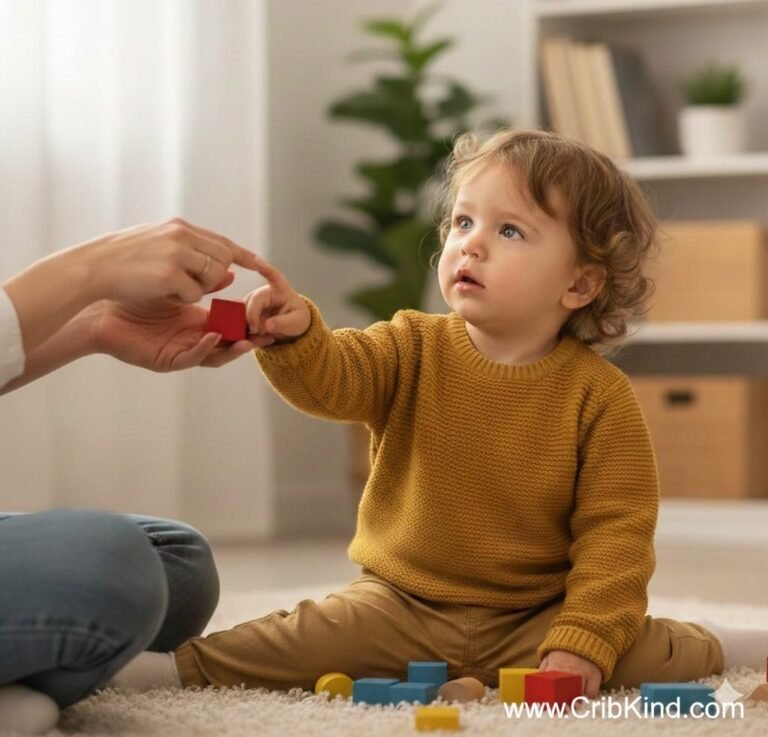
- Use Labels & Gestures: Point to objects and name them (apple, car), pair words with gestures (bye bye, waving).
- Encourage Repetition & Imitation: Repeat new words and invite your child to echo back. Celebrate every attempt, even mispronunciations.
- Create new Experiences: the vocabulary for zoo only comes from going to a zoo. New places give toddlers new words they genuinely need. Even a walk to a new park counts
- Stay Patient: vocabulary growth often comes in sudden bursts after weeks of silence. If it feels like nothing is happening, something usually is. Keep talking, keep reading, keep pointing at tomatoes in the grocery store
Should I Worry About Word Delays?
- Don’t worry if your toddler’s words aren’t clear yet pronunciation improves with practice. At age 2, expect around half their speech to be understandable by people outside the family; by 3, it jumps to three quarters.
- If your child uses less than the expected minimum for their age, or stops learning new words, it’s a good idea to check in with your pediatrician or a speech-language pathologist. Free evaluations are available through early intervention programs across the US.
- The American Academy of Pediatrics notes that while every child develops at their own pace, consistent delays in speech may be worth a pediatric check in.
Gender & Individual Differences
Why Do Some Toddlers Talk Later Than Others?
Every toddler has their own timeline, but a few factors can make speech come a little later:
- Hearing issues: Even mild fluid in the ear can make words harder to pick up.
- Personality: Some kids are cautious; they’d rather wait until they can say it perfectly than try early.
- Exposure: A child who hears more language (books, songs, conversations) tends to pick up words faster.
- Bilingual homes: Learning two languages at once is normal and amazing, but it may spread words across both languages.
Language Is a Journey, Not a Race
Remember, language growth is a journey, not a race. Milestones are guidance, not definitions. Keep the experience positive: talk, read, sing, and explore together. If you’re worried, trust your instincts and reach out to a professional for helpful, supportive feedback.
Age-Specific Help for Parents
Sometimes, worries don’t feel general. They feel very specific.
Like “My 15-month-old understands everything but doesn’t talk much” or
“My 18-month-old still isn’t saying words.”
If that sounds like you, these age focused guides may help you feel clearer and calmer:
- 14 Month Old Not Talking: What’s Normal and When to Worry
- 15 months old Not Talking but understanding
- 16 Month Old Not Talking: Should Parents Be Concerned?
- 18 Month Old Not Talking: Speech Delay or Normal Development?
- 21 Month Old Not Talking Much: What Parents Should Know
- 23 26 Month Old Not Talking: What Parents Should Do Next
If your baby is around one year old and you’re wondering what kind of words to expect, you can also check our detailed list of words 1 year-olds. baby’s first words list
- Each one breaks down what’s typical at that age, what signs deserve attention, and when simple reassurance is all you need.
- You’re not behind. You’re just trying to understand your child better. And that already makes you a great parent.
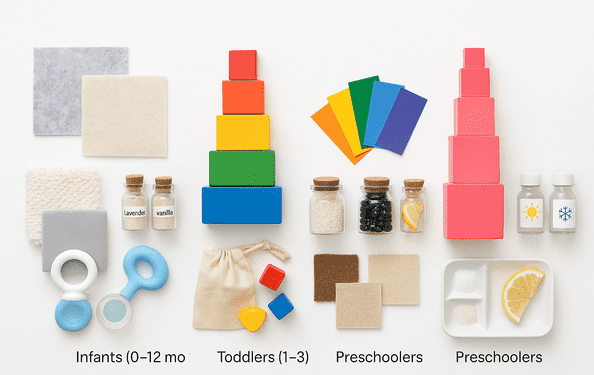
If your child is a little behind or you simply want to encourage more words, simple sensory activities at home can make a big difference in boosting communication.
-Just like nature, language takes time.
FAQ from parents
How Many Words Should My Toddler Say
- By around age 2, many toddlers say at least 50 words, start combining two words, and can follow simple 1–2 step instructions.
How many words should a 27 month old say?
- Says about 50 words and is continuously adding new words each month
- Uses two-word sentences
- May have unclear pronunciation or mix up word order, which is normal at this stage
- Is expected to show increasing independence and may begin more pretend play
- Should be using expressive language more and following simple directions
How many words should a 2 year old say?
Most 2 year olds say between 50 and 100 words,
What should a 2-year-old’s vocabulary be?
A typical 2-year-old vocabulary includes:
- 50+ different words
- Ability to combine words
- Names for familiar people, places, and objects
- Simple action words and descriptive words (e.g., run, big)
- Simple questions like What’s that? or Where go?
How many words is a 24 month old supposed to say?
By 24 months, toddlers are expected to say at least 50 to 60 words. Many children say more, and it’s common to start seeing two-word combinations forming. The typical range can go up to over 100 words.

17 Comments