
White Spots on Toddler Teeth: Causes, Fixes & When to See a Dentist
Most parents notice white spots on teeth during a random brushing session. A tiny chalky patch, a dull streak, or a bright white dot that definitely wasn’t there before. And then comes the spiral. Is that a cavity? Is it something I did? Should I have been brushing differently this whole time?
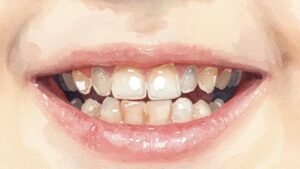
Here’s the honest answer: white spots on toddler teeth show up for a bunch of different reasons, and not all of them are bad. Some are completely harmless. Some need a dentist visit sooner rather than later.
And a few are actually reversible if you catch them early enough. The tricky part is figuring out which type you’re looking at, because they don’t all look the same, and they definitely don’t all get treated the same way.
Why Your Toddler Has White Spots on Their Teeth
There’s no single answer here, which is partly why it’s so confusing for parents. The four most common causes are early tooth decay, dental fluorosis, enamel hypoplasia, and plain old plaque buildup, and they can look pretty similar to the untrained eye.
Early tooth decay
Early tooth decay is the one that needs the most attention. It doesn’t start as a cavity. It starts as a chalky white spot, usually near the gumline, where plaque tends to sit overnight.
What’s actually happening is that bacteria in the plaque are producing acid, and that acid is slowly pulling minerals out of the enamel. Dentists call this demineralization. The reason it matters is that at this early stage, it’s still technically reversible. The enamel hasn’t broken down yet. But if you leave it alone, it will
Dental fluorosis
Dental fluorosis is a completely different story. This one happens before the tooth even comes in, during the years when enamel is still forming, usually under age 8.
If a child takes in too much fluoride during that window (through swallowing toothpaste, fluoride supplements, or drinking water that’s high in natural fluoride), the enamel can develop white streaks or speckles. It tends to appear on multiple teeth at once and looks fairly symmetrical. The important thing to know about fluorosis is that it’s cosmetic. The tooth itself is fine. It’s not decay.
Enamel hypoplasia
Enamel hypoplasia is less talked about but more serious than fluorosis. It’s a developmental condition where something interrupted the normal formation of enamel while the tooth was still developing under the gums. That something could be a high fever, a nutritional deficiency, a premature birth, or illness during infancy.
The resulting enamel is thinner than it should be, which makes those teeth more sensitive and more cavity-prone. The spots from hypoplasia often look rougher or more irregular than other types, and the enamel can actually feel pitted or grooved.
And then there’s just plaque. Not every white mark is a medical condition. Sometimes it’s a buildup of plaque along the gumline that hasn’t been fully brushed away. This is fixable at home with better brushing habits, though if it’s been sitting there long enough to leave a mark, it’s worth getting a dentist to take a look anyway.
Toddler Has White Spots on Teeth: Do You Actually Need a Dentist?
Honestly, yes, at some point. But the urgency depends on what you’re seeing.
If the spots are near the gumline, growing, or accompanied by any sensitivity (your toddler flinching during brushing or avoiding cold drinks), that’s worth a call to your pediatric dentist this week. Same if the spots look rough or pitted rather than smooth, or if your child is under two and you’re already noticing something off.
If the spots look more like faint white streaks spread evenly across several teeth, that’s more likely fluorosis. Still worth mentioning at your next regular checkup, but probably not urgent.
The American Academy of Pediatric Dentistry recommends a child’s first dental visit by age 1, or within six months of that first tooth coming in. If your toddler hasn’t had a dental visit yet, white spots are a solid reason to stop putting it off. A pediatric dentist can tell you in about thirty seconds which type of spot you’re dealing with, which is infinitely more useful than trying to diagnose it from a photo on your phone.
How to Get Rid of White Spots on Toddler Teeth
Treatment looks really different depending on what caused the spots. For early decay, the goal is to remineralize the enamel before it progresses.
That means better brushing at home, cutting back on sugar, and often a professional fluoride varnish or a calcium phosphate paste applied at the dentist’s office. Some dentists also use a treatment called ICON resin infiltration, which fills in the porous enamel with a clear resin. It’s a no-drill option that works well for early white spot lesions.
For fluorosis or hypoplasia, the approach is usually more cosmetic. Mild cases often don’t need treatment at all. For more visible spots, a dentist might recommend enamel microabrasion (buffing away a very thin outer layer), dental bonding, or in older children, veneers. None of these are typically needed for a toddler right away. They’re conversations to have as your child gets older and permanent teeth come in.
| Treatment | What It Does | Best For |
|---|---|---|
| Remineralization Paste | Restores calcium and phosphate to weakened enamel | Early decay, mild white spots |
| Professional Fluoride Varnish | Strengthens enamel and slows mineral loss | Demineralization, early decay |
| ICON Resin Infiltration | Fills enamel pores to reduce visible white appearance | White spot lesions, early cavities |
| Enamel Microabrasion | Buffs away thin outer enamel layer to reduce spots | Fluorosis, surface-level spots |
| Dental Bonding | Tooth-colored resin applied over visible spots | Enamel hypoplasia, cosmetic concerns |
| Dental Veneers | Thin porcelain shell placed over the tooth | Severe cases in older children |
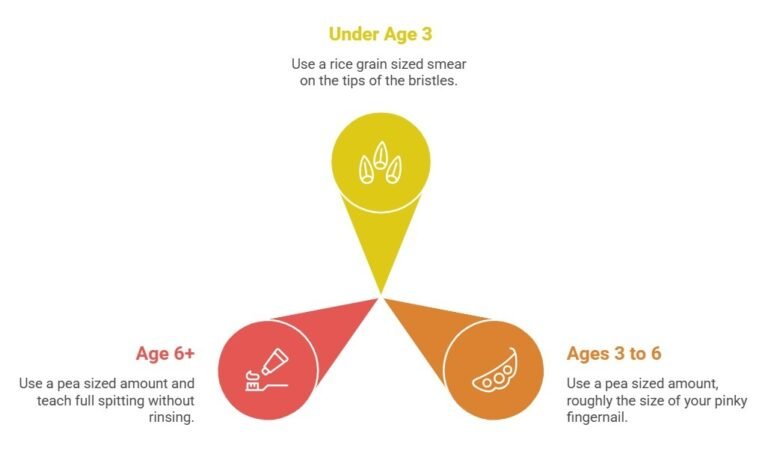
At home, the most useful things you can do are tightening up the brushing routine, dialing back on juice and sticky snacks, and making sure you’re using the right amount of fluoride toothpaste.
The Fluoride Question (Because It Always Comes Up)
A lot of parents land on this page after going down a rabbit hole about fluoride. So here’s the straightforward version: fluoride in the right amount protects teeth. Too much of it during enamel development causes fluorosis. Both of those things are true at the same time.
The CDC, the ADA, and the American Academy of Pediatrics all support fluoride use in children at recommended levels. U.S. community water fluoridation has been running since 1945 and is calibrated specifically to stay in a safe range. The issue usually isn’t the water. It’s toddlers swallowing toothpaste, which is why the amount matters so much at that age. If you’re genuinely worried about your local water fluoride levels, you can look them up through your water utility or ask your pediatric dentist to review your child’s total fluoride exposure at the next visit.
What You Can Actually Do Starting Tonight
- If you spotted white spots on your toddler’s teeth today, here’s where to put your energy right now. Check where the spots are. Near the gumline is more concerning than spread across the middle of the tooth.
- Check if the enamel feels rough or smooth when you gently run a finger over it. Look at whether it’s on one tooth or several. That information is going to be useful when you talk to a dentist.
- Then look at the brushing routine honestly. Are you getting to the gumline? Are you brushing before bed every single night without skipping? Is your toddler getting a bottle or sippy cup of milk or juice after brushing? That last one is a really common cause of early decay that parents don’t always connect to white spots.
- If nothing looks urgent, book a regular checkup and mention the spots when you call. Most pediatric dental offices will flag it and make sure the dentist looks closely. If something does look urgent, don’t wait for the next scheduled visit. Call this week.
Frequently Asked Questions
Can white spots on toddler teeth go away on their own?
It depends on what caused them. If you’re looking at very early demineralization, yes, there’s a real chance the enamel can recover with better brushing and less sugar in the diet.
That window is small though, and you won’t know if you’re actually in it without a dentist confirming the spot hasn’t progressed. Fluorosis spots are permanent, but they also don’t get worse over time, which is its own kind of reassuring.
Are white spots always a sign of cavities?
No, and this is where a lot of parents spiral unnecessarily. Fluorosis and enamel hypoplasia both cause white spots on completely healthy teeth. That said, a dull chalky patch right at the gumline is worth taking seriously because that specific location and texture is how early decay tends to show up. Location matters more than the color alone.
Do white spots on baby teeth affect permanent teeth?
Usually not directly. The two sets of teeth develop on separate tracks. Where it gets complicated is untreated decay in a baby tooth sitting right above a developing permanent one underneath. It’s not a guarantee of problems, but it’s not a zero-risk situation either. And beyond that, a toddler with an aching tooth is just a hard situation all around, so it’s worth treating regardless.
How do I tell fluorosis from early decay?
Fluorosis tends to be smooth, even, and spread across several teeth at once, often in a similar pattern on both sides of the mouth. Early decay is more likely to be one tooth, near the gumline, with a duller or chalkier texture. Enamel hypoplasia often feels rough or pitted when you run your finger over it. These are useful clues but not a diagnosis, so if you are genuinely unsure, a quick dental visit is faster than trying to figure it out from photos.


One Comment