
When Do Babies Start Laughing? Giggles, Chuckles & Belly Laughs Explained
Most babies start laughing around 3 to 4 months old. Some laugh earlier, some a little later, and both are normal.
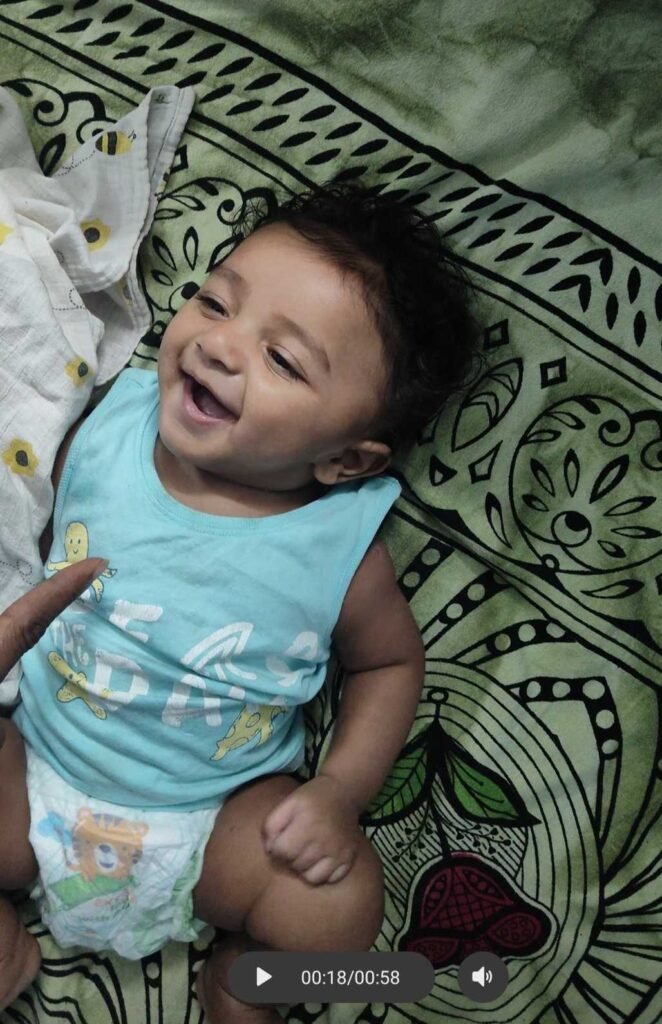
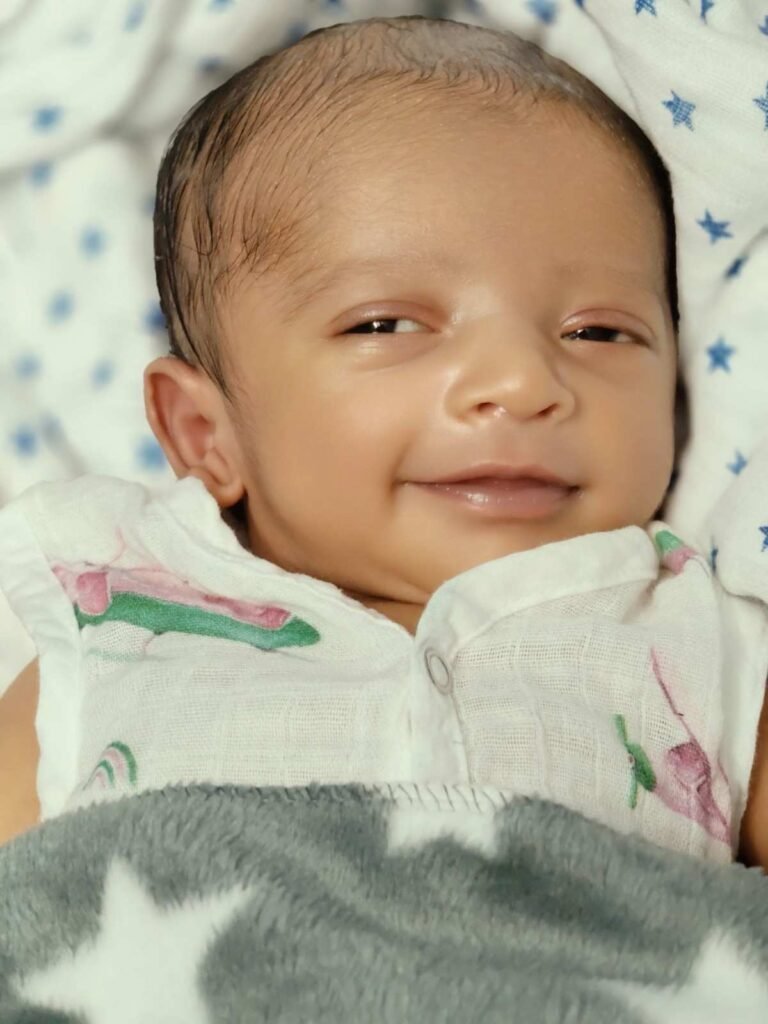
One funny thing I noticed with Vihaan (5 months old) was that he would burst out laughing when I said, you are under arrest, even though he obviously had no idea what it meant. It was really the rhythm, tone, and surprise in my voice that made it funny to him. captured from our family video
Most parents don’t think much about baby laughter until they hear it for the first time. Then suddenly you’re making the same ridiculous face seventeen times in a row, doing your best peek-a-boo, and wondering if that little exhale sound actually counted as a laugh. Was that a giggle? Is something wrong? Should my baby be laughing by now?
baby laughter follows a pretty predictable pattern, the range of normal is wider than most people think, and once you understand the timeline, the whole thing gets a lot less stressful.
This guide covers when babies start laughing, the full timeline from first chuckles to belly laughs, what makes babies laugh, why babies laugh in their sleep, and when it’s worth mentioning to your pediatrician. Bookmark it you’ll probably come back to it.
When Do Babies Start to Laughing?
Most babies start laughing somewhere around 3 to 4 months old. But before you get that first real laugh, your baby goes through a few adorable buildup stages first.
Here’s how it usually unfolds:
- 6 to 8 weeks: Real social smiles appear usually triggered by your face or voice
- 2 to 3 months: Cooing and excited sounds begin this is called proto laughter, basically the warm-up act before the real thing
- 3 to 4 months: First actual chuckle arrives soft, breathy, almost surprising even to your baby
- 4 to 5 months: Laughing gets more consistent your baby starts understanding what they find funny
- 5 to 6 months: Full out loud laughter and belly laughs begin the good stuff
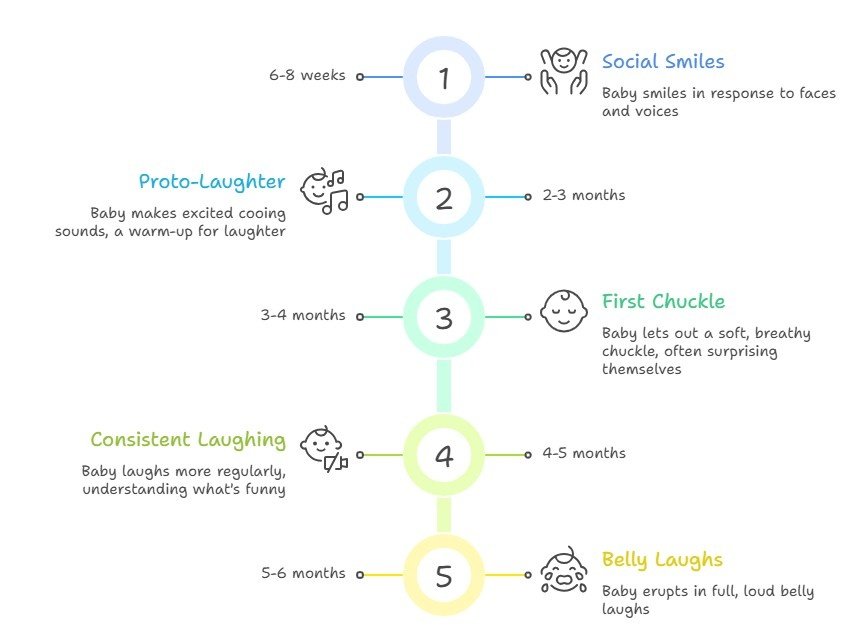
Every baby moves at their own pace. Some babies laugh as early as 11 weeks. Others take until closer to 5 months. Both are completely normal, so try not to compare.
When Do Babies Start Smiling and Laughing?
Smiling always comes first and that distinction matters.
Your baby’s first social smiles typically appear around 6 to 8 weeks. These aren’t random reflexes they’re real responses to seeing your face, hearing your voice, or feeling comfortable and safe.
Laughter usually follows a few weeks later, around 3 to 4 months. Think of smiling as your baby learning to show happiness quietly and laughing as turning the volume all the way up on that same feeling.
So if your baby is smiling but not yet laughing, you’re right on track. The giggles are on their way.
When Do Babies Start Laughing Out Loud?
There’s definitely a difference between a breathy little chuckle and a proper loud laugh and parents notice it instantly.
That quiet, soft first laugh usually shows up around 3 to 4 months. But the real, audible, everyone-in-the-room-can-hear-it laugh? That typically arrives closer to 4 to 5 months, and keeps getting louder and more frequent through month 6.
By 5 months, many babies will laugh freely and repeatedly when something genuinely cracks them up like the dog walking in, or you making an absolutely ridiculous face.
When Do Babies Start Belly Laughing?
The belly laugh. If you haven’t experienced this yet just wait. It might be the best sound in the entire world.
Babies typically hit belly laugh territory around 5 to 6 months. This is when laughter becomes deep, uncontrollable, and completely contagious. You will know it the moment you hear it.
What actually gets a belly laugh going at this age? A few things work almost every time:
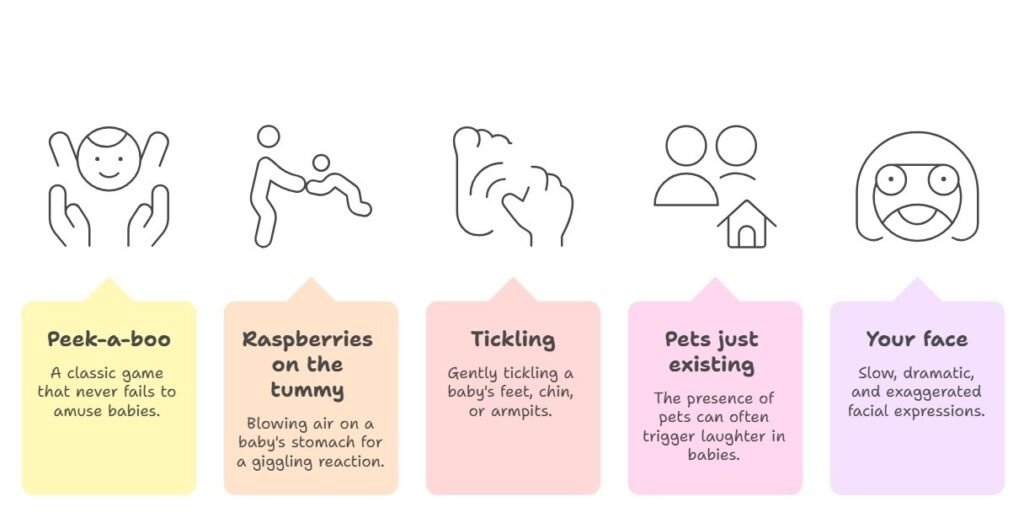
- Peek-a-boo :Still the GOAT. Works at 2 months, works at 12 months. They never see it coming, apparently. We tried this with both Eeshaan and Vihaan and the belly laughs we got were unreal. Simple hands-over-face, slow reveal, and they were completely gone every single time
- Raspberries on the tummy : Lift the shirt, blow hard, repeat until your face hurts. Worth it.
- Tickling : Feet, chin, armpits. Go slow at first some babies love it, some don’t. You’ll figure out your baby’s spots quickly.
- Pets just existing : The dog walks in. The cat jumps on the couch. Baby loses it. You did nothing and somehow you’re the best parent ever.
- Your face : Slow, dramatic, exaggerated expressions work better than fast ones at this age. Think silent movie actor, not stand-up comedian.
Here’s something fun: around 6 months, babies actually start being intentionally funny. They’ll make silly faces, repeat things that got a laugh before, and even misuse objects just to get a reaction. Your baby is basically becoming a tiny comedian.
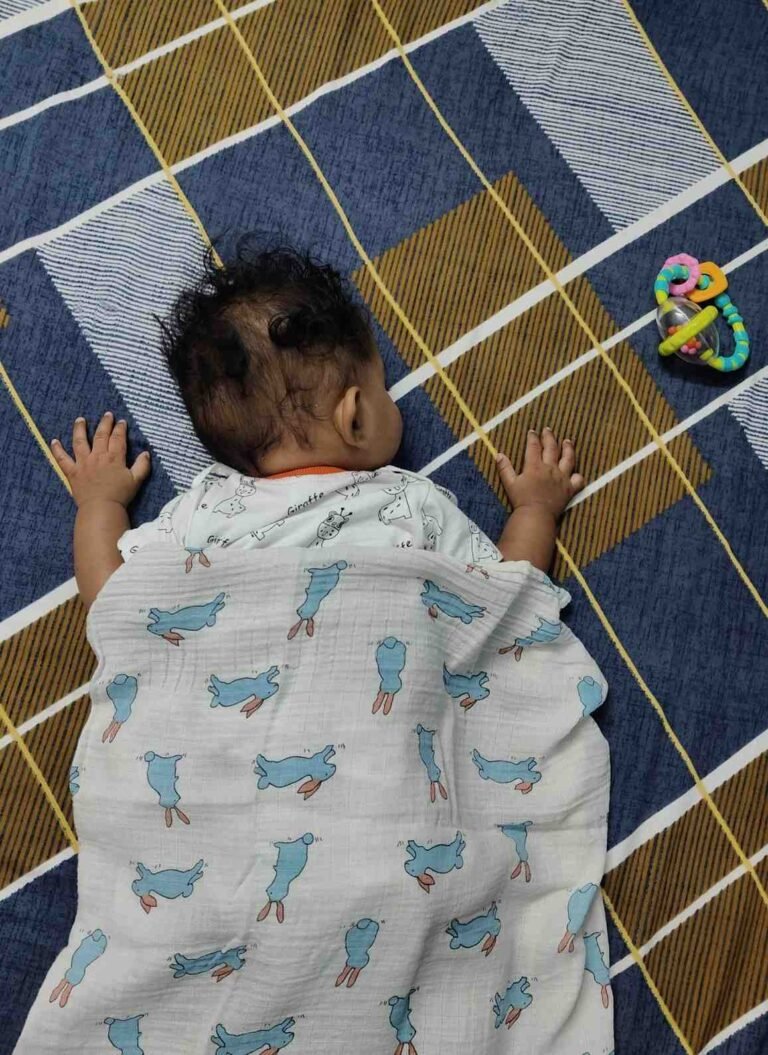
Why Do Babies Laugh in Their Sleep?
This one surprises a lot of parents you glance at the baby monitor and your little one is just… laughing. In their sleep. With no one around.
Completely normal. Here’s why it happens.
Babies spend a large portion of their sleep in REM (rapid eye movement) sleep the active stage where the brain is busy processing everything it learned during the day. During this phase, involuntary movements happen naturally smiling, twitching, cooing, and yes, laughing.
Some researchers believe babies may even be dreaming during REM sleep, though we can’t know for sure. Either way, sleep laughter is generally a healthy sign of brain activity, not something to worry about.
Signs of normal sleep laughter
- Happens during the middle of a sleep cycle not right as baby falls asleep
- Sounds like your baby’s usual laugh or smile expression
- Baby stays asleep or stirs briefly and settles back down
- No stiffening, twitching, or lip smacking alongside it
Signs to mention to your pediatrician
In very rare cases, laughing during sleep can be linked to something called a gelastic seizure a type of seizure that causes uncontrollable laughing, usually lasting 10 to 20 seconds. The laughter often sounds hollow or mechanical distinctly different from your baby’s normal happy laugh.
- Laughing that sounds forced, hollow, or out of place not their usual laugh
- Episodes happening as baby falls asleep rather than during deep sleep
- Baby wakes up during the laughing and then falls right back asleep
- Dozens of similar-looking episodes per day
- Accompanied by stiffening, lip smacking, facial flushing, or confusion afterward
What Makes Babies Laugh?
Not sure how to coax out that first giggle? Here’s what genuinely works at different ages:
- Your voice :Babies are literally wired to respond to high-pitched, sing-song tones. You might feel silly doing it, but it works every time.
- Peek-a-boo : Genuinely one of the most reliable laugh triggers in the entire first year. Simple, free, and it never gets old to them.
- Blowing raspberries: On their tummy, their arm, the side of their neck. Pick a spot and go for it. The reaction is worth it.
- Tickling :Chin, armpits, feet, tummy but go slow and gentle. Watch their face, not your hand. You’ll know when you’ve hit the right spot.
- Making faces :Big wide eyes, slow exaggerated surprise, sticking your tongue out. The sillier, the better. Leave your dignity at the door.
- Pets :If you have a dog or cat, just let them walk into the room. You don’t even have to do anything.
- Videos of other babies laughing :This one sounds too simple to work. It absolutely works. Try it tonight when nothing else is landing.
Fun fact: even babies as young as 4 months show measurable brain responses to humor their heart rate actually drops when something funny happens, even before they can laugh out loud. Humor is wired in earlier than most people think.
Does Baby Laughter Signal High Intelligence?
You’ve probably seen this come up in searches and there’s actually some real science behind it.
Laughter requires multiple areas of the brain to work together simultaneously the motor cortex for facial muscles, the respiratory system for breath control, and the limbic system for emotional processing. When a baby laughs early and often, it’s a signal that these neural pathways are forming and connecting well.
Research also suggests that babies who laugh and engage socially early tend to have better cognitive outcomes later in childhood including stronger language skills and higher emotional intelligence.
That doesn’t mean a quiet baby is less intelligent personality plays a huge role. But responsive laughter and social engagement are healthy signs of developing brain function. Interaction like peek-a-boo, for example, actually teaches babies about object permanence the understanding that things still exist when you can’t see them.
Baby Not Laughing Yet? Here’s When to Actually Worry
First take a breath. Some babies are naturally quieter and more observant. Not every baby is a giggle machine, and that’s perfectly okay.
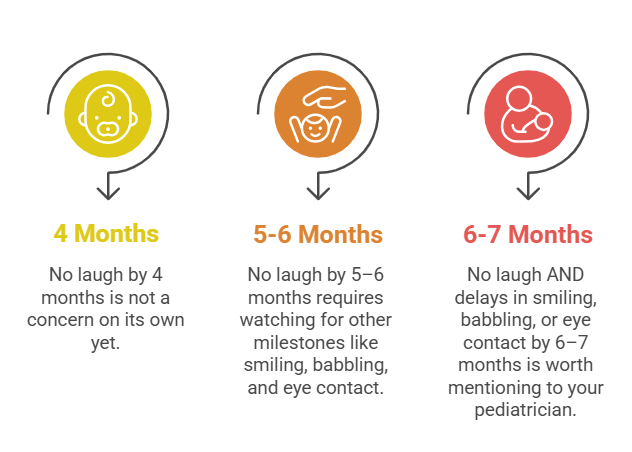
Here’s a practical guide:
- No laugh by 4 months Not a concern on its own yet
- No laugh by 5–6 months Watch for other milestones like smiling, babbling, and eye contact
- No laugh AND delays in smiling, babbling, or eye contact by 6–7 months Worth mentioning to your pediatrician at the next well baby visit
A missing laugh alone is usually not a red flag. But when it shows up alongside other delays, it’s always worth a conversation with your doctor. Trust your instincts you know your baby better than anyone.
Frequently Asked Questions
Do babies laugh at 3 months?
Yes! 3 months is actually on the earlier side of the normal range. If your baby chuckles at 3 months, they’re just a bit ahead celebrate it.
My baby is laughing at 11 weeks is that too early?
Not at all. Some babies start earlier than the average. If your baby is laughing at 11 weeks, you’re one of the lucky ones. Enjoy every second of it.
What does a baby’s first laugh sound like?
Most parents describe it as a soft, breathy, almost surprised sound like a little exhale with joy attached. It may not be loud at first, but you will absolutely know what it is the moment you hear it.
Baby laughed once but hasn’t since what happened?
Super common. Early laughs are inconsistent because your baby is still figuring out how to do it reliably. Keep up the silly faces and peek-a-boo regular giggles will start flowing within a few weeks.
Is my 2-month-old supposed to be laughing?
2 months is early, but not impossible. Most babies this age are still in the smiling and cooing stage. If you hear what sounds like a laugh at 2 months, it’s likely a happy vocalization a great sign regardless.
When do babies start laughing while sleeping?
Even newborns can make smile and laugh-like expressions during REM sleep. True social laughter during wakefulness comes around 3–4 months, but involuntary sleep laughter can happen from very early on and it’s almost always harmless.
What are signs of high IQ in babies?
Laughter is actually one positive indicator. Laughing requires the motor cortex, respiratory system, and limbic system to work together so early, frequent laughter signals that those neural pathways are forming well. Other early signs parents often notice include:
- Strong, sustained eye contact from early on
- Quick recognition of familiar faces and voices
- Early babbling and varied vocalization
- High curiosity reaching for, staring at, and exploring objects
- Responding to their name earlier than expected
- Imitating facial expressions and sounds
No single sign is a guarantee of anything and a quieter, more observant baby is not a less intelligent one. But social engagement, responsiveness, and early communication are generally healthy indicators of cognitive development in the first year.
One Comment