
Sensory Activities for Infants (0-12 Months): Age by Age Guide
Sensory activities for infants help build brain connections, motor skills, and emotional bonding through touch, sound, sight, and movement from birth to 12 months.
So here’s the deal. Babies are naturally wired to learn. From day one, every sound, squish, and silly face plays a role in shaping how their brain grows.

Sensory play is not just extra fun. It actively supports brain development, physical growth, and emotional bonding and the science backs this up.
- Before you panic, pause for a second. You do not need expensive or fancy toys to support learning.
- Simple things at home work beautifully. A kitchen spoon, a soft scarf, or even a cardboard box can turn into a tiny learning moment.
- Most importantly, while babies explore, they are also connecting with you. That connection matters just as much as the activity.
- In the photo, Eeshaan is sitting on green grass, quietly feeling the texture with his hands. Moments like this show how babies learn through touch.

What Are Sensory Activities for Infants?
Sensory activities help babies learn through their five senses: touch, sight, sound, taste, and movement. According to the Harvard Center on the Developing Child, consistent sensory-rich interactions build core brain architecture that supports language, attention, and emotional regulation over time. These early experiences lay the groundwork for coordination, focus, and emotional security that carries well into childhood.
Key Milestones Summary
If you are short on time, this table gives a quick snapshot of what to focus on at each stage. It helps match simple activities with your baby’s natural development.
| Age Group | Focus Area | Top Activity |
|---|---|---|
| 0–3 Months | Visual and Tactile | High-contrast cards and gentle touch |
| 4–6 Months | Reach and Grasp | Fabric pulls and mirror play |
| 7–9 Months | Cause and Effect | Water play and texture baskets |
| 10–12 Months | Fine Motor and Mobility | Sensory bins and nature walks |
Sensory Activities for 2 Month Olds
At two months, babies begin focusing more, recognizing faces, and responding to gentle sounds and touch. Vision is still developing, but high-contrast shapes grab attention like nothing else at this stage.
- High-contrast cards: Simple black-and-white patterns work well. We used these with both Eeshaan and Vihaan, and the focus was immediate.
- Gentle touch: Light strokes on hands or feet using a soft cloth help build tactile awareness.
- Your voice: Singing, talking, or narrating daily tasks makes a big difference in early language development.
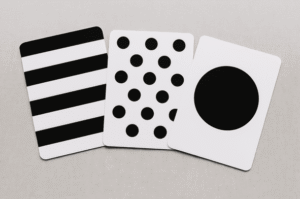
At this age, babies mostly see in black and white. With Eeshaan and Vihaan, we gently showed simple black and white cards and patterns not flashing them, but holding them at a comfortable distance and slowly moving them left to right so they could turn their head, maintain eye contact, build focus, and strengthen their visual attention.
Sensory Activities for 3 Month Olds
Three months in, tummy time may still feel like a struggle. Even so, it plays a critical role in building neck strength, head control, and body awareness.
Mirror Play
Babies love faces. Their own reflection often holds their attention longer than anything else in the room.
- Mirror play supports visual tracking and sustained focus.
- It helps babies notice expressions like happiness and curiosity an early step in social development.
- During tummy time, a mirror can motivate babies to lift and hold their head longer than usual.
It may look simple, but mirror play supports self-awareness, emotional connection, and early social learning all at once.
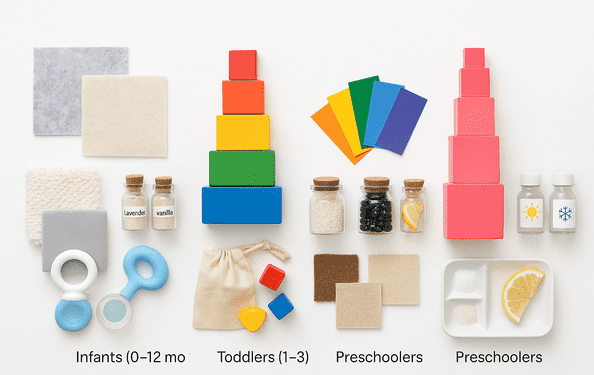
- Textures: Place different fabrics under their feet while they kick to build tactile sensitivity.
- Rattles: Gentle sounds moved side to side help with attention. The Oball rattle worked well for us because it was light and easy to hold.
Development note: Babies begin understanding cause and effect at this stage. When they shake something and a sound follows, that moment of surprise is their brain making a new connection.
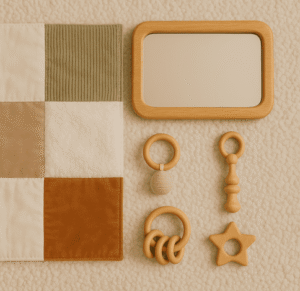
During this stage, we also tried simple black and red books just calmly showing them rather than flashing and introduced the Oball so they could start practicing their grip. Eeshaan loved exploring it with his tiny fingers and seemed especially curious, while Vihaan watched more carefully at first. We also offered a few texture-based wooden toys and soft rattles, and both of them really enjoyed the gentle sounds and different feel in their hands.
Sensory Activities for 4 Month Olds
By four months, hand discovery takes off. Reaching, batting, and swatting become part of daily play as babies start connecting their eyes with their hands.
- Dangling a soft scarf encourages reaching and strengthens arm coordination.
- Baby-safe mirrors during tummy time add motivation to push up and look around.
- Funny faces sometimes lead to copying an early form of social imitation.
Safety tip: Always choose items larger than your baby’s fist to avoid choking risks.
Sensory Play Activities for 5 Month Olds
Five-month-olds often giggle more and may roll in both directions. This is a great time to introduce new textures and simple cause-and-effect games.
- Fabric pulls using a scarf and box build curiosity and grip strength.
- Supported sitting with chunky toys encourages balance and core control.
- Music bounce with fast and slow songs teaches rhythm and body awareness.
Montessori touch: Real household objects like wooden spoons or silicone spatulas work beautifully at this stage with close supervision.
Sensory Activities for 6 Month Olds
Six months is a big stage. Sitting with help, rolling, and mouthing everything becomes the new normal and sensory play matches all of it.
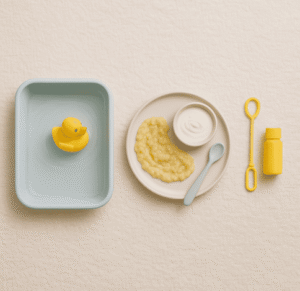
- Splash play with close supervision introduces water as a thrilling new texture.
- Edible painting using mashed banana or yogurt is safe, mess-worthy, and delightful.
- Bubbles bring pure, unfiltered wonder every single time.
Bonding tip: Laugh when bubbles pop. Joy spreads quickly between you and your baby.
Sensory Activities for 7 Month Olds
At seven months, repetition becomes a favorite way to learn. Doing the same thing over and over is not boredom it is how babies build confidence and understanding.
- Texture baskets with sponge, silicone brush, and crinkly fabric invite independent exploration.
- Drop games where you pick up the toy again and again teach persistence and cause-and-effect.
- Peek-a-boo songs bring laughter and quietly build object permanence.
Water Play
- A shallow tray with water and cups is enough. Keep towels nearby and stay close.
- Splashing teaches cause and effect through both sound and movement in the same moment.
Stick to chunky items like large wooden spoons, silicone spatulas, or Oballs.
Sensory Activities for 8 Month Old Babies
Eight months brings stronger sitting, more confident reaching, and a baby who wants to bang everything in sight lean into it.
- Stacking and knocking over cups builds spatial awareness and pure satisfaction.
- Texture crawl paths with different surfaces encourage exploration through movement.
- Kitchen band play with wooden spoons and pots introduces rhythm and sound cause-and-effect.
Montessori tip: Everyday household items often beat flashy toys. The realness of objects adds a layer of meaning that plastic cannot replicate.
Sensory Activities for 9 Month Olds
Nine months brings stronger object permanence and a baby who loves finding hidden things. Anticipation becomes part of the game.
- Treasure baskets with safe everyday items let babies lead their own exploration.
- Scarf peek-a-boo followed by a playful whoosh never gets old at this age.
- Supervised finger-food play supports fine motor skills while making mealtimes more engaging.
Sensory Activities for 10 Month Olds
Ten-month-olds are often pulling up, cruising furniture, and testing what their body can do. Sensory play can meet that energy.
- Push and pull games using a cardboard box build strength and gross motor confidence.
- Bottle shakers sealed tightly offer a DIY rattle with a satisfying sound reward.
- Simple hide-and-seek with toys reinforces object permanence in a playful way.
Sensory Activities for 11 Month Olds
Imitation becomes a favorite way to learn at this age. Whatever you do, your baby wants to try it too.
- Copycat clapping builds rhythm, coordination, and social connection.
- Kitchen helper play with safe utensils makes everyday tasks feel like adventures.
- Mini obstacle crawls using pillows and cushions challenge both body and brain.
Some days feel chaotic. Some days feel magical. Most days feel like both and that is perfectly okay.
Sensory Activities for 12 Month Olds
One year brings big personality, growing independence, and a baby who wants to do everything on their own terms.
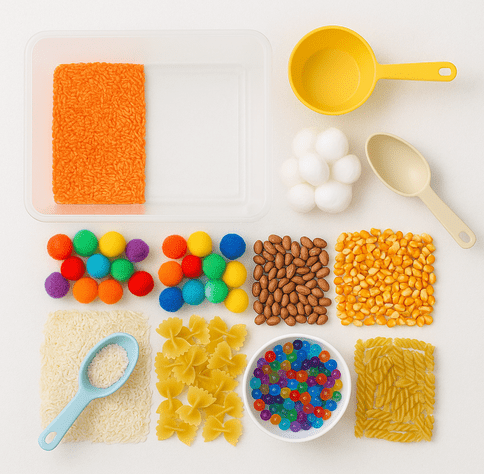
- Rice or sand bins with close supervision satisfy the urge to dig, pour, and feel.
- Outdoor sensory play with grass, leaves, and soil connects babies with the natural world.
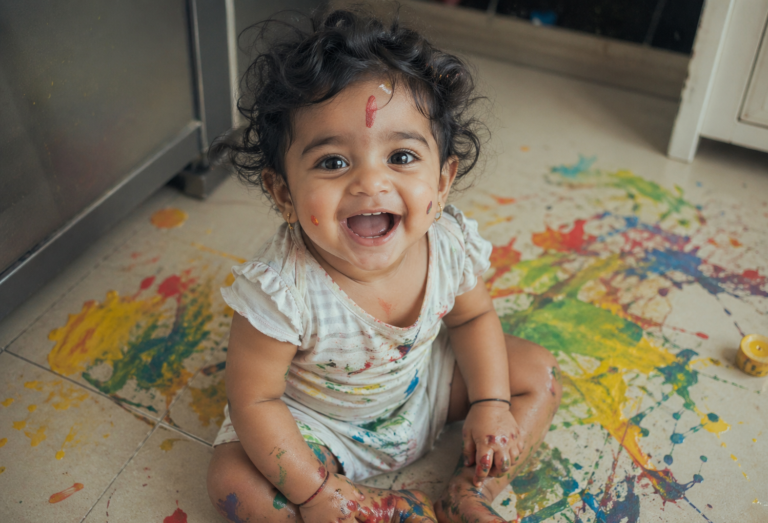
- Simple art using non-toxic supplies introduces color, texture, and creative expression.
Real moment: One day, Eeshaan froze mid-movement while I hummed during laundry. He locked eyes with me and smiled. It felt like the best show in the world and it was free.
According to the American Academy of Pediatrics, early play and sensory exploration support brain development, motor skills, and emotional bonding throughout the first year and beyond.
FAQs Parents Actually Ask
Are sensory activities safe for infants?
Yes, when supervised and age-appropriate. Always check that items are larger than a toilet paper roll tube and free of sharp edges.
Do I need fancy toys for sensory play?
No. Simple household items work beautifully. A wooden spoon, a soft scarf, or a shallow tray of water is genuinely enough.
How long should sensory play last?
Follow your baby’s cues. Some days it lasts ten minutes. Other days it lasts two. There is no minimum engagement matters more than duration.
When should I start sensory play with my newborn?
You can start from day one. Even gentle touch, soft voices, and looking at faces counts as sensory stimulation. Formal play activities simply grow more intentional as your baby develops.
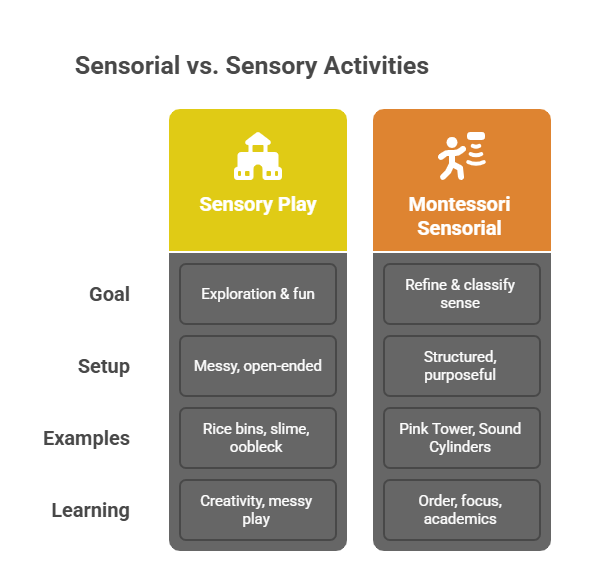
I really like this sensory activities it will help me with my babies in my classroom