Sensory Activities for Preschoolers (3-5 Years): 10 Easy Ideas
Sensory activities for preschoolers help develop fine motor skills, emotional regulation, problem solving, and creativity through hands-on play. These simple activities turn everyday materials into powerful learning tools.
Why Preschool Sensory Play Matters
Preschoolers are basically tiny scientists. They need to touch, squish, pour, and yes make a mess. The American Academy of Pediatrics calls play the ‘work’ of childhood, and they’re not kidding. By age 5, about 90% of brain growth has happened. So these sensory activities? They’re not just keeping your kid busy they’re building neural pathways
- Fine Motor Skills: All that scooping and pinching? That’s building the pincer grasp they’ll need for holding a pencil. Eeshaan struggled with this at first, but after weeks of sensory bins, suddenly he could pick up individual grains of rice
- STEM Concepts: Exploring Oobleck or Sink vs. Float introduces early physics and chemistry.
- Emotional Regulation:Kneading playdough works wonders after a meltdown. Last week, Vihaan had a full breakdown about his socks feeling wrong. Five minutes of smashing playdough later? Totally reset.
- Do this outside. I learned this when Eeshaan dumped an entire bowl of oobleck on our dining room rug. Forty five minutes of scrubbing later, outdoor activity it became.
- Language Boost: They move beyond soft or hard to learn rich, descriptive words like gritty, viscous, or aromatic.
If you’re curious about how these needs start even earlier, check out our guide on Newborn Sensory Activities to see how your child’s developmental journey began
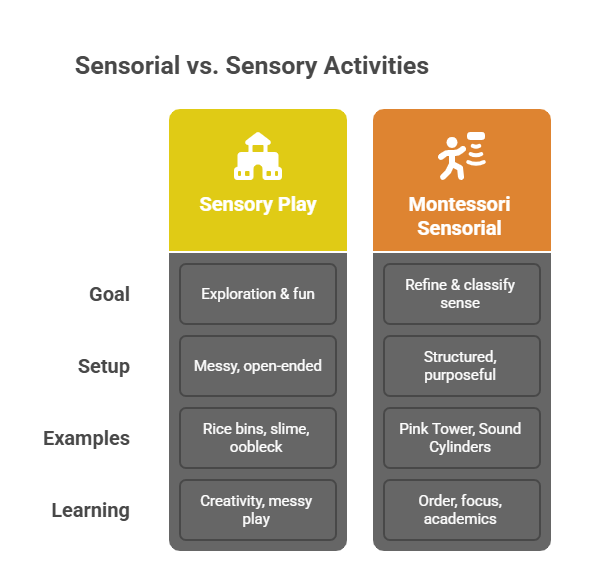
- https://cribkind.com/sensorial-vs-sensory-activities/ check this post for sensorial vs sensory activities
Age 3 to 4: Simple Sensory Exploration (Less Mess)
At this stage, toddlers are becoming official preschoolers. They are refining their focus and love activities that feel like a mission. To start your journey, try these lower-mess options:
1. Classic Sensory Bin (Best Sensory Activity for Preschoolers)
Grab a shallow storage bin.
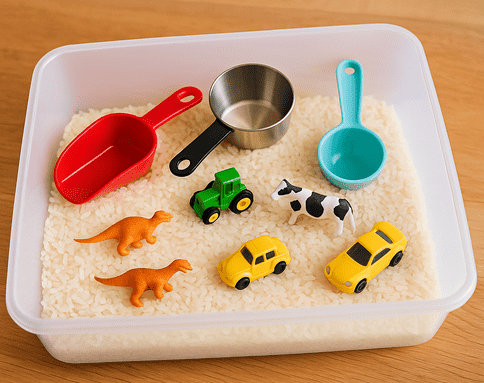
- Rice, beans, or pasta (dry or dyed)
- Scoops, measuring spoons, funnels
- Small figurines (dinosaurs, farm animals, cars)
Builds fine motor skills, hand-eye coordination, early math concepts, and imaginative play.
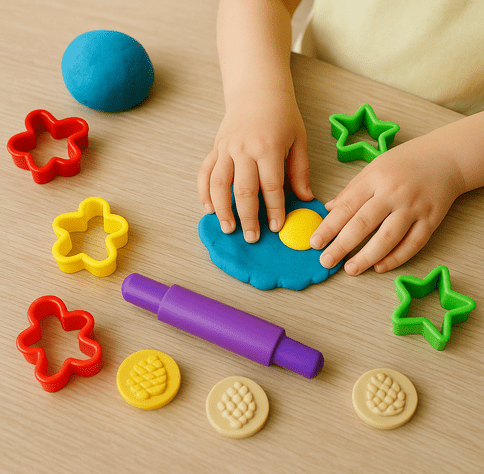
2.Playdough Station
Playdough is preschool gold. Store bought or homemade
- Cookie cutters
- Stamps
- Beads and buttons (for supervised older preschoolers)
Kneading playdough works wonders after a preschool meltdown. Trust me.
Age 4 to 5: Advanced STEM & Messy Play
As your child gets older, they are ready for “heavy work” and more complex experiments. This is where things get a bit messy—but the learning payoff is huge.
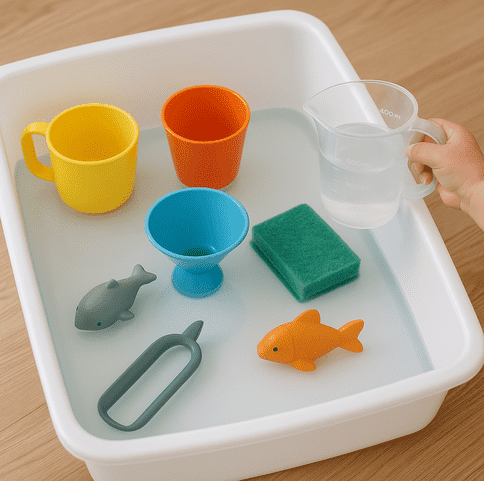
3.Water Play Station for Preschool Sensory Play
Set up a big plastic tub or just commandeer the bathroom sink. You’ll need cups, funnels, sponges, plastic toys whatever’s lying around.
What we actually do:
- Sink or float experiments: Vihaan was convinced his toy dinosaur would float because ‘dinosaurs are strong.’ Spoiler: it sank. Scientific method in action.
- Sponge races: Who can squeeze their sponge into the cup faster? This gets chaotic fast, but it’s hilarious.
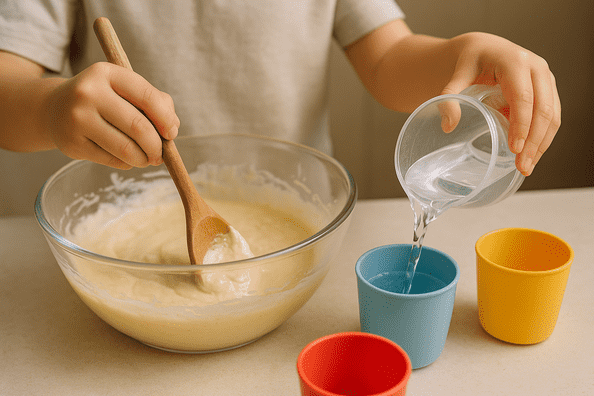
- Pouring practice: Eeshaan spent 20 minutes just transferring water from one cup to another. Boring to watch? Yes. Developing fine motor skills? Also yes.
Fair warning: Everything within a 3-foot radius will get wet. Embrace it or do this outside
4.Oobleck Madness
Cornstarch with water : oobleck. It’s gooey, runny, but solid when you squeeze it. Dr. Seuss even wrote a book about it
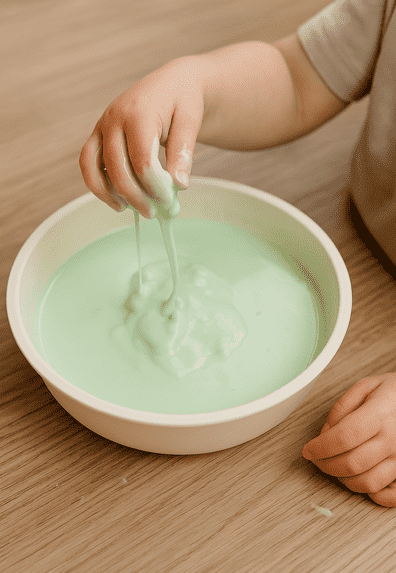
- Feels like slime, but safe to taste if they sneak a lick.
- Teaches science concepts like “solid vs liquid.”
- Endless giggles when they try to hold it and it slips away.
Tip: Do this outside or on a plastic tablecloth. Trust me.
Eeshaan’s first oobleck experience lasted exactly 90 seconds before he decided it felt ‘too weird’ and refused to touch it. A week later? Couldn’t get enough of it. Sensory preferences change fast at this age
Quick safety note, because it matters.
Always supervise sensory play. Avoid small items like beans, beads, or coins if your preschooler still mouths objects. Choose non-toxic materials and wash hands after messy play.
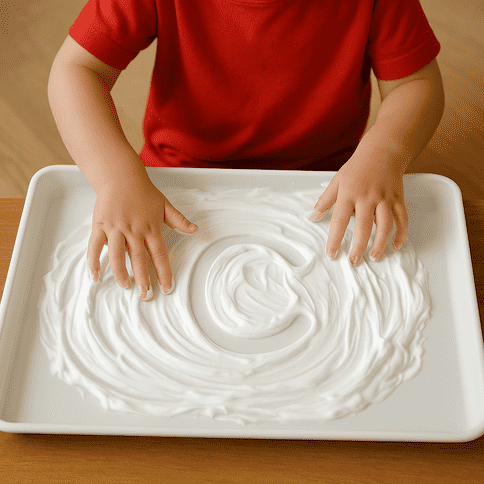
5.Shaving Cream Fun
Squirt some foam shaving cream onto a tray.
- Draw letters and shapes with fingers.
- Add toy cars for a “car wash.”
- Mix in food coloring for rainbow swirls.
Fine motor & pre writing practice without the worksheets.
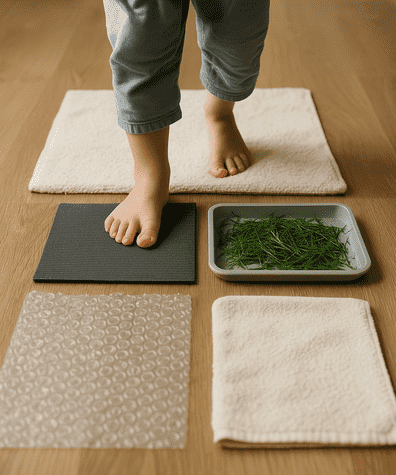
6.Sensory Walk (Gross Motor Fun)
Create a path of textures
- Bubble wrap taped to the floor
- Towels and yoga mats
- A tray of grass clippings or sand (outdoor version)
- Kids stomp, crawl, tiptoe across. It’s silly, it’s sensory, it’s preschool workout time.
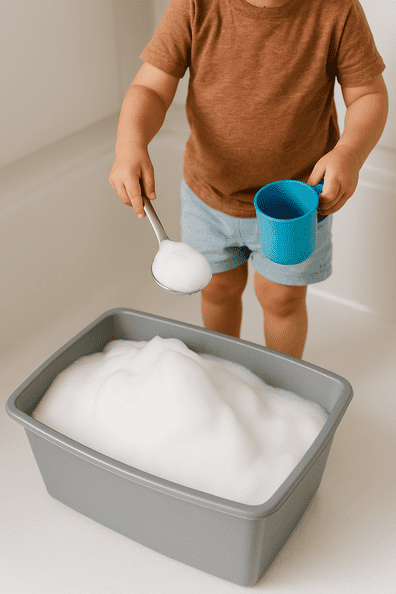
7.Foam Party (Mini Version)
This one is pure chaos in the best way.
- Grab a hand mixer, squirt in some dish soap, add water, and blend until you’ve got a mountain of foam. Pour it into a big plastic container and toss in some scoops and cups.
Do this in the bathtub for mess-free cleanup.
8.Calming Sensory Bottles
These are supposed to be magical calm-down tools. Sometimes they actually work.
- Grab an empty plastic water bottle (the ones with smooth sides work best).
- Fill it about 3/4 with warm water, add a generous squirt of clear glue, dump in glitter and food coloring, then toss in some beads or sequins.
- Seal the cap tight like, really tight, maybe even hot glue it shut if your kid’s a bottle-opener.
Kids shake, watch it settle, repeat. Works like a DIY calm down jar.
I made one of these during a particularly rough afternoon. Eeshaan shook it once, said ‘cool,’ and walked away. But then later that week when he was upset about something, he grabbed it himself and just watched it settle. It worked when he needed it, not when I offered it
9.Nature Sensory Hunt
Head outside with a basket
- Leaves
- Pinecones
- Rocks
- Flowers
Back inside, sort by size, shape, or color. Nature means free, endless sensory material.
10.Kitchen Helpers (Montessori Vibes)
Give preschoolers “jobs” during meal prep:
- Washing veggies
- Kneading bread dough.
- Pouring cereal into bowls.
Builds independence and gives them a sense of responsibility. Also, you get help with dinner
Mess Management Hacks (So You Don’t Lose Your Mind)
Sensory play is messy by nature, and that’s part of the learning.
But you can make it easier:
Containment strategy: I learned to use our shower curtain liner as a giant drop cloth. Toss it down, do the activity on top, then shake it outside when you’re done.
The 5-minute warning: ‘We’re cleaning up in 5 minutes’ gives them time to mentally prepare. Without it? Meltdown city.
Involve them in cleanup: Hand Vihaan a small dustpan and let him ‘help.’ Does it actually help? Not really. Does it teach responsibility? Sure, we’ll go with that.
Take it outside when possible: Take messy play outside when possible.
Some days it looks like learning. Some days it looks like chaos. Usually, it’s both.
Tips for Preschool Sensory Success
- Supervise always: Avoid choking hazards (beans, beads) if your preschooler still mouths objects.
- Short and sweet: 10–15 minutes is often plenty.
- Follow their lead: Some kids love messy, others prefer calm sensory bottles.
- Rotate activities: Keeps things fresh without buying new toys.
According to the American Academy of Pediatrics (AAP), play is the work of childhood.
FAQ
Are sensory activities safe for preschoolers?
Yes, when supervised and age appropriate. Avoid small choking hazards and always stay nearby during messy play.
How long should sensory play last?
10 to 20 minutes is perfect. Stop sooner if your child seems tired or overwhelmed.
How do I stop my preschooler from throwing sensory materials everywhere?
Set clear boundaries before you start: ‘The rice stays in the bin.’ When they test it (they will), calmly remind them. If they keep throwing, activity ends. Natural consequences work better than lectures at this age
Do sensory activities help learning?
Yes. They strengthen attention, problem-solving, language, and emotional regulation.
My preschooler hates messy textures. What should I try?
Start with ‘dry’ sensory bins (rice, pasta) and let them use tools instead of hands. Some kids need time to warm up to squishy stuff. Eeshaan wouldn’t touch playdough for months, then suddenly loved it. Don’t force it
One Comment