
Babbling in Infants: Stages, Red Flags
Babbling is when babies start combining consonants with vowels like ba-ba, ma-ma, or ga-ga, usually between 4 and 12 months.
Last week, Vihaan (our second kid) looked straight at me, grinned, and blasted out a loud, joyful A-GO-IN-GO-Ne! that somehow filled the whole living room.
Coffee in one hand. Phone in the other. Heart somewhere near my throat.
It sounded random. Silly. Almost meaningless. But it wasn’t.
That string of sounds? That was babbling when babies combine consonants and vowels (ba-ba, ma-ma, ga-ga) usually between 4-12 months. And it’s one of the most important language milestones your baby will hit
If you’re a parent scrolling this in five stolen minutes (maybe in the bathroom, no judgment), Here’s what I wish someone had told me: babbling is one of the most important language milestones in your baby’s first year.
Here’s what actually matters:

What is babbling in infants?
Babbling is when babies start combining consonants with vowels like ba-ba, ma-ma, or ga ga.
It’s not random noise. It’s organized sound play.
I started thinking of babbling as my baby’s speech workout: babies are strengthening their lips, tongue, breath, and brain pathways before real words appear.
With Eeshaan, I noticed something interesting. When he was calm especially while pouring water between cups or letting rice slip through his fingers his babbling became slower, clearer, and more rhythmic.
Lesson learned: when his body is relaxed, his speech practice just flows better.
When does babbling start?
Most babies begin real babbling between 4 to 6 months. Some start earlier, some later. Both are normal.
Marginal Babbling (Around 4–6 Months)
This is where babbling actually begins and most parents don’t even realize it’s happening.
Around four months, Eeshaan started making these slow, wobbly sounds. Not quite words, not quite cooing. Just him pushing his lips together and letting out something that sounded vaguely like baaaa/maaaa.
That’s marginal babbling. It’s your baby’s first attempt at combining a consonant and a vowel together sounds like “baa,” “maa,” or “uuum.” The reason it sounds imprecise is because it is their mouth muscles are still learning to coordinate.
The transition between the consonant and the vowel is slow and a little wobbly. That’s completely normal
Here’s a simple, parent-friendly timeline:
| Age | Stage | Example Sounds | What Baby Masters | Red Flag |
|---|---|---|---|---|
| 0–3 months | Cooing / Vowel Play | ooo, ahh, squeals | Basic vowel control | None yet |
| 4–6 months | Marginal babbling | ba, da, ga | First consonant sounds | No cooing by 4 months |
| 6–9 months | Canonical / Reduplicated | ma-ma-ma, ba-ba-ba | Rhythm and repetition | No consonants by 7 months |
| 9–12 months | Variegated / Jargon | ba-dee-ga-ma | Conversation-like flow | Very little variety by 12 months |
| 12+ months | First words | Dada, ball | Meaning starts to emerge | Fewer than 3 words by 18 months |
Babies move at their own pace.
No race here.
If you’re wondering how babbling connects to actual words, this guide on How Many Words Should a Toddler Say by Age breaks down what usually comes next.
Babbling vs Cooing
| Feature | Cooing | Babbling |
|---|---|---|
| Age | 2–4 months | 4–12 months |
| Types of sounds | Mainly vowels | Consonants + vowels |
| Typical sounds | ooo, ahh | ba-ba, ma-ma, ga-ga |
| Purpose | Expressing comfort and joy | Practicing speech patterns |
| Conversation feel | Mostly random | More rhythmic and patterned |
Why babbling matters
In Montessori training, I learned about the Sensitive Period for Language (ages 0–6). It sounds technical, but babbling is really where it all starts this is when babies’ brains are absolutely primed to soak up speech patterns
Babbling sits right at the heart of this period.
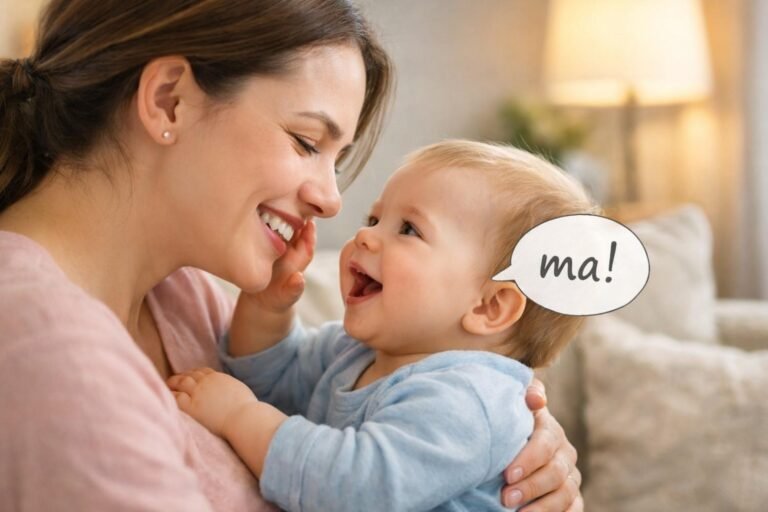
When your baby babbles and you respond, you’re doing something powerful you’re telling them:
Your voice matters.
With Eeshaan, I noticed this clearly. When I mirrored his sounds , he lit up and babbled even more. When I stayed silent, his sounds slowly faded.
Connection fuels language.
7 Dad-Tested Ways to Encourage Babbling in Infants
Don’t wait for babbling to just happen. When you respond actively, babies usually babble more. I’ve seen this clearly with Eeshaan small, consistent moments made the biggest difference.
1) Mirror Talk
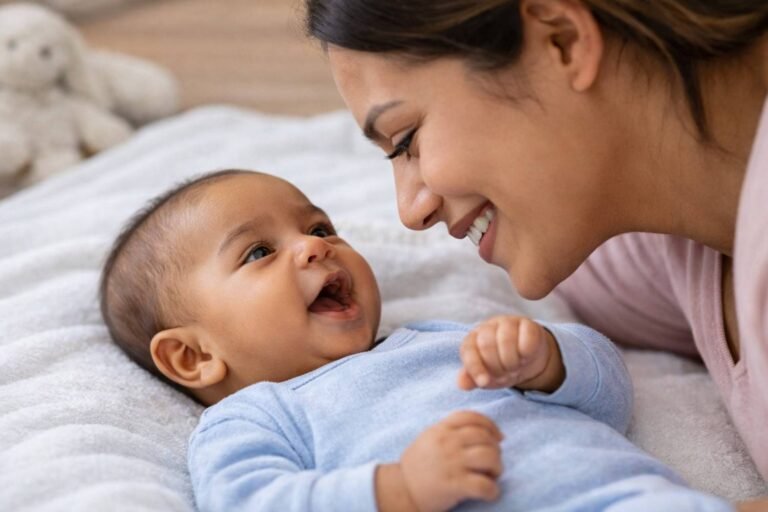
Sit face-to-face, exaggerate simple sounds like ba-ba, and make playful expressions.
At first he just stared at me. Then, slowly, he tried to copy. That moment was pure magic.
2) Echo Toys (with your voice)
Shake a rattle, then say shake-shake in a sing-song tone.
The toy grabs attention, but your voice keeps the conversation going.
3) Turn-Taking Pause
Let your baby babble.
Pause.
Then respond.
It becomes a tiny back and forth chat and babies absolutely love that rhythm.
4) High-Contrast Books (stretch the sounds)
Point to a picture and say: Red… baaa-ll.
Simple, slow, and surprisingly powerful.
5) Silly Songs
Ba ba black sheep with claps works beautifully in our house.
Ten minutes is plenty. Consistency beats intensity every time.
6) Tummy Time Narration (eye level)
I’d get on my stomach next to Eeshaan during tummy time and narrate everything at his eye level: Look… blue block… ba-block. Sometimes he’d just drool on the mat. Other times, he’d try to match my mouth movements
They watch your mouth. They try to match it. You can almost see the gears turning.
7) Record & Playback
Film their babbling and play it back.
Hearing themselves often sparks even more chatter. It’s funny, but it works.
About fifteen minutes a day is enough. Little joyful moments beat long lessons every single time.
When should you worry?
It’s worth checking in with your pediatrician if you notice any of these:
- No cooing by ~4 months
- No consonant sounds (“ba/da/ma”) by 8 to 9 months
- Babbling suddenly stops
- Baby doesn’t look at you while making sounds
- if your baby shows no marginal babbling by 6 months
Most delays are temporary, but an early check in with your pediatrician will give you peace of mind.
If your baby is older and still not using words, you may want to read our age-specific guides like 14 Month Old Not Talking, 15 Month Old Not Talking, or 18 Month Old Not Talking to see what’s typical at each stage.
Babbling and sensory play (our lived experience)
Here’s the part textbooks don’t tell you.
Eeshaan babbled the most when he was doing simple, real-world activities not flashy toys.
Pouring water.
Touching rice.
Shaking homemade sound jars.
Holding kitchen spoons.
He almost ignored expensive toys.
You might also like our guide on Sensory Activities for Babies and Toddlers, where we share calm, speech-supporting play ideas that worked well for us
Babbling stages + activities
0–3 months:
Talk softly, sing lullabies, and make gentle eye contact.
Keep it slow, calm, and warm. Let your face do the talking.
4–6 months:
Shake rattles, play with a mirror, and add little peekaboo sounds.
Let your baby watch your mouth as you exaggerate simple sounds.
7–9 months:
Do simple copycat games, introduce sound jars, and pause for turn-taking.
Babble, wait, and let your baby “answer.”
10–12 months:
Point and name objects with gestures cup, ball, spoon.
Keep it simple, slow, and consistent.
If your baby is babbling right now, take a moment and really listen. Those sounds matter more than you think. And if you’re ever unsure, you’re not overthinking you’re paying attention. That’s good parenting.
FAQs parents actually ask
When should babies start babbling?
Typically 4 to 6 months, but variation is normal.
What are the stages of babbling?
Cooing → first consonants → repetitive babble → mixed sounds → first words.
Is it okay if my baby pauses babbling?
Yes. Babies often focus on new skills (like crawling) and “pause” speech briefly.
Does baby talk help or hurt?
A sing-song, high-pitched voice actually helps babies process language better.
Is babbling a sign my baby will talk early?
Not necessarily. Some babies babble a ton and take their time with real words. Others babble less but then suddenly start talking in sentences. Babbling shows their speech system is developing, but timing varies wildly
One Comment