
When can infants sleep with blankets
Most babies should sleep in a completely bare crib until at least 12 months old. Some parents introduce a thin blanket right at 12 months, others wait until 18 months, and both are reasonable depending on your baby’s development.
One thing I noticed with Vihaan was how much he kicked and moved around in his sleep even at 4 months. Watching that on the monitor made it immediately clear why a loose blanket in the crib is a real risk he would have had it wrapped around his face within minutes. We stuck with the HALO SleepSack until well past his first birthday and honestly never looked back.
- Most parents don’t think much about this question until they’re standing over the crib at midnight, their baby looks cold, and every instinct says just tuck a little blanket around her. Was that shiver a sign she’s too cold? Is the sleep sack warm enough? Should I just add a light blanket?
- Infant sleep safety follows a pretty predictable pattern, the range of what’s considered safe is narrower than most people assume, and once you understand the timeline and the reasoning behind it, the whole thing gets a lot less stressful. This guide covers when infants can safely sleep with blankets, the full age-by-age timeline, safe alternatives that actually work, what to know about weighted blankets, and when it’s worth a call to your pediatrician. Bookmark it you’ll probably come back.
When Can Infants Sleep With Blankets?
The AAP recommends no blankets in the crib until at least 12 months old. Most pediatric sleep experts suggest waiting until 18 months if possible that’s when toddlers have the motor coordination to reliably move a blanket away from their own face.
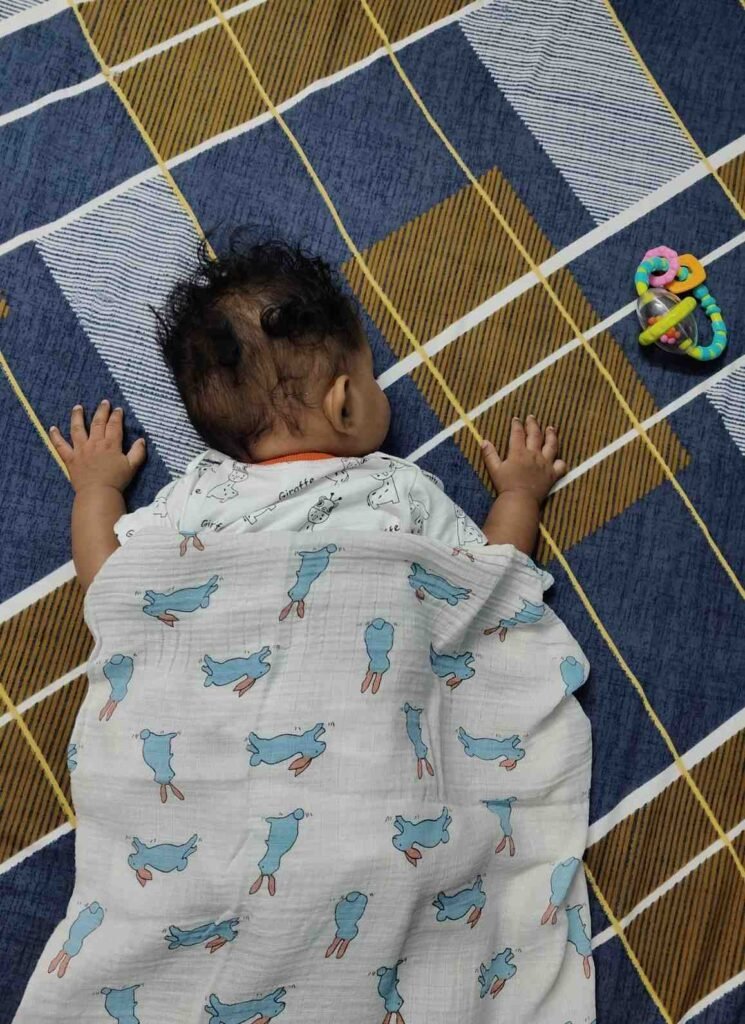
- When the time came with both Eeshaan and Vihaan, we went with the simplest option a light muslin cloth. Nothing fancy, nothing thick. Just a thin, breathable muslin we already had at home.
- And even then, we only used it during naps where one of us was around to check in not for overnight sleep right away.
It felt like the most low risk way to make the transition without overthinking it.
That’s actually exactly what pediatricians recommend. Once your toddler hits the 12-month mark and is showing strong motor skills, a light muslin cloth used with observation during naps is a perfectly safe starting point before moving to overnight use.
Before that milestone, a loose blanket isn’t cozy it’s a genuine suffocation and SIDS risk, even if it looks harmless from across the room.
Here’s how the timeline typically unfolds:
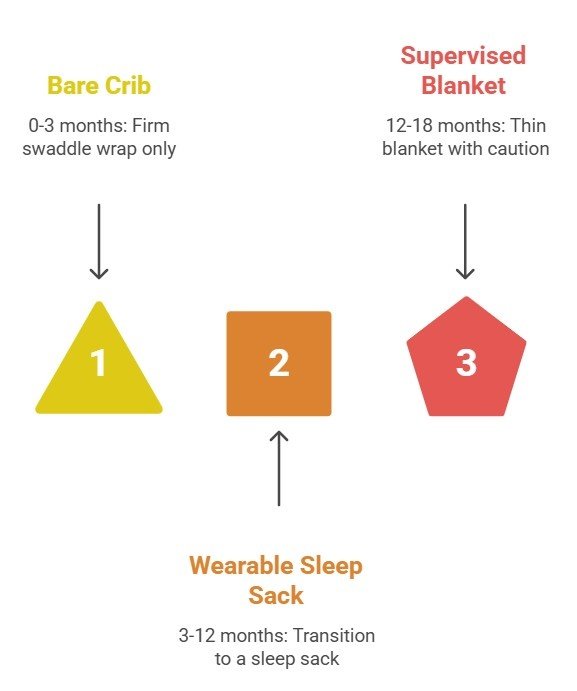
- 0 to 3 months: Bare crib only use a firm swaddle wrap instead
- 3 to 12 months: Still no blanket transition to a wearable sleep sack
- 12 to 18 months: Thin, breathable blanket okay with caution start with supervised naps first
- 18 months and up: Lightweight muslin or cotton blanket generally safe for overnight use
Every baby develops at their own pace. Some toddlers hit the motor skill readiness earlier, others take a little longer. What matters most is your baby’s individual development not the calendar date.
According to the AAP Safe Sleep guidelines, the sleep environment should stay completely bare for the entire first year no blankets, pillows, quilts, stuffed animals, or bumper pads. If your baby is in a sleep sack and the room is at the right temperature, they do not need a blanket.
When Do Babies Start Smiling and Laughing at 12 Months vs. Needing a Blanket?
Smiling and motor development always come first and that distinction matters when it comes to blanket readiness too.
Your baby’s ability to push objects away from their face with purpose and strength is the physical milestone that matters most here. That level of motor coordination where a baby can reliably react to something covering their face and move it typically develops reliably around 12 to 18 months.
So if your 13-month-old is walking, pulling to stand, and pushing things away from their face confidently, they’re probably closer to ready. If they’re still developing those skills, the sleep sack keeps doing its job beautifully.
Why Blankets Are Dangerous Before 12 Months
Here’s the part most parents don’t realize it’s not about the blanket itself. It’s about your baby’s ability to respond to it.
Infants under 12 months don’t have the muscle control or coordination to push a blanket away from their nose and mouth if it shifts during sleep. Add in the fact that babies are deep, heavy sleepers especially in the first few months and that’s a combination that creates real risk.
There’s also a subtler danger called rebreathing. Soft bedding can conform to a baby’s face and trap the air they just exhaled. In older children, the brain triggers a wake-and-cry response. But in some infants, especially in early months, that signal is simply too slow.
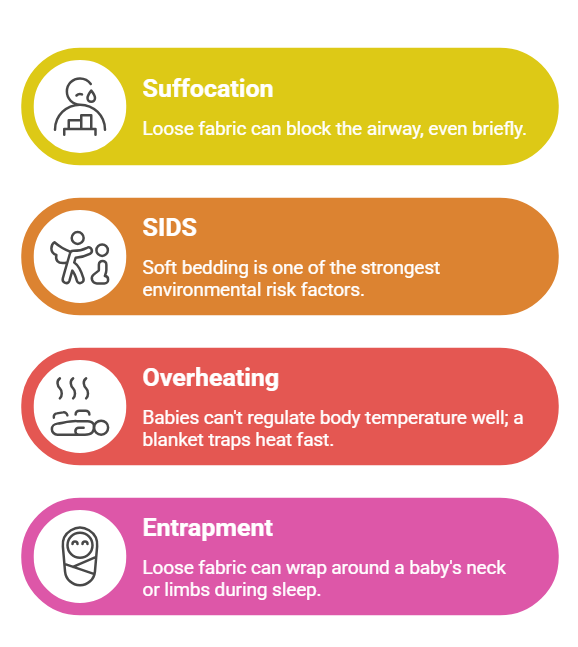
The specific risks include:
- Suffocation loose fabric can block the airway, even briefly
- SIDS (Sudden Infant Death Syndrome) soft bedding is one of the strongest environmental risk factors
- Overheating babies can’t regulate body temperature well; a blanket traps heat fast
- Entrapment loose fabric can wrap around a baby’s neck or limbs during sleep
The AAP, CDC, and CPSC all share the same message: keep the crib completely bare for the first 12 months. No exceptions for thin blankets, crocheted blankets, or “just for naps.”
One thing that actually does help reduce SIDS risk during sleep and surprises many parents is a pacifier. The AAP encourages pacifier use at nap time and bedtime because sucking stimulates the breathing center in the brain and helps keep the airway open. If you’re weighing that decision alongside safe sleep setup, our guide on whether to give your newborn a pacifier covers everything you need to know.
What Real Parents Ask (And What We Learned)
This question comes up constantly in parenting communities and the conversations are worth paying attention to.
One common reasoning you’ll see: “A crocheted blanket with holes can’t suffocate because the air goes through the gaps.” Here’s the problem with that logic any blanket, regardless of how it’s made, can shift, fold, and bunch during sleep. The holes don’t help once the fabric is covering a baby’s face and conforming to their airway.
Another parent shared this moment while watching a monitor during a supervised nap: “I let my baby nap with a small blanket while watching the camera. He had it wrapped around his head within 10 minutes. I noped out of that immediately.”
With Vihaan, we had a grandparent insist he looked cold and try to tuck a muslin cloth around him during a nap. Within minutes it had shifted up toward his face. We understood the instinct we really did but it reinforced why the bare crib rule matters even for those quick daytime naps.
Safe Age Timeline for Blankets
Here’s how blanket safety breaks down by age based on AAP and pediatric sleep expert recommendations:
| Baby’s Age | Blanket Safe? | Best Option Instead |
|---|---|---|
| 0–3 months | ❌ No | Firm swaddle wrap arms-in style |
| 3–12 months | ❌ No | Wearable sleep sack |
| 12–18 months | ⚠️ With caution | Thin breathable blanket supervised naps first |
| 18 months and up | ✅ Generally safe | Lightweight muslin or cotton blanket |
The 12-month mark is the AAP’s official minimum. But sleep experts at HALO Sleep and The Bump both note that 18 months is the safer target that’s when most toddlers have genuinely reliable motor control.
How to Keep Your Infant Warm Without a Blanket
“No blanket” only works if you have a real alternative. Here’s what actually works and what pediatricians recommend across the board.
Sleep Sacks and Wearable Blankets
This is the gold standard. A sleep sack zips around your baby’s body like a little sleeping bag no loose fabric, no way for it to shift over their face. The key is choosing the right TOG rating for your room temperature:
| TOG Rating | Room Temperature | Best For |
|---|---|---|
| 0.5 TOG | 75°F and above | Warm rooms, summer months |
| 1.0 TOG | 68–72°F | Average room temperature year-round |
| 2.5 TOG | Below 65°F | Cool rooms, winter months |
Popular US brands parents trust: HALO SleepSack, Kyte Baby, Nested Bean (non-weighted versions only). We used HALO with both kids and it held up through two winters without issues.
Swaddling for Newborns (0 to 3 Months)
A snug swaddle mimics womb warmth safely. Once your baby shows signs of rolling typically around 3 to 4 months transition to an arms-out sleep sack immediately. Continuing to swaddle after rolling begins is its own separate safety risk.
Footed Pajamas
Simple and genuinely underrated. A warm footed onesie adds a full layer of warmth without any loose fabric risk at all. Layer one under a 1.0 TOG sleep sack on cold nights and you’ve essentially solved the problem.
Control the Room Temperature
The AAP-recommended nursery temperature is 68 to 72°F (20 to 22°C). A practical rule that works: dress your baby in one more layer than you’re wearing comfortably.
💡 Pro Tip: Check your baby’s chest not their hands or feet to gauge warmth. Baby extremities are naturally cooler. A warm chest means they’re perfectly comfortable even if their little hands feel cool.
The One Thing to Never Use: Weighted Blankets
This one deserves its own section. In 2024, major retailers including Amazon, Target, and Babylist stopped selling weighted infant sleep products after years of AAP advocacy. The reason: weighted blankets and swaddles have been shown to reduce oxygen saturation levels in infants meaning measurable drops in the oxygen their developing brains receive during sleep.
The CPSC is equally direct: do not use weighted blankets or weighted swaddles on infants, period. This applies even to products marketed as “calming,” “womb-like,” or “doctor-designed.”
If your baby is currently using a weighted swaddle or weighted sleep sack, it’s worth replacing it with a standard TOG-rated sleep sack. The warmth benefit is the same the oxygen risk is not.
Signs Your Baby Is Ready for a Blanket
Don’t just go by age alone. Watch for these physical milestones before introducing any blanket at all:
- Rolls confidently in both directions not just one way
- Sits up unassisted and can pull to standing
- Pushes objects away from their face with purpose and strength
- Has naturally transitioned away from sleep sacks
- At least 12 months old 18 months is the safer milestone
If your 13-month-old isn’t quite hitting these yet, there’s zero rush. The sleep sack works perfectly until they’re developmentally ready and there’s no downside to using it longer.
How to Introduce a Blanket Safely (When the Time Comes)
Once your toddler hits those milestones, here’s how to do it right:
- Pick the right fabric first Lightweight muslin or breathable cotton only. No fleece, no quilts, no thick fabrics, nothing weighted.
- Keep it small A smaller blanket means less fabric to bunch, tangle, or shift during the night.
- Start with supervised naps Introduce during daytime naps when you can check in easily, before moving to overnight use.
- Tuck under the mattress Firmly tuck the bottom edge under the mattress so it stays put and can’t ride up.
- Skip weighted blankets entirely Even for toddlers under 2, weighted blankets are not recommended by pediatric sleep experts regardless of marketing claims.
Baby Not Ready for a Blanket Yet? Here’s When to Actually Worry
First, take a breath. Most of this is simpler than it feels at midnight. The sleep sack is doing its job even if it doesn’t look as cozy as a tucked-in blanket.
No blanket before 12 months and watch for motor skill readiness, not just age
Here’s a practical guide for what to watch:
| Situation | What It Means | What to Do |
|---|---|---|
| Baby looks cold in sleep sack | Likely needs higher TOG or footed pajamas layered underneath | Adjust TOG rating or add footed onesie layer |
| 12 months but not hitting motor milestones | Not yet ready age alone isn’t enough | Wait for rolling and pushing milestones, stick with sleep sack |
| Baby kicks sleep sack off repeatedly | May need a different style or size | Try a different brand or move up a size |
| 18 months with strong motor skills | Generally ready for a light blanket | Introduce thin cotton or muslin supervised naps first |
| Any age with breathing concerns during sleep | Worth a pediatrician conversation | Call your pediatrician don’t wait for the next scheduled visit |
A missing readiness milestone alone is usually not a red flag. But when concerns come up alongside other developmental delays, it’s always worth a conversation with your doctor.
Frequently Asked Questions
Can a 6-month-old sleep with a blanket?
No. At 6 months your baby is still well within the high-risk SIDS window and doesn’t have the motor control to manage loose bedding safely. A well-fitted sleep sack is the right call at this age.
Can a 9 month old sleep with a blanket?
Still no even though your baby is growing fast, 9 months is under the 12-month AAP minimum. A warm, appropriately TOG-rated sleep sack covers everything they need.
Can a 12 month old sleep with a blanket?
At 12 months you can begin introducing a thin, breathable blanket during supervised naps but most experts recommend full overnight use closer to 18 months when motor skills are reliably strong.
What’s the safest blanket for a 1 year old?
Thin, small, and breathable like a lightweight muslin or cotton blanket. Avoid quilts, fleece, and anything weighted. Tuck the bottom edge firmly under the mattress.
What if my baby gets cold without a blanket?
Use a higher-TOG sleep sack, layer with footed pajamas underneath, and keep the room between 68 and 72°F. That combination handles virtually every cold-night scenario safely without any loose fabric risk.
Are crocheted or knit blankets with holes safer?
No. Any blanket regardless of fabric structure can shift, fold, and cover a baby’s face during sleep. The holes don’t reduce suffocation or entrapment risk once the blanket is bunched against an airway.
My baby keeps kicking off the sleep sack what do I do?
Try a different style or size some babies do better with a slightly roomier fit, others need a snugger one. Brands like HALO and Kyte Baby both have sizing guides based on weight and height. If your baby is outgrowing their current size, that’s usually the issue.
When can babies sleep with a pillow?
Also not until at least 12 months and most pediatricians recommend waiting until 18 to 24 months. The same motor skill reasoning applies: your baby needs to be able to push it away from their face independently before it’s safe overnight.
A quick note: nothing in this post replaces a conversation with your child’s pediatrician. I wrote this as a practical starting point for parents trying to make sense of what they’re seeing at midnight not as a substitute for professional advice. If something feels off or urgent, trust that instinct and call your pediatrician directly.
Medical sources: American Academy of Pediatrics (AAP) · CDC Safe Sleep · U.S. Consumer Product Safety Commission (CPSC) · Johns Hopkins Medicine · Healthline · HALO Sleep · Pampers
This article is for informational purposes only and does not constitute medical advice. Always consult your pediatrician with questions about your baby’s sleep safety.


One Comment