15 Sensory bins ideas for Preschoolers
If you have a preschooler, you already know their little hands never stop moving. One moment they are pouring juice on the table just to see what happens. The next moment they are digging into the potted plant. It gets messy. But that mess usually comes from curiosity.
This is where sensory bins really help.
- A sensory bin is simply a container filled with materials to explore. You can use rice, beans, sand, water, foam, shredded paper, or pom poms. Add a few cups, scoops, or small toys. Suddenly, your preschooler has a hands-on space for pouring, scooping, digging, and imagining.
- There is also a bonus many parents do not expect. While children think they are just making a mess, they are quietly building motor skills, learning early science ideas, and calming their busy bodies.
If you’re looking for more age-based ideas, you can also explore our full guide on sensory activities for toddlers and preschoolers.
Why Sensory Bins Are So Good for Preschoolers
Early childhood experts and therapists often point out that sensory play is more than just fun. Sensory bins support learning and development in simple but meaningful ways.
- Build fine motor skills: Scooping beans or pinching pom poms strengthens the same muscles children later use for writing.
- Support early math and science: Children explore ideas like sinking and floating, more and less, sorting, and measuring.
- Grow language: Sensory play naturally introduces words such as squishy, grainy, sticky, and smooth.
- Help with emotional regulation: The repetitive motion of scooping and pouring can help children calm big feelings.
- Spark imagination: Dinosaurs in rice, cars in pasta, or mermaids in blue water beads quickly turn into full stories.
What You Need to Get Started
The basics are simple.
- A bin or container
- One main filler
- A few scoops, spoons, or cups
- Optional add ons like funnels, tweezers, toy figures, or seasonal decorations
15 Fun and Affordable Sensory Bin Fillers
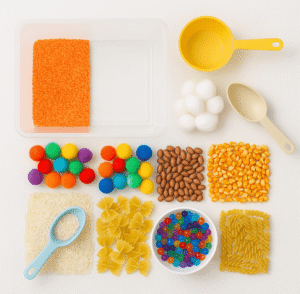
- Rice: Rice is where most moms start, and for good reason. It’s cheap, easy to dye with food coloring, and kids never seem to get bored of running their hands through it.
- Beans: Beans are brilliant for little ones who love to scoop and pour they’re bigger than rice, which makes them feel satisfying to grab by the handful.
- Pasta: Shells, rotini, or macaroni add interesting shapes.
- Pom poms: Pom poms are one of those fillers you don’t expect to be a hit and then your child plays with them for an hour straight. Soft, colorful, and honestly a little calming for busy hands
- Shredded paper: Got a pile of shredded paper lying around? Don’t throw it out! It’s free, easy to dig through, and makes the most satisfying
rustling sound - Cotton balls: Great for pretend snow or cloud play.
- Sand: Regular sand or kinetic sand both work well.
- Cloud dough: If you’ve never tried cloud dough , you’re missing out! Just mix flour with a little baby oil and you get this crumbly, moldable
texture that kids absolutely cannot put down. - Oobleck: Cornstarch and water for messy science play.
- Foam soap: Dish soap whipped with water.
- Water beads: Colorful and squishy with close supervision.
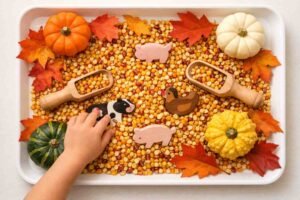
- Dried corn kernels: A good choice for fall-themed bins.
- Birdseed: Crunchy and budget friendly.
- Ice cubes: Ice cubes are wildly underrated! Drop in some toy arctic animals and you’ve got a cold sensory science experiment that’ll keep
preschoolers busy until it all melts. Eeshaan always loves to play with ice - Cereal: Cheerios or Rice Krispies that can double as a snack.
Safety reminder: Always supervise. Some fillers can be choking hazards, especially for younger preschoolers.
Themed Sensory Bin Ideas for Preschoolers
Adding a theme keeps sensory play fresh and interesting.
Fall Sensory Bin
- Filler: Dried corn, leaves, mini pumpkins
- Add: Scoops and small farm animals
Winter Sensory Bin
- Filler: Cotton balls and silver pom poms
- Add: Snowflake confetti and toy penguins
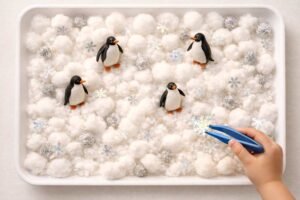
- If your little one loves digging and discovering, this winter sensory bin is going to be their new favorite thing!
- Grab a tray and fill it up with fluffy cotton balls and shiny silver pom poms instant snow, no cold required! Sprinkle in some iridescent snowflake confetti and pop in a few toy penguins, and watch your preschooler’s eyes light up.
- The best part? Cotton balls feel SO satisfying to squeeze and explore, while the pom poms have that fun little weight to them your kiddo won’t even realize they’re building fine motor skills while they play!
Tip: Hide white pom poms under the cotton and call them penguin eggs. Your child will spend a good 20 minutes on that treasure hunt alone.
Spring Sensory Bin
- Filler: Rice dyed green
- Add: Plastic bugs, flowers, and scoops
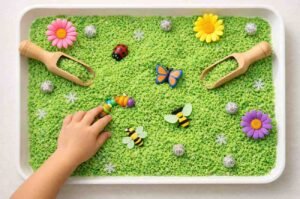
If there’s one sensory bin that screams SPRING, this is it
- Start with a big tray of green-dyed rice it looks just like fresh spring grass and feels amazing to run little fingers through. The best part? Dyeing rice takes less than 5 minutes and costs almost nothing.
- Just rice green food coloring a zip bag. Shake it, spread it, let it dry done!
- Now comes the fun part. Nestle in colorful plastic bugs (butterflies, ladybugs, caterpillars the more the better!), tuck in a few bright spring flowers, and add scoops for digging and pouring.
Your preschooler gets to be a full on garden explorer!
Summer Sensory Bin
- Filler: Water with a little blue food coloring
- Add: Seashells, toy fish, and cups for pouring
Mess-Free Sensory Bin Ideas
Yes, they do exist. These options work well indoors.
- Calm-down bottles: Glitter, water, and clear glue in a sealed bottle.
- Zip top bag squishies: Hair gel with beads or buttons.
- Dry pom poms: Use tongs for easier cleanup.
- Magnet bin: Paper clips and magnetic wands for low-mess play.
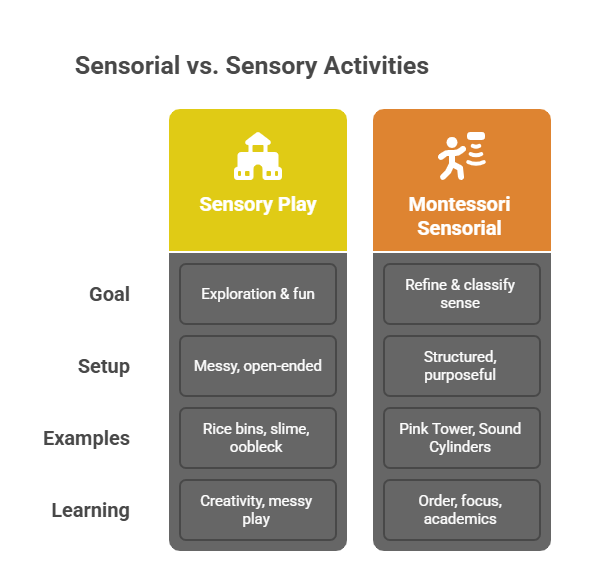
Montessori-Inspired Add-Ons
Many Montessori classrooms include sensory play because it supports independence.
- Measuring spoons for early math skills
- Tweezers to build fine motor control
- Funnels to encourage problem solving
- Natural items like pinecones or seashells
Individual Sensory Bins
Not every child enjoys large group bins. Individual bins work well for calmer moments.
- Quiet time
- Children who feel easily overwhelmed
- Road trips or waiting rooms
A simple setup works best. Use a shoebox-sized container with a small amount of filler and a few tools.
Mess Management Hacks
- Keep a small vacuum nearby.
- Take bins outside when possible.
- Fill bins halfway instead of to the top.
My son eeshaan once launched rice across the living room like confetti. Now we have a rule that the bin stays on the mat. It does not always work, but there is progress.
Pediatric experts at the American Academy of Pediatrics highlight play as an essential part of healthy brain and emotional development in early childhood.
FAQs
What are the best sensory bin ideas for preschoolers?
Rice, beans, pom poms, water, playdough, or seasonal themed bins all work well.
Where can I buy sensory bin supplies?
Target, Walmart, Dollar Tree, and Amazon carry affordable bins and fillers.
How often should my preschooler do sensory play?
A few times a week is enough. Even ten to fifteen minutes makes a difference.
Are sensory bins safe for preschoolers?
Yes, with supervision. Avoid small items if your child still puts things in their mouth.
Do I need to spend a lot of money?
No. Many effective sensory bins use items you already have at home.