
Cooing in Infants: When It Starts and What It Predicts
I was leaning over Eeshan’s crib one afternoon when he made a sound I had never heard from him before. Not a cry. Not a grunt. Just a soft, slow ooo and then silence, like he was waiting to see what I would do.
That was cooing, and I had no idea it was coming or what it meant for his speech. Most babies hit it between 6 and 8 weeks. Here is what those early sounds actually predict, how to respond when they start, and the one sign worth mentioning to your pediatrician.

when do babies start cooing
Most babies begin cooing between 6 and 8 weeks old, roughly around the 2 month mark. Some start a little earlier, and others take closer to 3 months. Both are completely normal.
Honestly, when Eeshan was a newborn, I kept checking those milestone apps every week. But development does not follow an app. It follows your baby.
Cooing often happens when your baby is:
- Calm and content
- Looking at your face
- Hearing a familiar voice
- Relaxed after feeding or waking from sleep
These early sounds are usually soft and vowel-like. Gentle experiments, not strong vocal efforts.
So if your baby is not cooing exactly at six weeks, there is usually no reason to worry. Development is a range, not a deadline.

What cooing actually sounds like
Cooing is one of the first intentional sounds babies make, apart from crying.
It usually sounds like:
- Ooo
- Aaa
- Eee
- Soft gurgles or gentle sighs
Unlike crying, which signals hunger or discomfort, cooing is about communication and connection. It is your baby discovering their voice and responding to the world around them.
Think of it this way. Crying says I need something. Cooing says I am here. I am listening. I am trying.
That shift is bigger than it sounds.
Why those early sounds matter for speech
Cooing is one of the first building blocks for speech and language, and it is more important than most parents realize.
According to the AAP, those soft early sounds exercise the tiny muscles babies will later use to form words. It also teaches babies something foundational: when I make a sound, something happens. That is the very beginning of back-and-forth communication.
When babies coo, they are learning how to:
- Control their breath and voice
- Move their lips, tongue, and mouth
- Listen and respond to sounds
- Take turns in early conversation
Cooing also builds social development. When you respond to your baby’s sounds, you are strengthening your bond and teaching them turn-taking skills they will carry for years. Before a single word, your baby is already trying to talk to you. That is what cooing really is.
A real example from our home
I remember this stage clearly with Eeshan.
It did not happen on a specific week like the apps said it would. No dramatic moment. Just one quiet afternoon after his nap, I was leaning over talking to him and Spandana was watching from the doorway, and Eeshan made this soft little ooo sound and then stopped. Like he was waiting.
We both froze. Then smiled. I said something back, and he did it again.
It was not loud. Not even that clear. But something shifted in that moment. He was not just a baby who cried and slept anymore. He was reaching out.
We are going through it all again with Vihaan now. He is in his second month and every quiet moment I find myself leaning in, waiting. I know it is coming.
How to encourage cooing without any special equipment
You do not need special toys or a schedule for this. Just talk to your baby like they understand you, because in their own way, they really do.
1. Talk to your baby
Speak slowly and clearly during everyday moments like diaper changes, feeding, or playtime. Even simple narration helps. We are changing your diaper now. Let us get ready for a nap. It feels silly at first. Do it anyway.
2. Make eye contact
Babies coo more when they can clearly see your face. Get close. Your expressions are teaching them how communication works, even now.
3. Respond to every sound
When your baby coos, smile and say something back. You are teaching them the most important lesson of their early life: your sounds matter, I am listening.
4. Pause and wait
After your baby makes a sound, stop and wait a moment before responding. This builds early turn-taking, a communication skill that starts right here in these tiny exchanges.
5. Sing and read aloud
Soft songs and simple picture books expose your baby to rhythm, tone, and language patterns even before they understand a single word. Your voice is the best input they can get right now.
Your presence is already enough. This should feel natural, not like a training session.
What to do if cooing has not started yet
Some babies are quieter by nature. Some focus more on movement before sound. Others just take a little longer to experiment vocally, and that is completely fine.
If your baby is making eye contact, reacting to voices or loud sounds, and calmly observing their surroundings, then early communication skills are likely developing on track even if cooing has not started yet.
The one sign worth a pediatrician call
Most of the time there is nothing to worry about. But bring it up at your next visit if by 3 to 4 months your baby:
- Rarely makes any sounds other than crying
- Does not respond to familiar voices or loud noises
- Avoids eye contact most of the time
This does not automatically mean something is wrong. Doctors often just check hearing or offer reassurance. Raising it early gets you answers faster, which is always better than waiting and wondering.
How cooing leads to babbling and first words
Cooing is the first step in a sequence that moves quickly. Here is how it usually unfolds:
- Birth to 6 weeks: Crying and reflex sounds
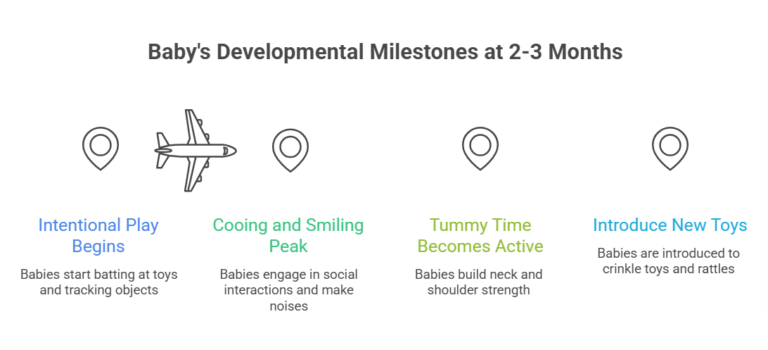
- 6 to 8 weeks (around 2 months): Cooing and soft vowel sounds
- 3 to 4 months: Squeals, growls, and more varied sounds
- 4 to 6 months: Babbling begins with sounds like ba, da, ma
- 9 to 12 months: First meaningful words
Each stage builds on the one before it. You will not even notice the transitions happening. One day it is cooing. Then it is mama.
As your baby grows, these early sounds turn into real words. Our full guide on how many words a toddler should say by age covers what comes after the first words land. For AAP-approved milestone guidance, HealthyChildren.org has reliable month-by-month benchmarks.
Milestones are a range, not a deadline
Cooing is not a test your baby needs to pass. Some babies coo often and loudly. Others are quiet observers who save everything up. Both can grow into perfectly talkative toddlers. You would not know the difference by age three.
Spend time talking, smiling, and responding. Those small everyday moments do more than any milestone chart. The chart tells you what is typical. You are the one actually building the language.
FAQ: cooing in infants
When do babies start smiling and cooing?
Usually between 6 and 8 weeks, around the 2 month mark. Up to 3 months is still completely normal.
What does cooing sound like?
Soft vowel sounds like ooo, aaa, or gentle gurgles. Nothing sharp or loud.
Is cooing the same as babbling?
No. Cooing comes first, around 2 months. Babbling starts later, around 4 to 6 months, with sounds like ba, da, or ma.
Does cooing mean my baby is happy?
Usually yes. Babies coo most when they feel calm, safe, and content.
What if my baby is not cooing yet?
Give it time. Some babies are quieter and take a little longer to experiment with sound. Mention it to your pediatrician if there is no vocalization at all by 3 to 4 months.
How can I encourage cooing?
Talk to your baby, make eye contact, respond to their sounds, and pause to let them reply. That is genuinely all it takes.
When should I see a doctor?
If by 3 to 4 months your baby rarely makes sounds, does not react to noise, or avoids eye contact, bring it up at your next pediatric visit.



5 Comments