When Do Babies Discover Their Feet? What It Predicts About Rolling
4 to 8 months, but not all at once. For newborns and young babies, feet exploration is completely normal and healthy. Problems only arise when major motor delays accompany it and that’s rare. Here’s exactly what the research says, when to actually worry, and what you can do about it today.
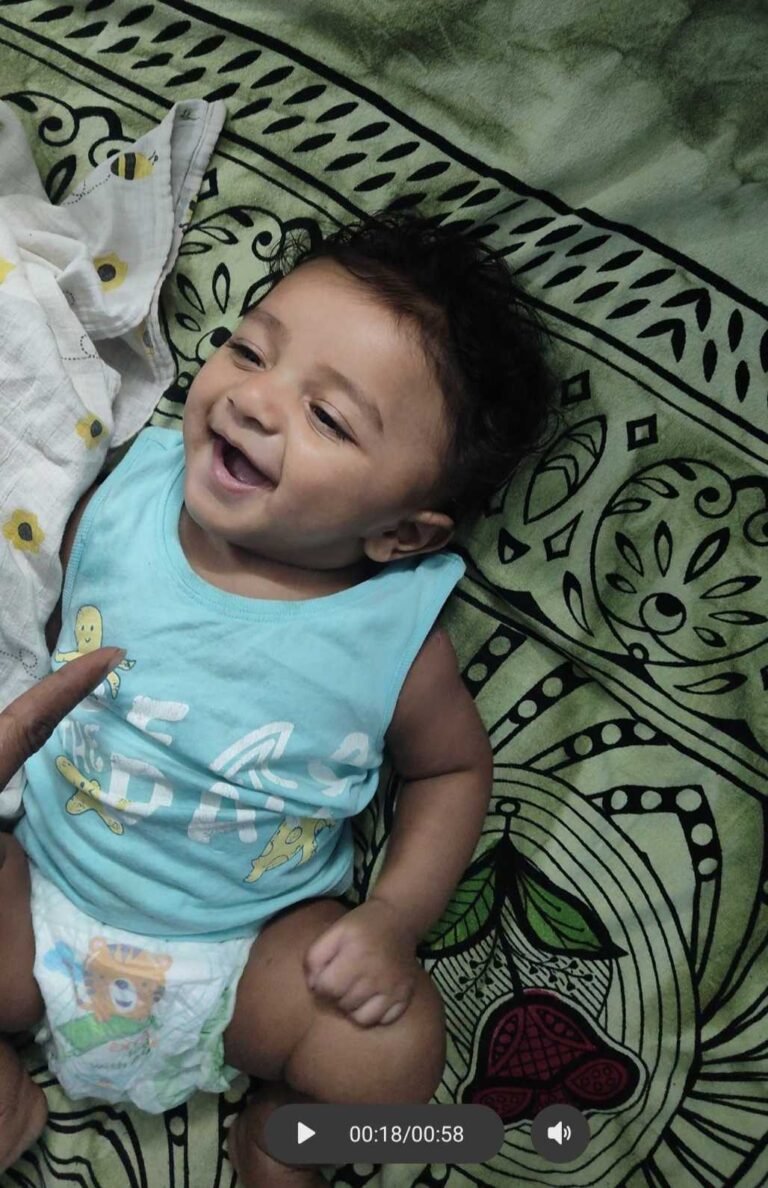
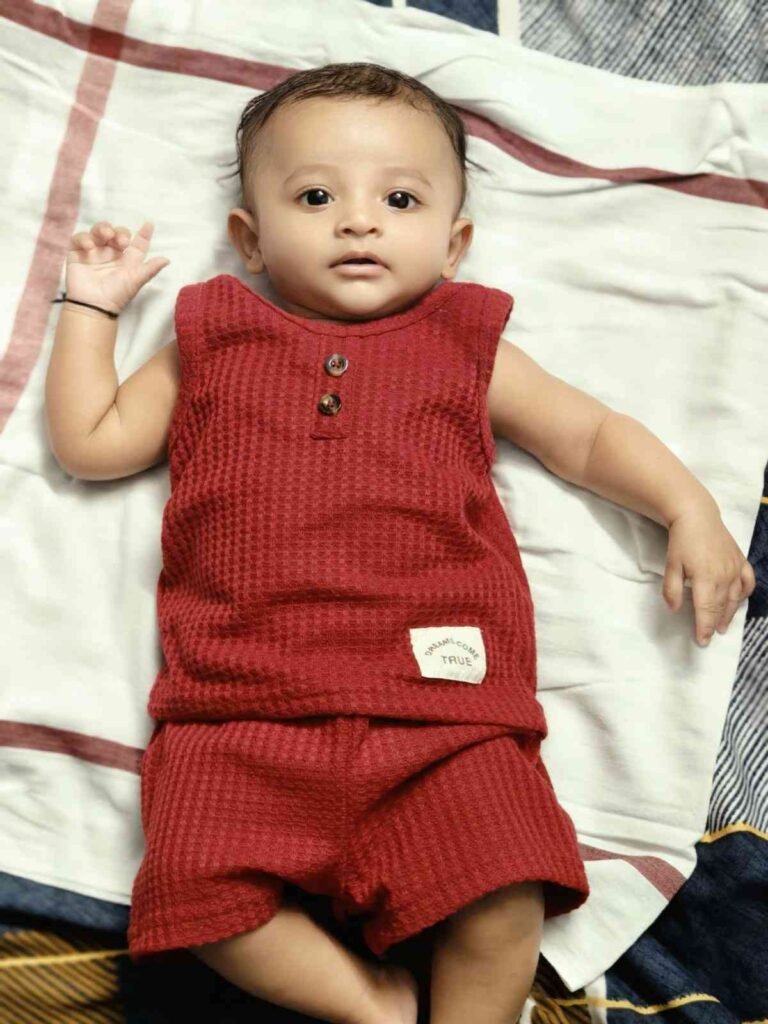
If you’re reading this, your baby is probably kicking away on the play mat while you quietly Google “is this normal?” May be nerves from pacifier teeth issues or Maybe a well-visit is coming up and you want to walk in prepared. Either way, you’re not overreacting this baby feet milestone trips up even experienced parents. Vihaan hit it at 4 months mid diaper change, feet shooting skyward, giggles everywhere. I had no idea it was a milestone until I looked it up.

Here’s the short version: most babies discover their feet between 4 and 6 months. The normal range stretches from 3 to 8 months. It signals real core strength the kind that predicts rolling and crawling. Let’s unpack it properly so you know exactly what’s normal and how to support it.
What Exactly Is Feet Discovery?
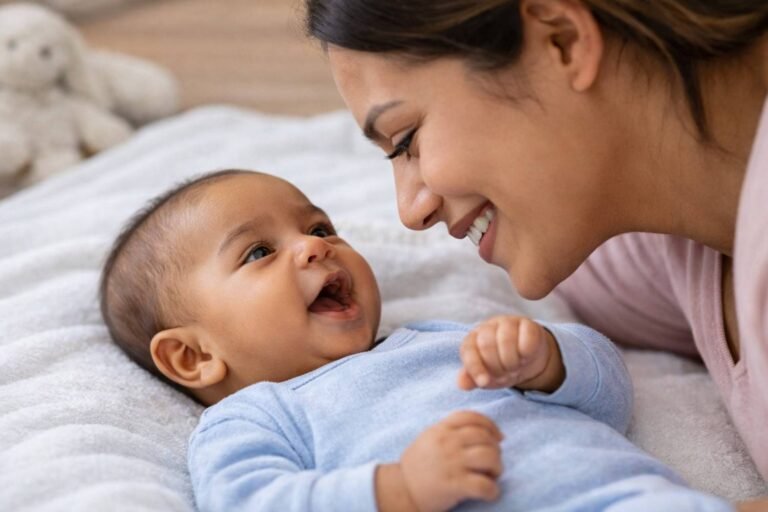
Baby feet discovery is when your infant first notices, reaches for, and plays with their own toes and feet. It sounds simple, but it requires serious core engagement your baby has to lift their legs, spot them, and coordinate their hands to grab. Pediatric PTs, AAP affiliated pediatricians, and developmental specialists worldwide track this as a key gross motor checkpoint, not a cute bonus milestone.
Do All Babies Hit This Milestone at the Same Time?
Nope, and the range is wider than most parents expect. Pathways.org marks 4 to 6 months as the typical window, but the full normal range runs from 3 to 8 months depending on core strength and individual development pace.
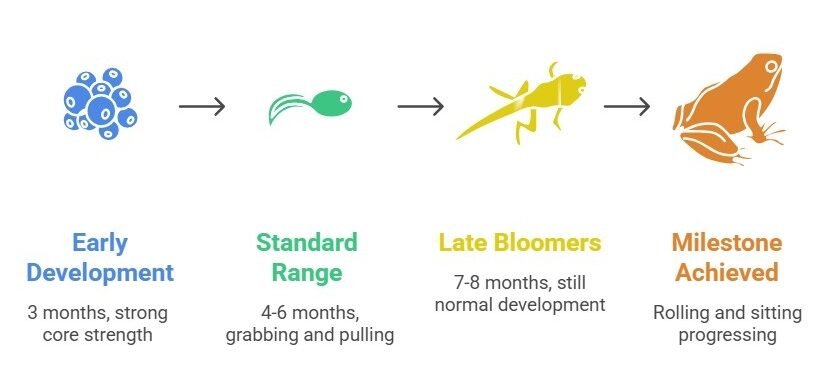
- Early birds (3 months): Strong core strength already developing often babies who got plenty of supervised tummy time from birth
- Standard range (4–6 months): Hands grab, feet pull toward mouth, rolling is usually right around the corner
- Late bloomers (7–8 months): Still completely normal, especially if other motor milestones like rolling and sitting are progressing on schedule
| When It Happens | % of Babies | Rolling Prediction |
|---|---|---|
| By 4 months | ~25% (early) | Roll by 5 months |
| 4–6 months | ~65% | Roll by 6 months |
| After 6 months | ~10% | Monitor by 7 months |
In our house, Vihaan was a 4-month grabber and Eeshaan hit it at 5½ months. Both crawled right on time proof that the range really does vary even within siblings.
When Do Babies Start Grabbing Their Feet vs. Just Noticing Them?
There are actually two phases most parents don’t realize are separate. The noticing phase comes first usually around 3 to 4 months when your baby spots their feet in the air, stares at them with genuine fascination, and kicks like they’re trying to shake hands with their own toes but can’t quite close the gap yet.
The grabbing phase follows 1 to 3 weeks later, once core strength catches up enough to tilt the hips, bring the feet into reach, and coordinate the hands to make contact. Vihaan spent almost two full weeks in the noticing phase feet shooting up, eyes wide, arms waving nowhere near them before the grab finally clicked one afternoon on the play mat. If your baby is staring at their feet but not grabbing yet, they’re right between the two phases. The grab is coming.
What Does Feet Discovery Actually Look Like in Real Life?
Forget the textbook diagrams. Here’s what you’ll actually see during everyday moments:
- Toes suddenly becoming fascinating during back play on the mat
- Hands reaching down while knees pull up toward the chest
- Feet-to-mouth acrobatics that look physically impossible but aren’t
- Extended staring and kicking the “feet are in view” phase before grabbing begins
- A tucked knee-chest position during tummy time as core strength builds
If you’re seeing these signs, celebrate your baby is right on track. If you’re not seeing them by 7 months, gentle encouragement (see the section below) plus a quick mention at your next pediatric visit is the right move.
Does Every Baby Who Kicks Eventually Get There?
Yes, virtually always. The AAP encourages leg movement from birth through supervised tummy time, and all that kicking is exactly what builds the core power needed for feet discovery. Think of the kicks as training feet grabbing is the graduation ceremony. The only time timing becomes a concern is when feet discovery is missing past 8 months alongside other motor delays, not on its own.
Will Late Feet Discovery Fix Itself?
In most cases, yes but the answer depends on your baby’s age:
Under 7 months: Encourage gently through activities below and keep watching progress. No pediatrician visit needed unless you notice other developmental gaps.
7 to 8 months: Bring it up at the 9-month well visit. Your pediatrician will check overall motor progression. About 95% of late babies catch up completely without intervention.
9+ months with no interest in feet: Request a physical therapy evaluation. Early PT intervention works best when started early waiting rarely helps.
When Should You Start Encouraging Feet Play?
AAP and CDC guidance breaks it down by age:
- Birth to 3 months: Supervised tummy time builds the kicking foundation
- 3 to 6 months: Active encouragement during play makes the biggest difference
- 6+ months: Feet play becomes natural as babies progress toward sitting and rolling
The sweet spot is starting daily barefoot play from 3 months before babies even show interest, the muscle memory is already building.
7 Easy Ways to Spark Feet Exploration
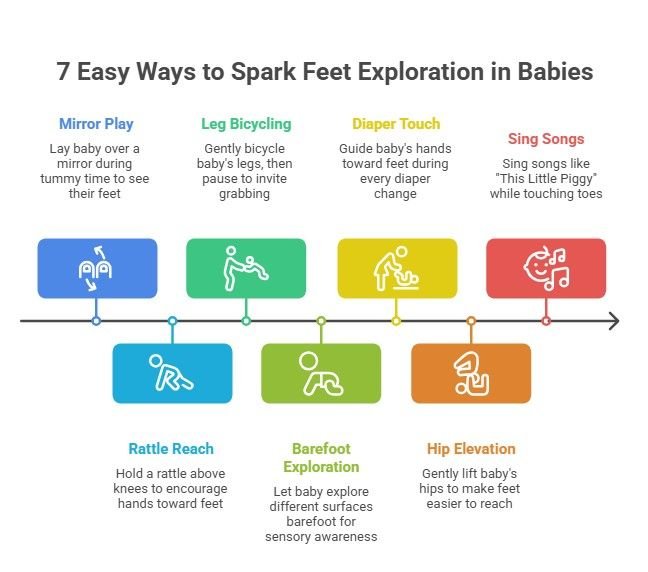
- Mirror Magic: Lay baby over a safe floor mirror during tummy time seeing their own feet triggers curiosity fast
- Toy Tease: Hold a rattle just above the knees; reaching for it naturally draws hands toward feet
- Cycle and Pause: Gently bicycle baby’s legs, then pause the stillness invites grabbing
- Texture Trail: Barefoot time across different surfaces (soft rug to crinkly mat) builds sensory awareness of feet
- Diaper Change Opportunity: Guide baby’s hands toward their feet during every diaper change it takes 10 seconds
- Hip Lift: Gently lift baby’s hips while they’re on their back to make feet easier to reach
- Sing and Touch: “This Little Piggy” or “Itsy Bitsy Spider” on the toes makes feet discovery a sensory rich experience
No expensive gym equipment needed. According to Physical Therapy for Infants, your hands and daily floor time outperform any activity gym on the market.
Feet vs. Hands Discovery: Which Comes First?
Hands almost always come first, typically between 2 and 4 months, since they’re closer to a newborn’s natural line of sight. Feet follow at 4 to 6 months once core strength and hip flexion improve. Both are midline crossing milestones meaning the brain is building the cross body connections that eventually support crawling and walking. If both seem delayed past 5 months, mention it at your next pediatric visit rather than waiting.
Do You Need Special Toys to Encourage Feet Play?
No. The AAP is consistent on this: supervised tummy time plus engaged parent interaction is the gold standard. Expensive activity gyms can supplement, but they don’t replace floor time with you. Vihaan did most of his feet discovery on a cheap foam mat the setup matters far less than the daily habit.
FAQ: Baby Feet Milestones
My 3-month-old is already grabbing their feet is that gifted?
It means your baby has excellent core strength for their age, which is genuinely great. Three months is early but well within the normal range. Keep doing whatever you’re doing plenty of tummy time and floor play is almost certainly the reason. Track other milestones alongside it (visual tracking, social smiling, head control, babbling) to get the full developmental picture at your 4-month visit.
My baby is 6 months and still not grabbing their feet should I worry?
Not yet. Six months is still within the normal window, especially if your baby is showing other signs of motor progress like rolling attempts, good head control, and active kicking. Try the 7 encouragement activities above consistently for 2 to 3 weeks. Most babies who haven’t grabbed yet will get there without any intervention rolling tends to happen around the same time and sometimes comes first.
My baby grabs their feet but isn’t rolling yet is something wrong?
This is actually very common and nothing to worry about. Feet grabbing and rolling use overlapping muscle groups, but rolling typically lags behind feet discovery by 1 to 2 weeks. If your baby is grabbing feet confidently, rolling is almost certainly coming very soon. Keep floor time open and unsupported babies need the freedom to attempt the roll on their own terms.
Should I tickle my baby’s feet to encourage discovery?
It’s fine occasionally, but avoid making it your main strategy. Tickling is a passive experience driven by you feet discovery is most valuable when your baby initiates it. The goal is self-led exploration, which builds both motor skills and sensory body awareness. Guide hands toward feet, yes. Tickle constantly, no.