10 Printable farm animal coloring pages free
Eeshan knew what a cow said before he had any idea what a cow looked like. That gap between the sound and the image is exactly what farm animal coloring pages fill. At 17 months he would point at the pig on a coloring page and say “oink” with more confidence than I had ever heard from him about anything. The naming connection happened through the page, not through a real farm visit.
Free printable farm animal coloring pages: all 8 animals, download here
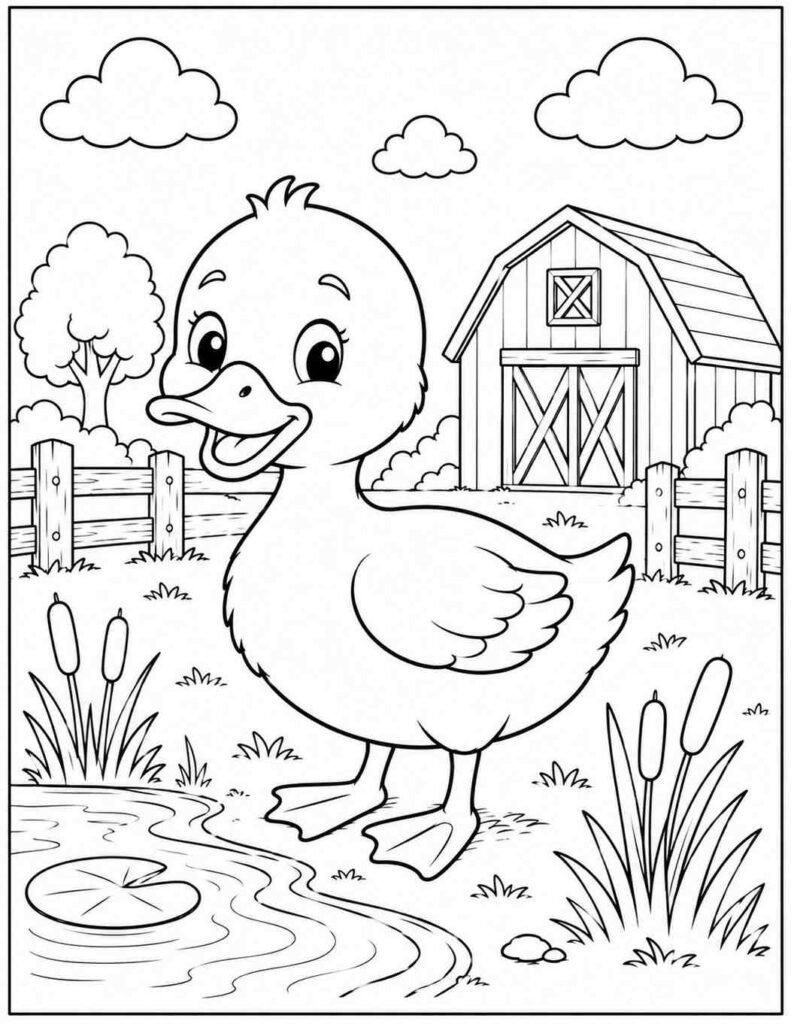
Eight coloring pages for farm animals printable at home, one animal per page, thick outlines built for toddlers 12 to 24 months. Each page has the animal’s name at the bottom and its sound in a bubble at the top so naming and colouring happen at the same time. Cow (Moo), Pig (Oink), Sheep (Baa), Horse (Neigh), Chicken (Cluck), Goat (Meh), Duck (Quack), Rooster (Cock-a-doodle-doo).
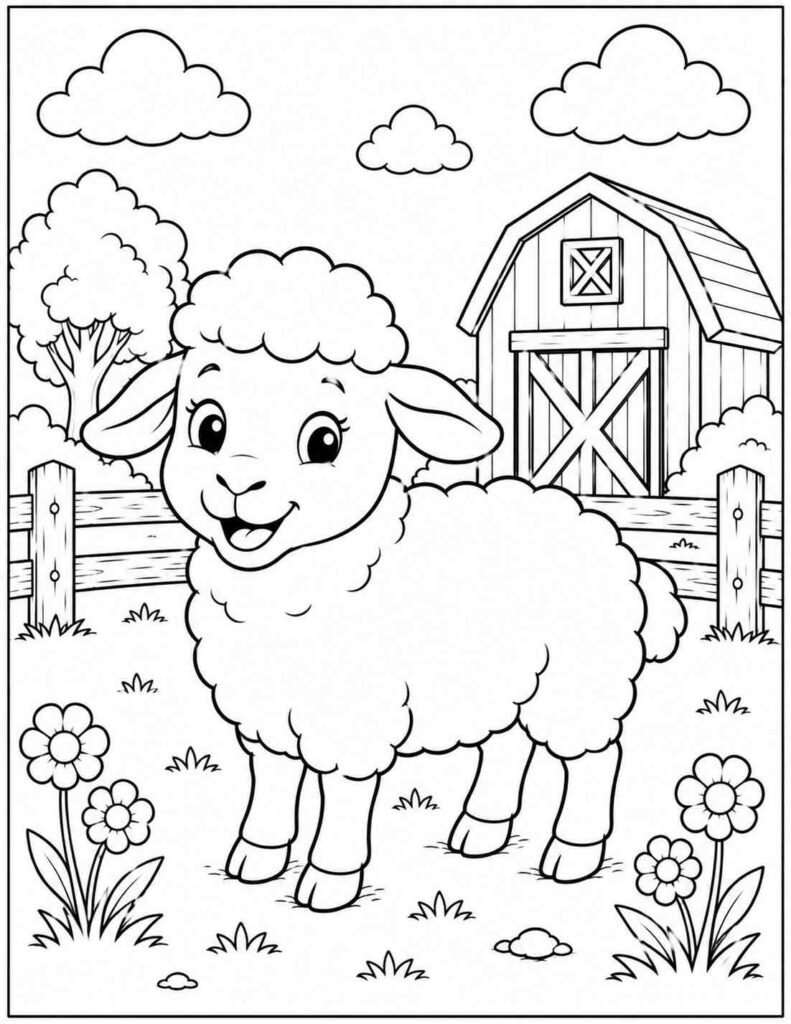
All free printable farm animals coloring pages in this set are US Letter size, print at standard settings, and have no background detail that would confuse a toddler’s crayon. One animal per page, as large as it can be while fitting the page.
Why farm animals work so well for printable farm animal coloring pages
Farm animals are in most toddlers’ vocabulary before their second birthday. The AAP developmental milestones include animal sound imitation from around 12 to 15 months, which means the sounds arrive before the visual recognition is fully established. A printable coloring pages farm animals set closes that gap: by colouring the cow while saying “moo,” the toddler is building the word-to-image connection that is foundational for later language development.
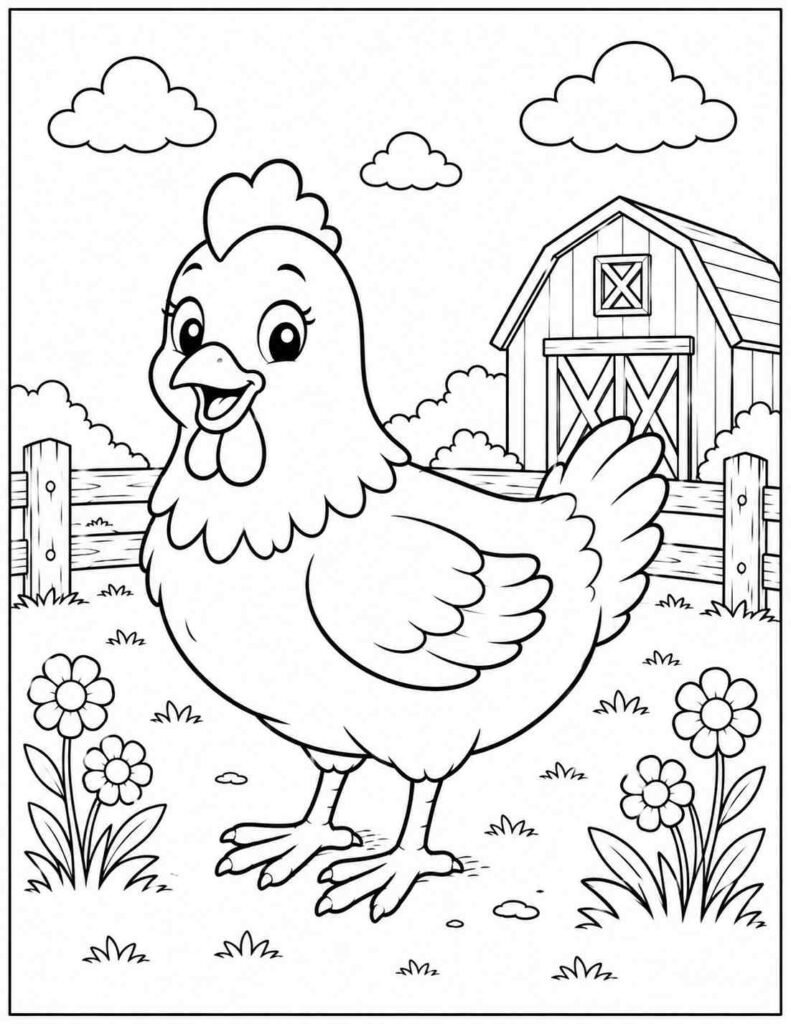
There is also a sensory element most parents do not think about. Eeshan would moo while he coloured the cow page, oink during the pig page. He was not following any instruction. The image triggered the sound automatically by 18 months. That kind of spontaneous labelling during an activity is exactly what speech and language therapists look for as a sign of healthy vocabulary development at this age.
These farm animals printables coloring pages are also a vocabulary tool. For more on how naming and language develop alongside activities at this age, our sensory activities guide covers the companion activities that support vocabulary development through play.
How to use farm animal coloring pages with toddlers by age
12 to 15 months: naming only, colouring is secondary
At this age the primary developmental value is naming, not colouring. Put down a printable coloring pages of farm animals sheet and say the animal’s name. Wait for any response, a sound, a look, a point. Then say the sound the animal makes and colour one stroke together. The colouring is an excuse for the vocabulary work, not the other way around. Keep sessions to 3 minutes maximum at this age.
15 to 18 months: wide strokes, crayon exploration
This is when intentional colouring begins. The toddler holds the crayon with increasing grip and makes deliberate marks on the page. Farm animal coloring pages work particularly well here because the thick outlines give a target without requiring fine control. The pig’s round body and the sheep’s fluffy circular outline are the easiest starting points at this age because they do not require staying in complex boundaries.
18 to 24 months: completing the animal
By 18 months, most toddlers can fill a large simple shape with colour using broad crayon strokes. The farm animals coloring pages free printable set is designed for this stage: the outlines are thick enough that a toddler’s crayon makes contact with the interior naturally, and the single-animal-per-page format gives one clear task rather than a busy scene. Eeshan completed his first full cow page at about 19 months, brown scribbles covering most of the outline with the confidence of someone who had been practising for months.
Printable farm animal coloring pages: tips that actually help
These are the things we worked out with Eeshan that made a noticeable difference:
Say the sound, not just the name. “This is a pig. The pig says oink” produces more engagement at this age than just “this is a pig.” The sound is printed on each page specifically for this reason. Point to it and say it every time you introduce the page.
Let the colour be wrong. A blue cow is a valid cow to a 17-month-old. Correcting the colour produces frustration and teaches the wrong lesson about colouring at this stage. The goal is confident mark-making, not accuracy. Accuracy comes later.
Print the same page multiple times. Toddlers at this age benefit from repetition far more than variety. Eeshan coloured the pig page seven times in one week. By the seventh time the pig outline was being coloured more intentionally than the first three combined. Repetition is how the motor skill actually develops.
Use fat triangular crayons, not regular ones. Standard crayons are too thin for the tripod grip most toddlers are still developing at this age. Chunky triangular crayons designed for toddlers produce better results and fewer broken crayons.
What comes next after farm animal coloring pages
Once the printable farm animal coloring pages feel easy, the natural next step is the broader animal set. Our free printable animal coloring pages hub covers the complete 10-animal baby and toddler set plus developmental guidance for the full 12 to 24 month range. The farm animal pages in this post are one cluster within that larger printable farm animal coloring pages collection.
The ocean and sea animal set is the other natural follow-on once farm animals are established. Farm animals are typically the first vocabulary cluster because most toddlers encounter them in books and songs first. Sea animals tend to follow because they introduce colours, fish, whale, crab, octopus, that toddlers find visually striking once they have the colouring habit established.
Frequently asked questions
What farm animals should I start with for toddler coloring pages?
Start with whichever animal your toddler already knows the sound for, usually the cow, pig, or duck. The sound connection makes the first colouring session immediately rewarding because the toddler recognises the animal on the page. Save more complex-shaped animals like the rooster and horse for after the simpler round shapes (pig, sheep, duck) are established.
How are these free printable coloring pages of farm animals different from other coloring sites?
Most farm animal coloring pages online are designed for preschool-age children who can manage thinner outlines and more complex scenes. The CribKind printable farm animal coloring pages are specifically designed for the 12 to 24 month window, with outlines three times thicker than standard coloring pages, one animal per full page, and no background clutter. The animal sound printed on each page also makes them a vocabulary tool, not just a colouring activity.
Can babies under 12 months use farm animal coloring pages?
Under 12 months, intentional crayon use is not yet developmentally expected. Babies at this stage benefit more from looking at and pointing to the animal images while a parent names them, rather than colouring. Using the printable farm animals coloring pages as flash cards at this age, one animal at a time with the sound, is a valid and useful activity even before the colouring begins.
How do I print the free farm animal coloring pages printable?
Download the PDF from the link above, open in any PDF viewer, and print at 100 percent scale on US Letter paper. Standard home printer settings work fine. For multiple colouring sessions with the same animal, print 4 to 5 copies of that page so the toddler can repeat without running out.
What other free printable coloring pages of farm animals exist beyond this set?
This set covers the 8 core farm animals most toddlers know first: cow, pig, sheep, horse, chicken, goat, duck, and rooster. For a broader animal selection including jungle and ocean animals, the National Geographic Kids coloring section and ABCMouse both offer additional free pages. The CribKind set is distinguished by its specific design for the under-2 age group rather than general kids.
From one dad to another
The farm animal pages were the ones Eeshan asked for by name first. Not by the page, but by the animal. “Pig?” at 18 months, pointing at the shelf where we kept the printed sheets. That kind of spontaneous request for an activity is what made me realise the printable farm animal coloring pages were doing more developmental work than I had given them credit for. The pig page was not just colouring. It was a naming activity, a fine motor session, and a vocabulary reinforcement all at once.
Download this farm animal coloring pages free printable set, print a few extra pig pages, and see which animal yours goes back to first.
For the fine motor skills that colouring practice builds at this age, our crafts for infants and toddlers guide covers the companion hands-on activities that develop grip and control alongside early colouring.
Saidesh is a dad of two, Eeshan and Vihaan, writing about what he actually tried, tested, and learned the hard way. CribKind covers baby development, sensory play, and real parenting for the first two years.