Screen free activities for kids
I started filming Eeshan during his wake windows at around 11 weeks, because I kept reaching for my phone to entertain him and then feeling terrible about it afterward. The videos made one thing clear: he didn’t need the screen. He needed something to look at, touch, or kick against.
That realization turned into a whole system of screen-free activities we’ve now run with two kids, across every age from the newborn stage through Vihaan’s second birthday. What follows is what actually worked, sorted by age so you’re not scrolling through ideas your baby can’t use yet.
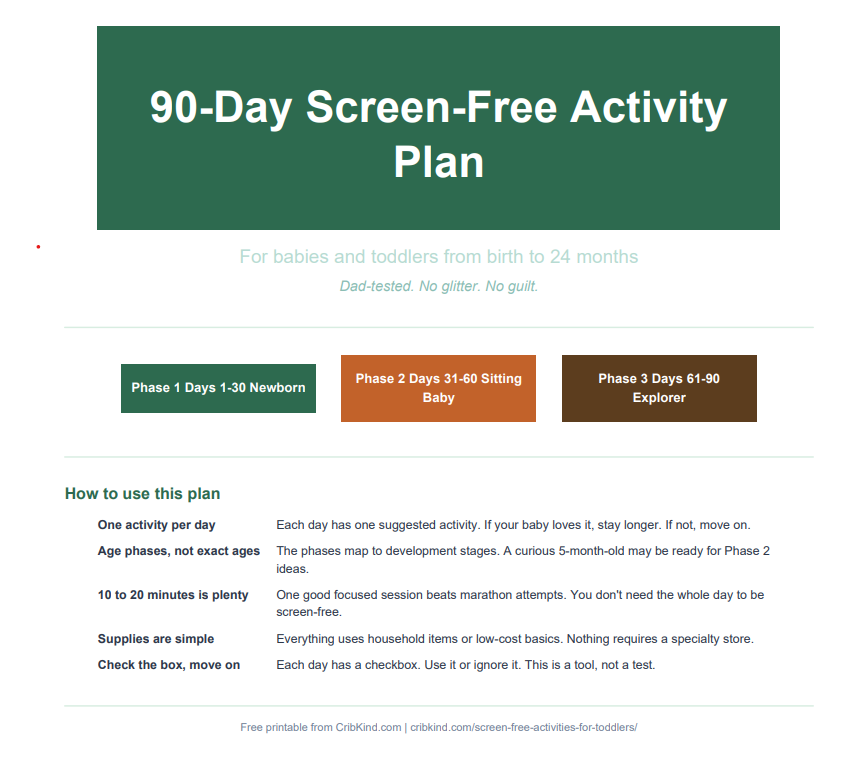
The 90 day screen free activity plan: one activity per day, sorted by age
After two kids and a lot of trial and error, we put together a simple 90-day plan that maps one activity per day to your baby’s developmental phase. No complicated system, no expensive kit. Just a day-by-day list you can actually use.
The plan runs in three phases:
Phase 1 (Days 1 to 30): Newborns from birth to around 3 months. Every activity focuses on sensory input, bonding, and language exposure. Sessions are 3 to 10 minutes. Your presence is the activity.
Phase 2 (Days 31 to 60): The sitting baby phase, roughly 3 to 8 months. Cause-and-effect play, tactile exploration, and object permanence games. Attention spans are longer now, and babies start showing clear preferences.
Phase 3 (Days 61 to 90): The explorer stage, 8 months through 24 months. Movement, pretend play, fine motor work, and independence-building. Eeshan was deep in this phase when he started actually helping sweep the kitchen floor with his mini broom. Vihaan hit it a little earlier, around 10 months, mostly just dumping everything out of every bin he could reach.
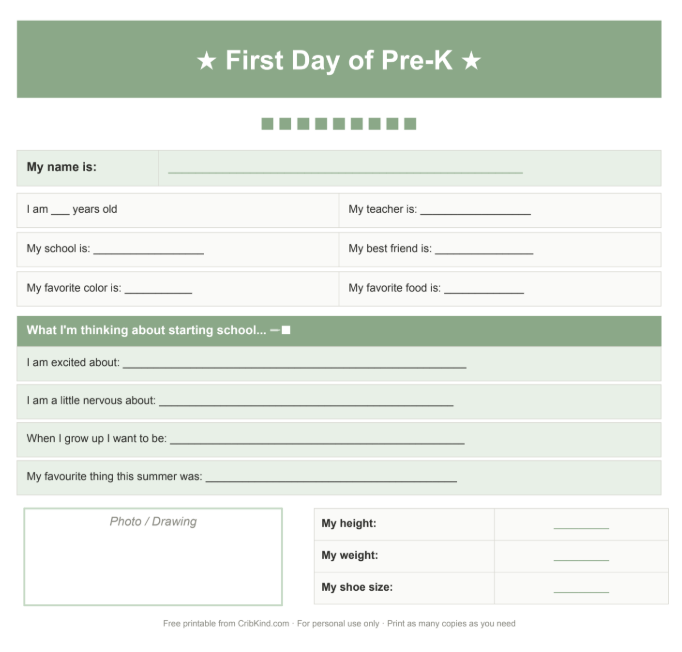
Each day has one activity, the developmental area it targets, what supplies you need (nothing fancy), and a rough time estimate. There’s also a notes page at the end to track what landed and what didn’t.
What are the best screen-free activities for babies and toddlers?
The best screen-free activities match the developmental stage. For newborns and young infants, that means high-contrast visuals, skin-to-skin contact, and simple sensory play. For 6 to 12 month olds, it shifts to cause-and-effect toys, floor exploration, and sound play. Toddlers from 12 to 24 months do best with open-ended materials, movement, and pretend play. No activity needs to be expensive or elaborate.
Below you’ll find activities broken into three age groups, a section on what to do when your toddler refuses everything, and answers to the questions I searched for most often during those early months.
Why screen-free time matters in the first two years
The American Academy of Pediatrics recommends avoiding screen use for children under 18 to 24 months, except for video chatting with family. That guideline surprised me when Eeshan was a newborn. I thought screens were a neutral tool. What the AAP is actually pointing to is an opportunity cost: every minute in front of a screen is a minute not spent on the face-to-face interaction, tactile exploration, and language exposure that build the brain fastest at this age.
Here’s what that actually meant for us in practice: when Eeshan was about 4 months old, even five minutes of back-and-forth “talking” during a diaper change was more developmentally useful than 20 minutes of a baby video. That’s not guilt-tripping. It’s just genuinely useful to know, because it reframes the goal. You’re not performing enrichment. You’re being present.
Screen-free activities for newborns and young infants (0 to 6 months)
Vihaan was our second, and I was much calmer about his “entertainment.” With Eeshan I’d panicked constantly, convinced he needed more stimulation. With Vihaan I learned the opposite problem is more common: overstimulation. Young babies don’t need a lot. They need the right things.
Here’s what we actually used in those first six months:
High-contrast visuals. Newborn eyes can’t resolve color well. Black-and-white patterns placed 8 to 12 inches from their face are genuinely attention-grabbing. We used a simple foam board with printed high-contrast images propped near the changing table. Eeshan would stare at it for minutes, which felt like forever when you’re sleep-deprived.
Tummy time variations. We used three setups: flat on the floor, chest-to-chest with a parent, and over a small rolled towel to reduce arm fatigue. Each position builds different muscle groups. Vihaan hated flat tummy time for the first six weeks. Chest-to-chest saved us. From there he gradually accepted the floor version once his neck got stronger, around 10 to 11 weeks.
Sensory bottles. Fill a sealed water bottle with water, a few drops of food coloring, and some glitter glue. Hold it for them while they stare at it. Easy, free, and Eeshan loved it from about 3 months on. We have a full post on sensory bottles if you want to make a few variations.
Tracking games. Hold a bright object, a red ball, a rattle, or even just your fist, about 12 inches from their face and move it slowly from side to side. At around 2 to 3 months, babies start following movement with their eyes. Doing this for 2 to 3 minutes is a legitimate activity with developmental return.
Skin-to-skin and talking out loud. This one sounds too simple to count, but it’s genuinely the most important one on the list. Narrating what you’re doing, “I’m changing your diaper now, the wipe is cold, sorry about that”, builds language exposure. The Zero to Three organization calls this “parentese,” and the research on its impact on language development is solid.
Screen-free activities for babies 6 to 12 months
This is when things got genuinely fun. Eeshan started sitting at around 7 months, and that changed everything. He could participate in activities rather than just observe them. The sensory activities we’d been doing shifted dramatically once he had hands that worked on purpose.
Cause-and-effect play. Anything where the baby’s action produces a result. Banging a wooden spoon on a pot. Dropping a ball into a container. Pressing a button that makes a sound. Eeshan’s absolute favorite from 8 to 11 months was a simple set of stacking cups. He’d knock them over before I’d finished stacking them every single time, cackling like it was the funniest thing in the world. It probably was.
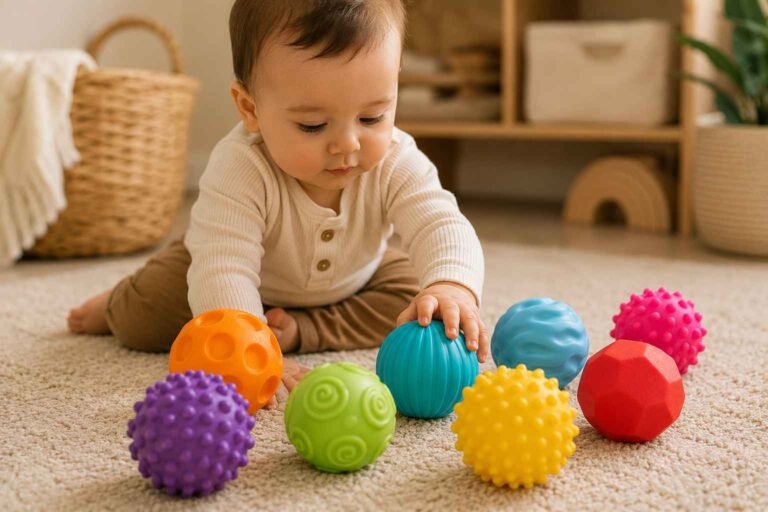
Simple sensory bins. A shallow plastic bin with a few cups of dry oatmeal, some measuring spoons, and a few small toys. Watch them like a hawk (no choking hazards, and you’ll want to be on floor level). Vihaan started this at 9 months. He mostly just poured oatmeal on himself, but his focus was remarkable. We’ve got a full breakdown of sensory play ideas for infants if you want ages-and-stages detail.
Object permanence games. Hide a toy under a blanket or cup and let them find it. This sounds almost insultingly simple. But object permanence, knowing things exist when you can’t see them, is a real cognitive milestone that develops between 6 and 12 months. Every round of “where did it go?” is a mini lesson.
Water play in the tub. Beyond the actual bath, a baby-safe shallow amount of water with a few cups and a rubber toy is all you need. Pouring, splashing, and watching water move is rich sensory input. We’d do this two or three times a week on days when we needed something that would actually hold Eeshan’s attention for more than four minutes.
Peek-a-boo, still a classic. It works for a reason. It’s not just fun, it reinforces object permanence, practices social reciprocity, and produces genuine laughter, which is its own reward. I’d play peek-a-boo with a dish towel during meal prep just to keep Vihaan engaged while I cooked. It bought me a solid 10 to 15 minutes.
Screen-free activities for toddlers 12 to 24 months
This age range is where the challenge actually shifts. Young babies are easy to occupy. Toddlers have opinions. Vihaan at 14 months would spend 90 seconds on something and then throw it. We had to learn the difference between activities that genuinely hold attention and activities that look good in theory but don’t survive contact with an actual toddler.
Open-ended art. A piece of paper, one chunky crayon, and five minutes of sitting beside them. Not teaching, just doing it alongside. At 12 to 14 months, making a mark on paper is the activity. They’re not making art. They’re learning that they caused something to happen. By 18 months, Vihaan would do this for 15 to 20 minutes unprompted if I was sitting near him with my own paper.
Play dough. This one earns its reputation. Homemade or store-bought, it doesn’t matter. Squeezing, poking, rolling, and pulling sensory input across multiple modalities. The fine motor development return from play dough is real: pinching and pressing build the hand strength that eventually goes into writing. Eeshan couldn’t care less about the developmental benefit. He cared that it was squishy.
Movement breaks. Toddlers this age aren’t built for sustained sitting. We built movement into every unplugged stretch of the day: crawl across the room, climb over a pillow pile, carry a laundry basket from one end of the hall to the other. Gross motor play from 12 to 24 months matters for both fine and gross motor development, and the simplest version is just giving them something heavy to push or something safe to climb.
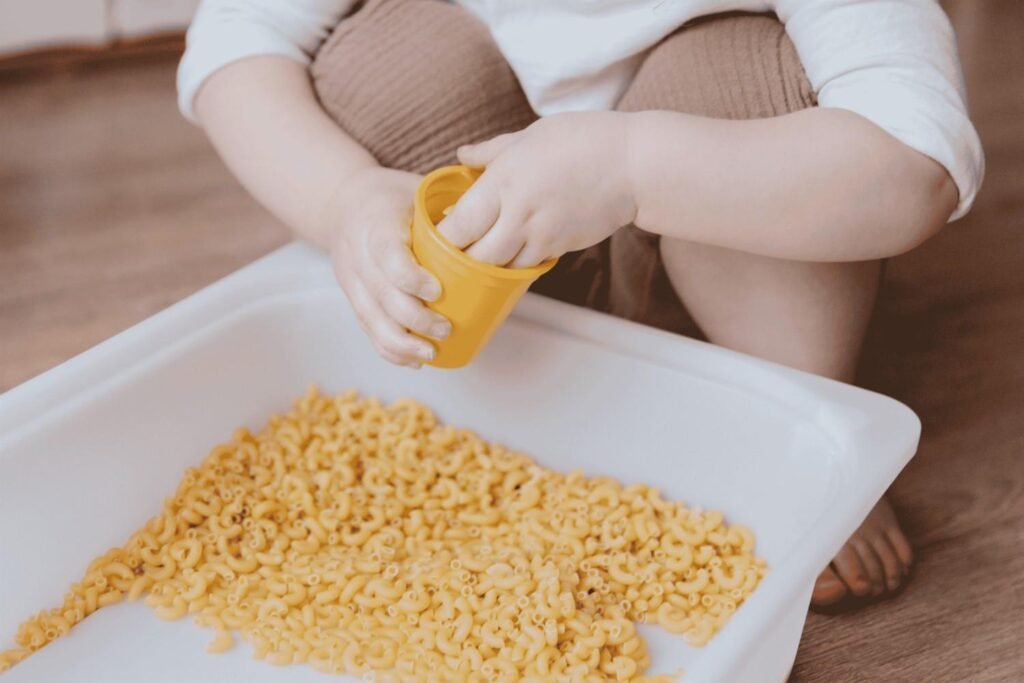
Simple household tasks. Toddlers this age desperately want to participate in what adults do. Putting socks in a drawer. Wiping down a low surface with a cloth. Transferring dry pasta from one bowl to another. These aren’t “chores” at this age. They’re fine motor skill builders dressed up as helping. Vihaan was obsessed with the broom from around 15 months. He swept the same corner of the kitchen for 20 minutes one afternoon while I cleaned nearby.
Pretend play starters. All you need is a small pot, a wooden spoon, and some plastic fruits. Toss in a stuffed animal that “needs” to be fed. Even a cardboard box that becomes a boat. At 18 to 24 months, pretend play is just beginning, and you don’t need to buy anything special. Eeshan’s favorite at 20 months was feeding his stuffed elephant with a plastic spoon from the play kitchen. He’d do this for half an hour. We’d just make sure he felt observed, not hovered over.
How to actually build screen-free time into daily life
The gap between knowing good activities and actually doing them daily is real. We didn’t crack this until Eeshan was about 16 months. The system that worked for us was simple: we picked one predictable unplugged window each day and protected it like a nap. For us it was the 45 minutes between Eeshan’s post-nap wake-up and dinner prep. Same time, same general structure, same low-stimulation setup.
A few things that made a real difference:
Toy rotation. We kept maybe a third of toys out at any time and rotated the rest every week or two. The returned toys felt new again. Vihaan would light up for a basket of things he hadn’t seen in 10 days like they were Christmas morning. The novelty effect is real, and it’s free.
Low-prep defaults. On harder days, we had a mental list of things that needed zero setup: go outside, fill the water table, get out the play dough, put on music and dance. Not every activity needs to be curated. Some days “we went for a walk and kicked pine cones” is the whole thing, and that’s fine.
Following their lead. When Eeshan was 9 months old, he went through a phase where he’d spend 20 minutes pulling scarves out of a tissue box I’d made for him. Just pulling. Completely absorbed. The research on sensory activities for infants and toddlers points to this exact kind of focused, open-ended play as building the attention span and self-regulation that shows up later in school readiness. He wasn’t doing anything impressive. But he was doing something genuinely useful.
Screen-free activities sorted by developmental area
| Activity | Age range | Developmental area |
|---|---|---|
| High-contrast visual tracking | 0 to 3 months | Visual development, attention |
| Chest-to-chest tummy time | 0 to 4 months | Head and neck strength |
| Sensory bottles (supervised) | 3 to 8 months | Visual tracking, cause-and-effect |
| Talking out loud / narrating | 0 to 24 months | Language acquisition |
| Stacking cups, knock-down play | 6 to 12 months | Cause-and-effect, problem-solving |
| Dry oatmeal sensory bin | 8 to 14 months | Tactile input, fine motor |
| Object permanence games | 6 to 10 months | Cognitive development |
| Play dough | 12 to 24 months | Fine motor, sensory processing |
| Pretend play (kitchen, animals) | 15 to 24 months | Language, imagination, social |
| Household task participation | 12 to 24 months (what Vihaan loved) | Fine motor, independence |
Frequently asked questions about screen-free activities
How many hours a day should a toddler be screen-free?
The American Academy of Pediatrics recommends no screens at all for children under 18 months (except video calling), and very limited use for children 18 to 24 months. In practice for most families, building two to three dedicated screen-free windows of 30 to 60 minutes each is a realistic starting point. You don’t need the entire day to be screen-free for the activities to be worth doing.
What are the best screen-free activities for a 12-month-old specifically?
At 12 months, the best activities involve cause-and-effect (stacking and knocking, dropping objects into containers), basic sensory play (water, play dough, dry oatmeal), and movement. Pretend play is just starting: a simple toy phone, a small pot and spoon, or a stuffed animal to “feed” can all hold attention at this age. Short repetitive activities work better than anything complicated.
My toddler won’t do any screen-free activity for more than two minutes. Is that normal?
Yes. A 12 to 15 month old who sustains attention on one thing for two to four minutes is actually doing fine. Attention spans this age are short by design. The goal isn’t sustained engagement with one activity. It’s a series of short interactions across the day. Keep activities low-prep so you can transition quickly between them without frustration.
Are sensory bins safe for babies under one year?
Only with direct supervision and age-appropriate materials. For babies under 12 months, skip any loose small items (beads, buttons, small toys) and use materials like water, oatmeal, or large fabric pieces that can’t be choked on. We didn’t use sensory bins with Eeshan until he was 9 months and had good sitting balance. Being on the floor at their level and watching their hands the whole time is non-negotiable at this age.
What should I do on days when screen-free time just isn’t working?
Go outside. This is the single most reliable reset we found across both kids. Even five minutes outdoors, sidewalk, backyard, front steps, changes the sensory environment completely and often breaks a spiral. If outdoor time isn’t an option, a bath does the same reset. If neither is possible, a screen for 20 minutes is not a parenting failure. It’s a Tuesday.
Do screen-free activities need to be educational to count?
No. Play is the work of early childhood. A toddler kicking a cardboard box across the kitchen floor is doing real developmental work: proprioception, gross motor control, cause-and-effect reasoning, and problem-solving. Nothing on that list requires a labeled curriculum. The activities that look the simplest often build the most.