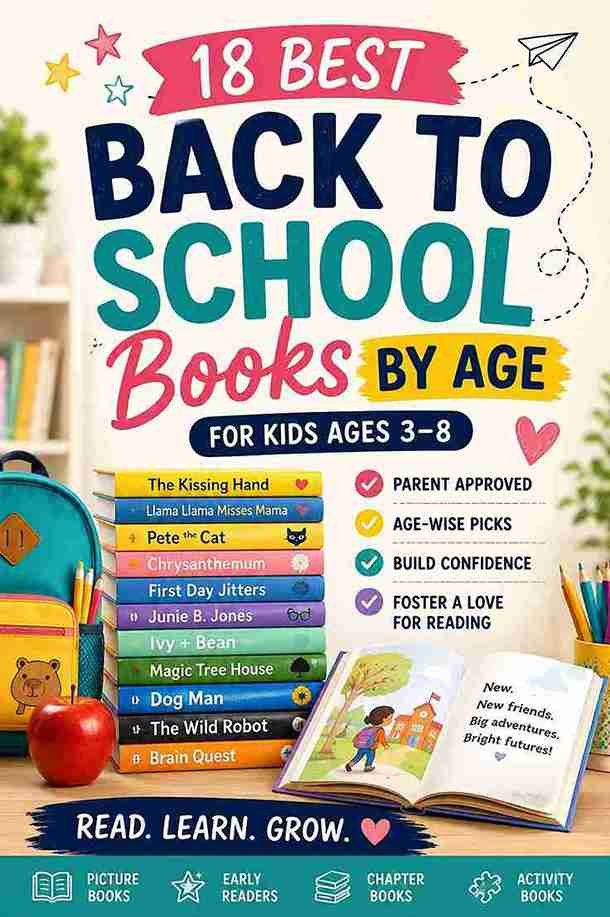
18 Best Back to School Books by Age
I bought Eeshan eleven books the August he started kindergarten. Nine sat on the shelf. Two of them he read until the spines cracked. I’d picked mostly based on covers and reviews from sites that hadn’t tested them with an actual five-year-old. Six years of first grade later, I have a much shorter list of what actually works, sorted by age and reading level, with honest notes on which ones are worth buying and which ones you can borrow once and return.
This list is different from our back to school read alouds guide, which focuses on emotional prep picture books for the first week of school. This post is the shopping guide: what to buy, for which age, at which reading level, and whether it is a once-from-the-library book or a read-it-ten-times book worth owning. Back to school books for kids cover more ground than first-day nerves, and the list below reflects that.
Back to school books for preschool, ages 3-4
Preschool is the first time most children separate from their parent for a significant part of the day. The books for this age have one job: making that separation feel survivable. Spandana has used all four of these in her classroom and read them at home with Eeshan. The two she would buy without hesitation are listed first.
The Kissing Hand by Audrey Penn [Best for separation anxiety]
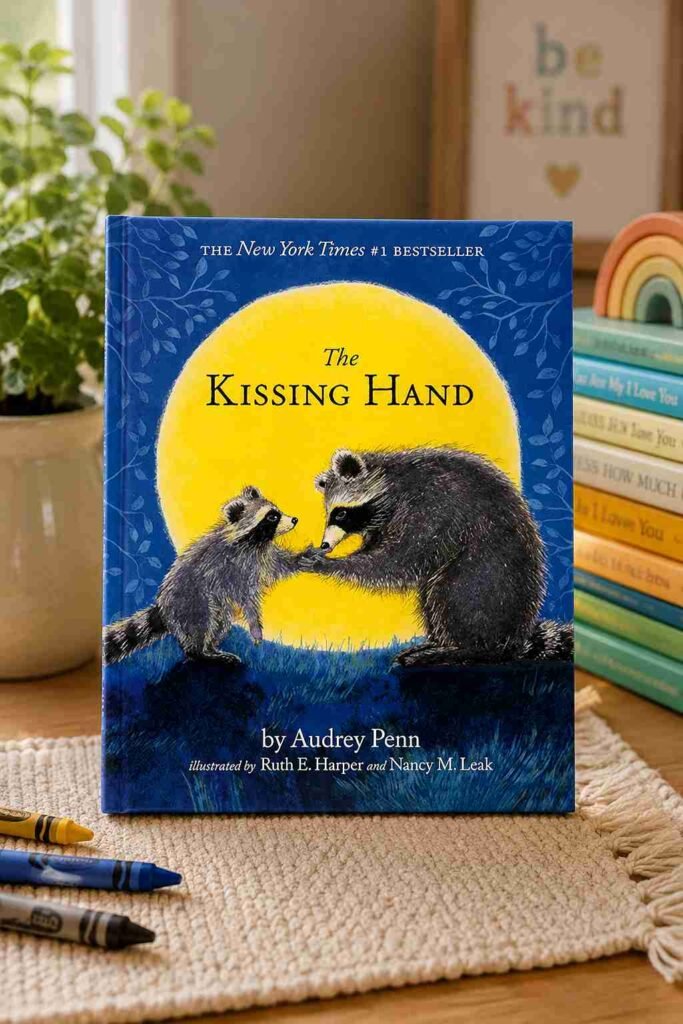
Chester the raccoon doesn’t want to go to school. His mother kisses his palm and tells him that whenever he misses her, he can press his hand to his cheek and feel her love there. Chester does the same for her before he goes.
In the classroom this is the first-day book every year without exception. The kissing hand becomes a real ritual: children press their palms to their cheeks during the hardest moments of the day. Eeshan still asked for it in second grade on days he was anxious about something, which tells you everything about its staying power across ages.
Buy vs. borrow: Buy. This one gets re-read every August for at least two or three years. The replay value at drop-off alone is worth the purchase. Some editions include a small plush raccoon, which drives up the price significantly. The book alone is enough.
Llama Llama Misses Mama by Anna Dewdney [Best realistic preschool drop-off story]
Llama arrives at preschool, Mama leaves, Llama misses her, the teacher helps, and by afternoon it’s okay. No magic fix. Just the actual sequence of what happens at a preschool drop-off, shown without skipping the sad part.
This is the most accurate picture book about a preschool morning Spandana has found in six years of classroom reading. Parents tell her their children ask for this one specifically before their first week starts because it shows exactly what will happen, including the part where it gets better.
Buy vs. borrow: Buy. The Anna Dewdney Llama Llama series has strong replay value across multiple preschool seasons. If you have more than one child going through preschool, this one earns its shelf space.
Pete the Cat: Rocking in My School Shoes by Eric Litwin and James Dean [Best for cool-kid confidence]
Pete walks through his school day singing. Cafeteria, library, gym, math. Whatever happens, Pete says it’s all good. The repetition makes the school day feel predictable and manageable, which is exactly what a child afraid of the unknown needs most.
The song transfers into real life faster than most parents expect. Vihaan started saying “it’s all good” unprompted when minor things went wrong at his first preschool, which is precisely the self-regulation the book is designed to build. Not every picture book produces that kind of carry-over.
Buy vs. borrow: Buy. The song drives very high replay value. If your child is the type who finds repetition comforting, this stays on rotation for months.
Daniel Tiger Goes to School by Angela C. Santomero [Best for Daniel Tiger fans]
Daniel is nervous about going to school, meets his teacher and new friends, and learns the classroom routines. Simple, warm, and very specifically set in a preschool environment that children who watch the show will recognize immediately.
This works for children who already love the television show. Character recognition shortens the emotional distance between the page and the child’s own experience. For kids who don’t watch Daniel Tiger, the other three picks above will land better.
Buy vs. borrow: Borrow. Unless your child is deeply attached to the character, this one is a library pick. It’s effective for one or two reads before school starts, not a long-term keeper.
Back to school picture books for kindergarten, ages 5-6
Kindergarteners have more specific anxieties than preschoolers: they worry about being teased, about not knowing the rules, about whether other kids will like them. The back to school picture books in this section address those concerns without talking down to five and six year olds, which is harder to pull off than it sounds.
Chrysanthemum by Kevin Henkes [Best for kids worried about being teased]
Chrysanthemum loves her name until she starts kindergarten and the other kids make fun of it for being long and unusual. Then a beloved music teacher changes the classroom dynamic entirely with one revelation.
This is the single most useful book Spandana knows for any child worried that something about them, a name, a way of talking, a family difference, will make them a target. The resolution is earned and specific, not generic “be yourself” advice. She has read it every year since her second year of teaching and it consistently sparks the longest classroom conversations of the back-to-school week.
Buy vs. borrow: Buy. Replay value across multiple grade levels. This is a real story, not just a lesson, and children return to it on their own.
First Day Jitters by Julie Danneberg [Best for universal first-day nerves]
Sarah absolutely does not want to go to school. The last page reveals that Sarah is the teacher, not a student. It’s a classic plot twist and it lands every single time, even with children who have been told what to expect.
For kindergarteners, the realization that their teacher is also nervous every year does something real: it equalizes the experience. The teacher is not all-powerful and perfectly comfortable. She’s in the same boat, just hiding it better. That’s a useful thing to know on day one.
Buy vs. borrow: Borrow. Best read once or twice before school starts. After the twist is known, the re-read value drops significantly. A library copy works perfectly.
David Goes to School by David Shannon [Best for classroom rules without preaching]
David breaks every single classroom rule. He runs in the hallway, chews gum, cuts in line, and yells. Each page is one rule broken, told with complete visual chaos and zero lecture. The children laugh. Then they start discussing which rules their school has too.
This is the best back to school book Spandana knows for introducing expectations without turning it into a warning. Children read David as funny, not as a cautionary tale, and the rule-discussion that follows happens naturally rather than being forced.
Buy vs. borrow: Borrow first. If your child asks for it repeatedly, buy. The replay value varies a lot by child.
All Are Welcome by Alexandra Penfold [Best for belonging and diversity]
Rhyming text follows a school day where every kind of child is explicitly welcomed. Different families, different abilities, different cultures. The refrain “all are welcome here” runs throughout and children remember it.
For children entering a school where they might feel different in some way, this does the most direct job of showing them that school is built specifically for all of them. The illustrations are genuinely warm rather than instructionally diverse, which makes the message feel real rather than performed.
Buy vs. borrow: Buy if needed. If belonging is your child’s primary concern, this one earns its place. If it isn’t, borrow once.
Buy vs. borrow: quick reference for all 18 back to school books
| Book | Best age | Best for | Buy or borrow |
|---|---|---|---|
| The Kissing Hand | 3-5 | Separation anxiety | Buy |
| Llama Llama Misses Mama | 3-4 | Drop-off reality | Buy |
| Pete the Cat School Shoes | 3-5 | Cool-kid confidence | Buy |
| Daniel Tiger Goes to School | 3-4 | Daniel Tiger fans | Borrow |
| Chrysanthemum | 5-7 | Fear of being teased | Buy |
| First Day Jitters | 5-7 | Universal nerves | Borrow |
| David Goes to School | 5-7 | Classroom rules (funny) | Borrow first |
| All Are Welcome | 4-7 | Belonging | Buy if needed |
| Frog and Toad Are Friends | 5-7 | First chapter reading | Buy |
| Junie B. Jones: First Grader | 6-7 | School life chapter book | Buy |
| Ivy and Bean (Book 1) | 6-8 | School friendships | Buy |
| Horrible Harry in Room 2B | 6-8 | Classroom chapter book | Buy first |
| Big Nate: In a Class by Himself | 7-9 | Reluctant readers | Buy |
| Clementine | 7-9 | Creative, unconventional kids | Buy if fits |
| Diary of a Wimpy Kid | 8+ | School humor | Buy (buy two) |
| Brain Quest (grade-specific) | K-5 | Skills practice | Buy |
| Highlights Hidden Pictures | 4-8 | Focus building | Buy one collection |
| Wipe-Clean Learn to Write | 3-6 | Preschool readiness | Buy |
Back to school books for early readers, ages 6-7
This is the section most back to school book lists skip entirely. By first grade, many children are ready to move past picture books into early chapter books, and the first months of the school year are when they need a book that feels grown-up but stays manageable. These four earn their shelf space.
Frog and Toad Are Friends by Arnold Lobel
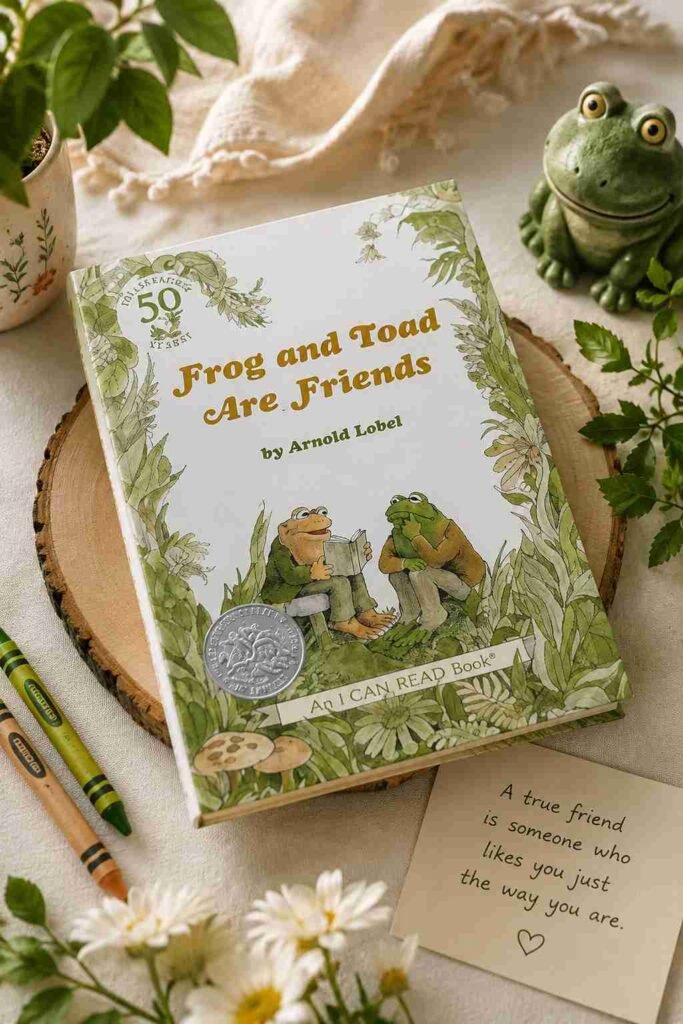
Five short stories about two best friends, told in simple text with genuine humor and real emotional warmth. Each story is complete in itself, which makes it perfect for a child not yet ready for cliffhanger chapters.
Eeshan read this one four times in a single month when he was six. The friendship between Frog and Toad reads as genuinely real rather than instructional, which is unusual at this reading level. It earns its reputation as the classic first chapter book for a reason that has nothing to do with awards.
Buy vs. borrow: Buy. Classic with very high replay value. Inexpensive and durable enough to last through multiple children.
Junie B. Jones: First Grader (At Last!) by Barbara Park [Best school-life chapter book for grades 1-2]
Junie B. starts first grade with strong opinions about all of it: the teacher, the reading group, the lunch situation, whether anyone will be her friend. She is frequently wrong and makes things worse. That’s exactly why children love her.
The Junie B. Jones series is the most school-specific early chapter book series Spandana has found. Her experience mirrors what many first graders feel but don’t have words for. Starting with First Grader (At Last!) rather than the kindergarten books gives incoming first graders the most immediately relevant entry point.
Buy vs. borrow: Buy. The series has 27 books. If your child likes the first one, they’ll want the rest. Book one is the commitment.
Ivy and Bean (Book 1) by Annie Barrows [Best for school friendships, ages 6-8]
Ivy and Bean are neighbors who don’t expect to like each other and end up best friends after working together on a prank. Most of the action takes place at home and school, and the friendship develops in ways that feel completely unforced.
This is the series Spandana recommends most often to parents of girls at a 6-8 reading level who are nervous about making friends at a new school. The characters are specific and funny rather than generically nice, which makes them believable in a way that directly-instructional friendship books are not.
Buy vs. borrow: Buy. Strong series with 14 books. Book one is the test, and if it lands, the rest follow naturally.
Horrible Harry in Room 2B by Suzy Kline [Best classroom chapter book for reluctant boy readers]
Harry loves gross, strange, and unusual things. The series follows him through a full school year in Room 2B with a teacher who genuinely likes him despite everything. The school setting is completely realistic and specific.
This is one of the few early chapter book series set almost entirely inside a real classroom, which makes it useful for children who want to know what the school experience actually feels and sounds like from a peer’s perspective. Boys who resist reading often get hooked because Harry is funny in ways they recognize.
Buy vs. borrow: Buy the first, then decide. The series has 38 books, so this is a significant commitment if they love it. One book in is enough to know.
Back to school books for second grade and up, ages 7-8
By second grade, the back-to-school concern shifts from drop-off to social life: friendships, fitting in, classroom dynamics, and finding their identity as a reader. These three cover that territory well, and all three are set substantially in school environments.
Big Nate: In a Class by Himself by Lincoln Peirce [Best for reluctant readers ages 7-9]
Nate Wright is convinced he’s destined for greatness despite consistently being in trouble at school. The combination of illustrated panels and prose makes it feel lighter than a chapter book while still giving the reading-independently satisfaction of one.
This is the series Spandana recommends most often to parents of reluctant readers. The school setting is completely realistic, the humor lands for 7-9 year olds specifically, and children who claim they don’t like reading frequently ask for the next book in the series on their own. That unprompted request is the goal.
Buy vs. borrow: Buy. The series has 14 books. If book one lands, they will want all of them.
Clementine by Sara Pennypacker [Best for creative, unconventional kids]
Clementine is in third grade and has a very creative brain that doesn’t always cooperate with classroom expectations. She is not the easiest student. She is also completely compelling and genuinely kind.
This series is specifically for children who feel like they’re “too much” for school, too energetic, too distracted, too creative. For that child, this series lands with real weight rather than just entertains. Eeshan read the first two books over one school week the fall he was seven.
Buy vs. borrow: Buy if your child matches the description. Otherwise borrow first to test the fit.
Diary of a Wimpy Kid by Jeff Kinney [Best school humor, ages 8+]
Greg Heffley navigates middle school with a very skewed sense of his own importance and a relentless series of social disasters. The illustrated diary format is approachable for reluctant readers and genuinely funny for everyone else.
Greg is not a role model, and the book doesn’t pretend he is. Some parents find the humor mean-spirited in places. What it does extremely well is capture the social experience of school, specifically the gap between how things feel at 8-11 and how they actually are, with remarkable accuracy.
Buy vs. borrow: Buy, and buy two. The series has 18 books. Children finish one the day they get it.
Back to school activity books and workbooks
These three are the only activity books Spandana recommends without caveats. They’re specific enough to be genuinely useful and low-pressure enough to be done voluntarily.
Brain Quest Workbook (grade-specific) [Best skills-maintenance book]
Curriculum-aligned activity pages covering math, reading, writing, and science, calibrated to the specific grade your child is entering. Each page is short, which keeps the sessions from becoming a chore for either the child or the parent supervising.
Buy the grade your child is entering, not the grade they just finished. Spandana uses these with Eeshan the last two weeks of August and first two weeks of September as a warm-up habit, not as a test-prep pressure cooker. Ten minutes a day keeps the school brain in gear without the resistance that longer sessions produce.
Buy vs. borrow: Buy. Library copies are often partially filled in by previous borrowers. A clean copy is the point.
Highlights Hidden Pictures collection [Best focus-building activity]
Find the hidden objects in each illustrated scene. Simple premise, genuinely absorbing, and the sustained visual attention required transfers directly to the kind of focus school asks for from day one.
This isn’t curriculum prep in an obvious sense, but the attention-building it provides is exactly what kindergarteners and first graders need more of than any worksheet delivers. Eeshan still does a page on school mornings as a focus warm-up before leaving the house, which started when he was five and became a habit.
Buy vs. borrow: Buy one collection. Available in large compilation books that last several months. Worth having at home year-round, not just for back to school.
Wipe-Clean Learn to Write by Usborne [Best for preschool and kindergarten readiness]
Write on the laminated pages, wipe clean, and write again. Letters, numbers, shapes, and beginning word formation, all designed for small hands still building pencil grip and letter memory.
For children entering preschool or kindergarten who haven’t had much writing practice, this is the most effective readiness tool Spandana has found. The wipe-clean format removes the stakes entirely, which is specifically what perfectionist or anxious children need. Vihaan used this version for six months and it made a measurable difference in his confidence with letter formation before he started school.
Buy vs. borrow: Buy. The wipe-clean format only works when the child owns it and can use it repeatedly without worrying about filling pages up.
For more on how to use books alongside the start of the school year, our early childhood education quotes collection has ideas worth sharing with your child’s new teacher. And our reading quotes for kids post has lines worth putting somewhere visible to build the reading habit before and after school starts.
Frequently asked questions about back to school books
What are the best back to school books for kindergarten?
The two most consistently useful back to school books for kindergarten are Chrysanthemum by Kevin Henkes and First Day Jitters by Julie Danneberg. Chrysanthemum addresses the fear of being different or teased without being preachy, which is the concern most kindergarteners are carrying. First Day Jitters uses a plot twist to normalize first-day nerves in a way that genuinely surprises children. For a third pick, David Goes to School introduces classroom rules through humor rather than warning.
Are back to school books the same as back to school read alouds?
There is significant overlap, but the terms describe slightly different things. Back to school read alouds usually refers specifically to picture books read aloud to ease first-day anxiety. Back to school books is broader: it includes early readers, chapter books, and activity books that children use independently or as school prep tools. Our back to school would you rather questions post pairs well with these books as a conversation tool in the first week of school.
When should I buy back to school books?
Two to three weeks before school starts is the ideal window for picture books. Early enough to read them multiple times before the first day, and late enough that the topic feels relevant rather than distant. For chapter books, buying at the start of school lets a child begin a series exactly when the school-life connection is freshest. Activity workbooks are most useful in the last two weeks of August, used as a short morning warm-up rather than structured homework.
What are good back to school books for preschool?
The best back to school books for preschool honestly show the drop-off moment without skipping the sad part. Llama Llama Misses Mama does this better than almost any other book at this age. The Kissing Hand gives children a physical ritual to carry into the day with them. Both are worth buying rather than borrowing because the replay value across multiple preschool back-to-school seasons is genuinely high.
Are early chapter books good for back to school?
Yes, and this is the category most back to school books lists skip entirely. By first grade, many children are ready for books like Junie B. Jones, Frog and Toad, or Ivy and Bean, all of which are set partially or completely in school. These books give children a way to engage with school life at a reading level that feels genuinely age-appropriate, without the emotional-prep framing of picture books. A child who follows Junie B. through her first-grade year has a different kind of preparation than one who only reads first-day picture books.
The two books Eeshan actually read until the spines cracked were Chrysanthemum and Frog and Toad Are Friends. I didn’t predict either of them. That’s the honest thing about back to school books for kids: you usually can’t tell in advance which one will be the one. Give a child two or three good options and let them choose. They’ll find their own.
What back to school book has your child actually re-read? Drop the title in the comments.
2 Comments