The Complete Back to School Checklist for Parents
Everyone gave us the same back to school checklist the August Eeshan started kindergarten: supplies, new shoes, doctor’s appointment, labels on everything. I checked off every single item two weeks early and genuinely felt ready. He still cried at drop-off for eleven days straight. The second time, with Vihaan, I kept the same practical list and added four things that none of the official checklists had ever mentioned. Day three was completely fine. Those four things are in this list.
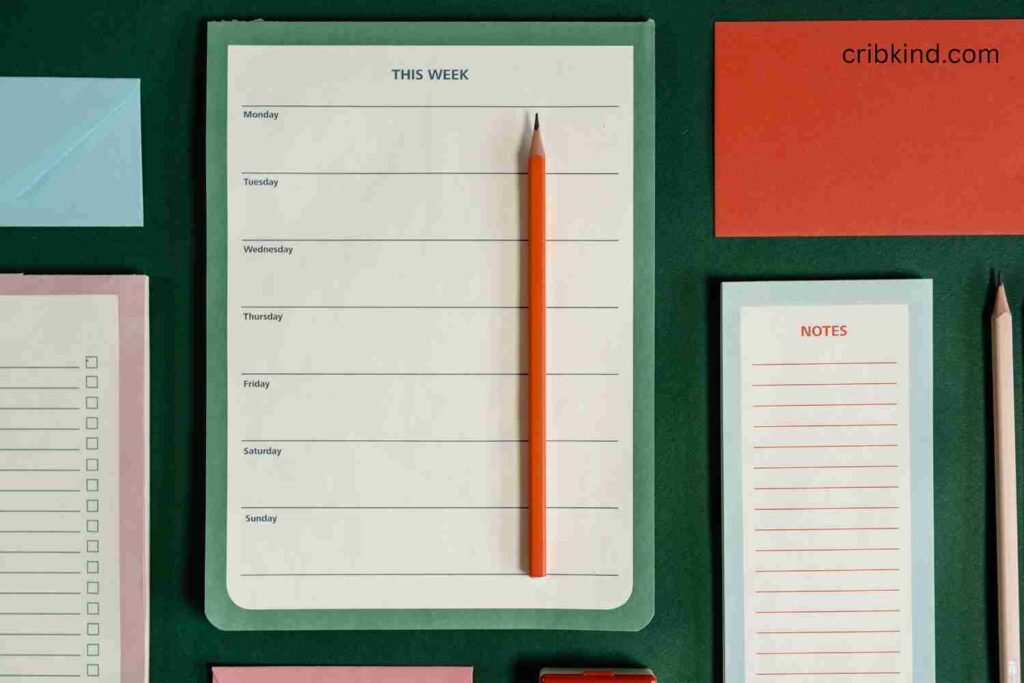
Most back to school checklists are organized by category: supplies, health, clothing. This one is organized by week, which is how preparation actually works. When you do things matters as much as what you do.
Quick reference: back to school checklist timeline
| When | Focus | Key items |
|---|---|---|
| 4 weeks out | Supplies and clothing | Backpack, school supplies, shoes, uniforms |
| 3 weeks out | Health and admin | Vaccines, school forms, parent portal, labels |
| 2 weeks out | Routine and emotional prep | Bedtime shift, school drive, books, open conversation |
| 1 week out | Practice run | Morning dry run, confirm lunch plan, first-day ritual |
| Night before | Pack and prepare | Backpack packed, outfit laid out, alarm set early |
| Morning of | Calm start | Buffer time, photo, clean goodbye, specific pickup time |
4 weeks out: supplies and clothing checklist
Four weeks out is early enough to avoid the August scramble, when shelves are half-empty and online orders take two weeks. Do this in one trip with the teacher’s supply list in hand. If the school hasn’t sent the list yet, buy the basics and wait for specifics.
Backpack and lunch
- Backpack – should sit above the waist when worn; check the child can open and close it independently
- Lunch box or bag – insulated if the school doesn’t heat food
- Water bottle – labeled, leak-proof, child can open it without help
- Reusable utensils if school lunch requires them
Writing supplies
- Pencils – minimum 12; buy more than the list says, they disappear
- Colored pencils or crayons – check the grade level on the supply list; some teachers specify the brand
- Erasers – both pencil-top and the large pink block kind
- Glue sticks – 2 to 3 minimum
- Scissors – check if the school provides them; if buying, safety tip for K-2
- Pencil case or pouch that fits inside the backpack
Notebooks and folders
- Folders – check color requirements; many teachers assign subject colors
- Notebooks – wide-rule for K-2, college-rule for grades 3 and up
- Composition notebooks if specifically requested
Clothing
- Check uniform requirements – if required, order now before sizes sell out
- Shoes the child can put on independently – Velcro for K-1 unless the child can tie laces reliably under pressure
- Weatherproof layer – classrooms are cold; schools go outside in light rain
- Change of clothes in the backpack – especially for K-2; accidents happen
For book recommendations to add alongside the supplies, our back to school books guide covers what’s actually worth buying versus borrowing from the library.
3 weeks out: health and admin checklist
This is the section parents leave until the week before and then panic about. Vaccination records and school forms take longer than expected. Three weeks gives enough buffer for the pediatrician’s office backlog and any mail delays.
Eeshan’s first year, I left the vaccination form until August 28th for a September 5th start. The pediatrician’s office took four business days to process the paperwork. We made it with one day to spare. I have never done that again.
Health
- Well-child visit – schedule now if overdue; book with your pediatrician not urgent care
- Vaccination records – confirm they are current for the grade level; request a copy for the school file
- Allergy action plan – if your child has any food allergy or medical condition, submit the written plan to the school nurse before the first day, not at it
- IEP or 504 plan – if applicable, confirm the new teacher has received and reviewed it; request a meeting if you have questions
- Glasses or hearing aids – check prescriptions are current; school vision screening is not a substitute for an optometrist
Admin and communication
- Set up the parent portal account on the school’s system (Google Classroom, Bloomz, Seesaw, or similar)
- Update emergency contacts – confirm the school has current phone numbers for everyone authorized to pick up
- Know who can pick up your child – communicate this explicitly to the school office, not just the teacher
- Save the school’s main number and nurse’s number in your phone
- Label everything – backpack, lunchbox, water bottle, jacket, folders, every loose item; permanent marker or iron-on labels both work
2 weeks out: routine and emotional prep checklist
This is the section the official checklists skip. It’s also the section that changes the most between a first child starting school and a second. With Eeshan, we did the practical prep perfectly and skipped all of this. With Vihaan, we spent the two weeks before school on exactly these items. The difference was immediate and measurable.
Routine adjustment
- Shift bedtime earlier by 15 minutes every two days – don’t try to jump straight to the school-year bedtime the night before
- Run the morning routine as a dry run – wake at the real time, eat breakfast, pack the bag, get out the door; see where the time goes
- Drive or walk the school route at the actual departure time – traffic patterns change by time of day
- Locate drop-off and pickup procedures in writing – car line rules, where to park, who opens the door, what time the gate opens
Emotional prep
- Read 1-2 back to school books together – our back to school read alouds guide flags which ones to use based on your child’s specific worry
- Drive past the school on a weekend – even just seeing the building and parking lot reduces the unfamiliarity on day one
- Attend the school’s orientation or open house if one is offered – the only item on this list that costs more than time
- Have one honest conversation – ask what they’re excited about and what they’re nervous about; do not try to fix the nervous part, just let them say it out loud
- Establish a drop-off ritual – the Kissing Hand, a secret handshake, a specific phrase; something portable they can carry into the classroom
- Establish a pickup ritual – a specific snack waiting in the car, a single question you always ask (“What was one thing that was better than you expected?”), a stop on the way home the first week
For the car ride in both directions, our back to school would you rather questions are the best conversation tool we’ve found for kids who don’t want to answer “how was school today?” directly. And our free back to school word search is a quiet activity for the first-week afternoons when everyone needs to decompress.
Night before and morning of checklist
The morning of the first day is not the time to discover the backpack is empty, the outfit needs ironing, or nobody knows where the school is. Everything on the morning-of list should already be done the night before.
Night before
- Pack the backpack together – not the morning of; make it a small ritual with the child involved
- Pick out the outfit together and lay it out – removes one decision from the morning
- Confirm the lunch plan – packed lunch made in the fridge, or cafeteria money loaded on the account
- Prep breakfast if possible – overnight oats, pre-made eggs, anything that removes one step
- Set the alarm 15 minutes earlier than you think you need
- Get to bed 30 minutes earlier than usual – you need the sleep too
Morning of
- Give yourself a buffer – something will go wrong and you need 10 minutes to absorb it calmly
- Take the first-day photo before you leave – not in the drop-off line, before
- Do the drop-off ritual – the Kissing Hand, the handshake, whatever you’ve established
- Tell them the specific pickup time – not “I’ll be there after school” but “I’ll be there at 3 PM, right when the bell rings”
- Say goodbye cleanly and leave – a long, lingering goodbye at the door makes separation harder, not easier; staying until the tears stop teaches the child that tears extend the goodbye
- Tuck a lunchbox joke in the bag – something for them to find mid-day that signals you’re thinking about them
What can wait – the anti-overwhelm section
Most back to school checklists add items until the list feels impossible. These are the things that appear on many lists that genuinely can wait, or that don’t need to happen at all.
- The “perfect” full supply list – buy the basics; ask the teacher in week one what they actually use and what they provide. Many items on school supply lists go unused all year.
- Setting up a dedicated homework space – see what the homework routine looks like first before buying a desk organizer and a special lamp
- The first-day haircut – do this at least 3 days before, not the morning of; a new haircut plus a new school in the same morning is too many new things at once for most young children
- An Instagram-ready first-day photo setup – a photo on the front porch is fine; the sign and the chalkboard and the matching outfit are optional
- Buying every item from one store in one trip – spread it over two or three weeks; buy the essentials first and add as you see the supply list
- Resolving every anxiety before the first day – some things only settle once school actually starts; trying to pre-solve every worry exhausts everyone and doesn’t work
Frequently asked questions about the back to school checklist for parents
When should parents start the back to school checklist?
Four weeks before the first day of school is the right starting point for most families. This gives enough time to get school forms processed, schedules a well-child visit without rushing, and allows for bedtime adjustments to happen gradually rather than overnight. Starting less than two weeks before school causes most of the avoidable stress that parents associate with back to school season.
What is the most important thing on a back to school checklist for parents?
The health and admin forms are the most time-sensitive items because they have external dependencies (doctor’s offices, school office processing times) that cannot be rushed at the last minute. Everything else on the list can be handled in a compressed timeframe if needed. Vaccination records and allergy action plans are the specific items that, if missing, can prevent a child from attending school or participating in activities on day one.
What do parents need for back to school besides supplies?
The items most parents forget: confirming who is authorized to pick up the child (and communicating this to the school office in writing), setting up the school’s parent communication app or portal, establishing a drop-off and pickup ritual the child knows in advance, and adjusting the sleep schedule at least two weeks before school starts. These don’t cost money and they change the first week more than any supply purchase does.
How do you emotionally prepare a child for back to school?
Drive past the school building on a weekend so it looks familiar. Read one or two back to school books together in the weeks before. Have one honest conversation where you ask what they’re excited about and what they’re nervous about, and listen without trying to fix the nervous part. Establish a drop-off ritual they can count on: the same goodbye every day, not a different version depending on how the morning went. Predictability is the tool; most of the emotional prep is just creating predictable moments.
What is a back to school checklist for elementary parents specifically?
For elementary school parents, the checklist additions are: confirming the school’s allergy and medical policies (more complex in elementary than preschool), understanding the homework expectations for the grade level before school starts so you can set up a routine, knowing the school’s policy on communication (some teachers prefer email, some use class apps), and if your child has an IEP or 504 plan, scheduling a brief meeting with the new teacher in the first week rather than waiting for a problem to prompt it.
The list Saidesh gave Vihaan before his first day was shorter than the one he gave Eeshan. No supply category was missing. The emotional prep items were just actually on it this time. The difference wasn’t the length of the list. It was knowing which items actually moved the needle.
Print this, work through it by week, and add the items specific to your school and your child. The checklist that works is the one that gets used.
What’s one thing you always forget until the night before? Drop it in the comments – the list improves every year.
Saidesh is a dad of two, Eeshan and Vihaan, writing about what he actually tried, tested, and learned the hard way. CribKind covers baby development, sensory play, and real parenting for the first two years.