
Where Did the Easter Bunny Come From?
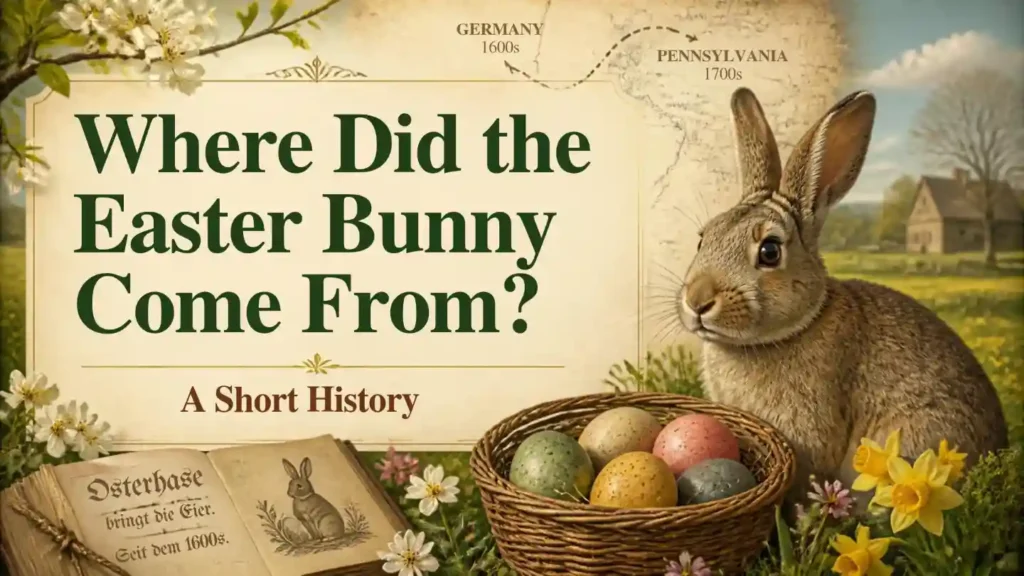
Where did the Easter bunny come from? The sources I read point to Germany, where a story of an Easter hare laying colored eggs was written down in the 1600s. German settlers brought it to Pennsylvania in the 1700s. Rabbits and Easter were linked even earlier by spring, because rabbits breed fast and stand for new life. Where it started before that is still debated. I am a dad, so I also added a simple way to explain the whole thing to a curious kid.
Why is Easter celebrated in the first place
Before the bunny, there is the holiday. Britannica describes Easter as a festival celebrating the Resurrection of Jesus on the third day after the Crucifixion. Christianity.com calls the resurrection the bedrock of Christian belief and says it is the reason Christians celebrate Easter.
The date moves each year. Britannica says Easter in Western churches falls on a Sunday between March 22 and April 25, depending on the first full moon after the spring equinox. The Eastern Orthodox calendar uses a different calculation, so Easter often falls later there. The bunny and the eggs came into the holiday separately, as the sections below show.
Where did the Easter bunny come from: a short timeline
The sources I read agree on the story but not on the exact dates. Here is the Easter bunny history in order, with who says what.
| When | What happened | Source |
|---|---|---|
| 1200s | Decorating eggs for Easter likely begins | Chowhound, Military Family Services |
| 1500s | First Easter bunny legends are documented | NBC News |
| About 1620 | First references to the Easter bunny are thought to come from Alsace | Countryfile |
| 1680 or 1682 | A German text describes the Osterhase laying eggs in gardens | NBC News (1680), Chowhound (1682) |
| 1700s | German immigrants bring the story to Pennsylvania | Chowhound, NBC News |
| 1800s | The first edible Easter bunnies appear, made of pastry and sugar | Countryfile |
Chowhound says the origin before 1682 is largely unknown, with almost nothing to go on. Treat the early dates as best guesses.
Why rabbits and eggs for Easter come down to new life
Both symbols point the same way. Chowhound says rabbits and hares represent fertility and new life, and eggs represent new life and the resurrection. Newswise quotes a Virginia Tech religion professor, Candace Buckner, who says rabbits were linked to spring because of their high reproduction.
Spring is the common thread. Pagan spring festivals centered on fertility and renewal, says Buckner, and Easter lands in the same season.
Why the rabbit for Easter
The short answer to why the rabbit for Easter is fertility. Rabbits breed fast, so people saw them as a sign of spring. Chowhound adds that people once wrongly believed hares could reproduce without a mate, which tied them to the Virgin Birth. It also says Renaissance artists used white rabbits for Mary’s purity, citing Titian’s The Madonna of the Rabbit.
Countryfile offers a smaller idea about hares versus rabbits. Hares, it says, give birth above ground in grassy hollows called forms, and lapwings lay eggs in similar places. People may have mixed up whose eggs they were finding. Countryfile presents this as a theory, not a fact.
Why eggs for Easter
Eggs were forbidden during Lent, says Chowhound. People saved them, decorated them and ate them at the Easter feast. Buckner says early Christians preserved and dyed the eggs, then ate the colorful ones first when they broke their fast on Easter.
Chowhound says egg decorating goes back to the 1200s, a few centuries before the Easter bunny, and calls the egg tradition one that appears to predate the bunny. So if you are asked which came first, the answer these sources lean toward is the egg. Buckner also says that in ancient Rome people dyed eggs and gave them as spring gifts. Christianity.com says eggs have a long pre-Christian history as a symbol of life, and that early Christians connected that meaning to the resurrection.
How the rabbit and the eggs got together
Chowhound says many historians believe the bunny and the eggs became Easter symbols separately and were combined later. The first piece of evidence for the combination is the German Osterhase, an Easter hare that hops from garden to garden laying colored eggs.
Military Family Services says German children built nests so the hare could lay its eggs, and that decorated baskets later replaced the nests. That is why eggs and rabbits on Easter now arrive in a basket on your kitchen table. If you are building one this year, our Easter egg fillers have ideas for what goes inside.
Where did the Easter bunny come from if not Eostre
You will see a goddess named Eostre in most articles on rabbits and Easter. Chowhound says the symbols were co-opted from a pagan spring festival honoring her, and that the 6th century missionaries merged Christian elements into existing holidays. Buckner calls the merging of traditions the most probable explanation, but says the hare may have been Eostre’s sacred animal.
Countryfile is the most careful. It says the topic can be tricky to unravel and rarely goes unchallenged, and uses phrases such as thought to and is said to throughout. My reading is that the Eostre link is a popular theory, not a proven fact.
How the Easter bunny reached America
Chowhound says German immigrants brought the rabbit to Pennsylvania in the 1700s, and from there it spread across the country. NBC News says the legends came with settlers in what is now Pennsylvania Dutch country.
Over time the Easter morning deliveries grew to include chocolate, candy and gifts, says Military Family Services. Many children leave carrots out for the bunny, since it might get hungry from all that hopping.
Easter animals in other countries
Military Family Services says some countries link Easter to other animals. It names the fox in Germany, cuckoo birds in Switzerland and the bilby in Australia, which it calls a rabbit bandicoot. The rabbit is not the only animal that brings Easter surprises.
How to explain rabbits and Easter to kids
Here are two simple versions you can adapt. They are my wording, based on the sources above, so change them to fit your family.
- For a preschooler: Rabbits have lots of babies in the spring, so people used rabbits to say that spring and new life are here. Eggs are also a sign of new life. A long time ago people put the two ideas together in a story.
- For a school age kid: The Easter bunny story comes from Germany, where children believed a hare laid colored eggs. German families brought it to Pennsylvania in the 1700s. Historians are not sure how it started, so it is fine to say we do not know the whole story.
NBC News says the bunny tradition was added to Easter separately from the Christian celebration of the resurrection. That gives you a simple way to talk about it if your family keeps Easter religious. The bunny is a spring tradition. Easter morning has its own meaning.
Frequently asked questions about rabbits and Easter
Why is Easter celebrated?
Christians celebrate Easter because it commemorates the resurrection of Jesus on the third day after the crucifixion, says Britannica. In Western churches it falls on a Sunday between March 22 and April 25.
Why are rabbits associated with Easter?
Rabbits and hares symbolize fertility and new life, because they breed quickly and are linked to spring. Sources say the Easter bunny story was added to Easter separately from the Christian holiday.
Why are eggs associated with Easter?
Eggs represent new life and the resurrection. They were forbidden during Lent, so people saved and decorated them and ate them at the Easter feast. Chowhound says decorating eggs dates to the 1200s.
Which came first, the Easter bunny or the Easter egg?
The egg, according to Chowhound, which says egg decorating predates the Easter bunny by a few centuries. The first record of the egg laying Easter hare is from the 1600s.
Where did the Easter bunny come from?
Germany, according to most of the sources I read. The earliest written evidence is of an Easter hare called the Osterhase laying eggs in gardens, dated to 1680 or 1682 depending on the source.
Is the Easter bunny in the Bible?
No. Chowhound says the Bible does not mention an Easter bunny or egg hunts, and calls the origin of these symbols muddy.
How did the Easter bunny come to America?
German immigrants brought the story to Pennsylvania in the 1700s, according to Chowhound and NBC News. It then spread across the country.
If I were explaining it to a child tonight, I would keep it short and honest. Rabbits stand for spring, eggs stand for new life, and nobody is completely sure how they ended up in the same story. I can see how much a kid enjoys hearing that even grown ups are still curious about it.