
10 Best Wooden Educational Toys We Actually Tested
I used to think wooden toys were something you bought for the shelf, not the toy bin. A nostalgia purchase. The kind of thing that photographs well and gets ignored by 6pm. Then Eeshan turned two and something changed. He walked past a battery powered dinosaur that talked, ignored a light up drum, and sat down with a set of wooden rings for 40 minutes without a single sound from either of us. That was the week I stopped thinking of wooden educational toys as decoration and started actually testing them.
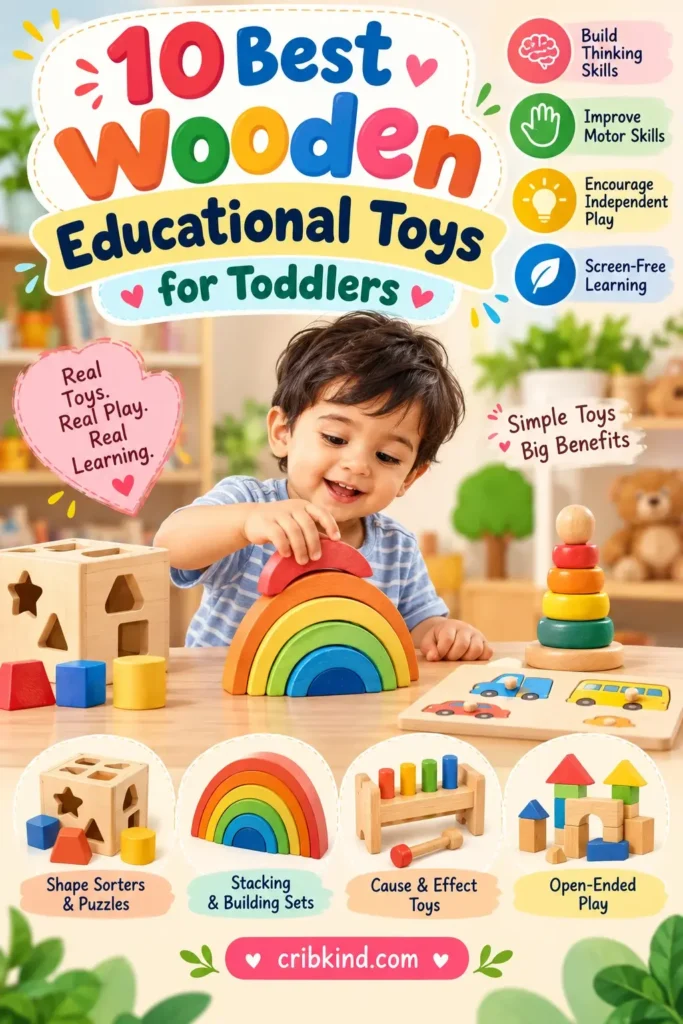
Why we started testing instead of just buying for the shelf
The wooden toy aisle sells a feeling as much as a product. Warm, screen free, Montessori adjacent. I bought into that feeling for Eeshan’s first birthday and got a beautiful stacking toy that sat untouched for two months. It wasn’t a bad toy. It was the wrong toy for where he was developmentally at the time.
What changed things wasn’t the material. It was matching the toy to the actual skill Eeshan or Vihaan was working on that month. A wooden toy with a real job to do, sort this, stack that, press here and hear a sound, gets used. A wooden toy that just looks nice gets photographed once and left in the bin.
So this list isn’t “10 pretty wooden toys.” It’s the ones that survived contact with two actual toddlers, in order of how much use they actually got.
What makes a wooden toy educational instead of just decorative
Not every wooden toy does developmental work. Some are just wood shaped like something else. The ones that earned a spot on this list share three things.
- A single clear action. Sort this shape, stack this ring, press this key. One job, done repeatedly, is how toddlers build mastery.
- Immediate feedback. A sound, a wobble, a piece that clicks into place. Toys with a delay between the action and the result lost both boys’ interest fast.
- No adult required. If Eeshan or Vihaan needed me to operate it, they lost interest within a few tries. Independence is the whole point at this age.
The American Academy of Pediatrics has been clear for years that open ended, hands on play does more for early development than most screen based “educational” products marketed at this age. Wood isn’t magic. Simple, repeatable, feedback driven play is the actual mechanism, and wood just happens to be a durable, low stimulation way to deliver it.
Shape sorters and puzzles
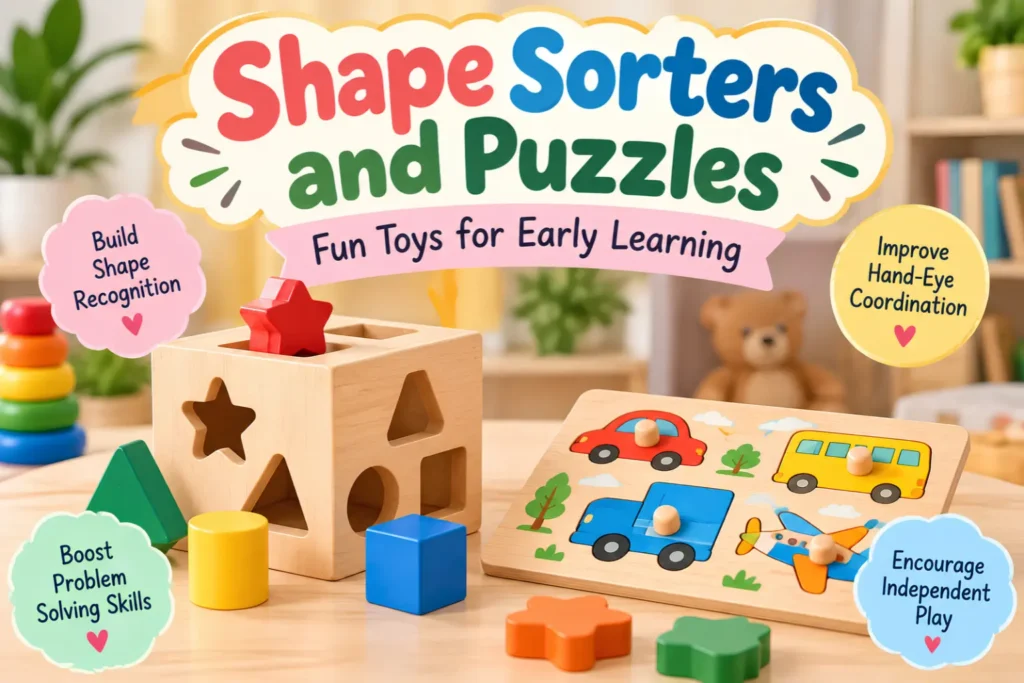
[Best for hand eye coordination] Melissa & Doug Shape Sorting Clock
This was Vihaan’s first real “aha” toy. It’s a wooden clock face with shaped pegs he had to match and slide into place, and it doubles as an early numbers and clock hands introduction once he got the sorting part down around 15 months. He carried this thing around the house for a solid three months, which for a toddler toy is basically a permanent fixture.
Honest downside: the pegs are small enough that we still supervise closely with Vihaan, who mouths everything. If you have a toddler under 18 months who still puts things in their mouth, this one needs active supervision, not background play.
[Best first puzzle] Melissa & Doug Wooden Vehicle Puzzle
Eeshan’s first puzzle, at around 14 months, was a chunky four piece wooden vehicle set with knobs on each piece so small hands could actually grip and place them. What sold me was watching him go from randomly slamming pieces down to actually looking at the empty slot shape before trying a piece. That shift took about two weeks of daily attempts.
Honest downside: once he mastered the four pieces, he lost interest within about a month. This is a genuine “first puzzle” toy, not a long term one. Budget for a step up puzzle around 18 to 20 months.
Stacking, sorting, and building sets
[Best for color sorting and stacking] PlanToys Rainbow Stacker
This is the toy Eeshan sat with for 40 minutes that I mentioned at the start. Six wooden arches in graduated sizes and colors, and he’d build them into a rainbow, then knock it down, then rebuild it in a different color order, completely self directed. No instructions needed after the first demo.
Honest downside: it’s one of the pricier picks on this list. If budget matters more than brand, the Guidecraft version below does almost the same job for less.
[Best budget stacking alternative] Guidecraft Nesting and Stacking Rainbow
Same basic idea as the PlanToys version, simpler paint finish, noticeably lower price. Vihaan actually preferred this one over Eeshan’s PlanToys stacker at 12 months because the pieces were slightly easier for smaller hands to grip.
Honest downside: the paint chips faster than the PlanToys version over heavy daily use. Ours started showing wear after about eight months.
[Best for open ended building] Melissa & Doug Standard Unit Wooden Building Blocks
Not flashy, but this is the toy that’s still in daily rotation two years after we bought it, first as stacking blocks for Vihaan, now as actual building material for whatever Eeshan is constructing that week. That kind of range is rare in a toy box.
Honest downside: no built in “win condition,” so younger toddlers under 12 months mostly just bang them together. The real payoff comes closer to 18 months and beyond.
Sound and cause and effect toys
[Best for sound based cause and effect] Hape Pound and Tap Bench with Slide Out Xylophone
Vihaan’s most used toy at 13 months, hands down. Hammer the pegs through, then flip the bench over and slide out a xylophone to bang on with the same hammer. Two toys in one, and both sides got real daily use for months, not weeks.
Honest downside: it is loud. If you have a small apartment or a baby who naps nearby, this is not a quiet toy.
[Best repeat play ball toy] Hape Pound and Roll Tower
A simple ball drop tower where hammering or dropping wooden balls sends them rolling down a ramp with a satisfying clatter. Eeshan played this one on loop around 11 to 13 months, over and over, which turned out to be exactly the repetition his brain wanted at that age.
Honest downside: the balls are a genuine choking hazard for a younger sibling in the house. We had to keep this one put away once Vihaan started crawling toward anything on the floor.
Early math and pretend play
[Best early counting toy] Melissa & Doug Wooden Abacus
Less a “counting” toy at this age and more a slide and click sensory toy, but it earns its spot because both boys came back to it at completely different ages for completely different reasons. Vihaan at 12 months for the sliding motion, Eeshan at nearly 3 for actual counting practice.
Honest downside: at under 12 months, it’s really just a fidget toy, not an educational one yet. Don’t expect real counting engagement before about 2 years old.
[Best for fine motor and balance] PlanToys Balancing Cactus Stacking Game
An odd looking one on the shelf, a wooden cactus base with balancing rings, but it turned into a genuine fine motor challenge for Eeshan around 20 months, requiring more precision than the color stackers above.
Honest downside: it’s frustrating for toddlers under 18 months. Both boys tried and gave up quickly before that age. This is a slightly older toddler pick, not a first birthday one.
[Best for pretend play] Melissa & Doug Wooden Play Food Set
This one’s a slightly older pick, closer to 18 to 24 months, but it rounds out the list because it’s the first wooden toy that pulled both boys into actual pretend play, “cooking” for each other, rather than sorting or stacking play.
Honest downside: pieces get lost in the couch constantly. Budget for losing at least two or three pieces within the first year.
The ones that didn’t survive the first month
Two wooden toys we bought never made it past a few tries in either household. A wooden shape sorting bus with pieces that only fit one specific orientation frustrated Eeshan more than it taught him anything, and a wooden xylophone with mallets got used exactly twice before the mallets vanished under the couch for good.
The pattern we noticed: toys that required fine precision before the boys had the fine motor skill for it got abandoned fast. Toys that gave partial credit, close enough counts as a win, held attention much longer. Worth checking a toy’s actual mechanism against your child’s current stage, not just the box’s age range, before buying.
Frequently asked questions about wooden educational toys
What age are wooden educational toys good for?
Most of the toys on this list work well from around 12 months through 2.5 years, though simple stacking and sensory pieces can start closer to 9 to 10 months. Readiness varies more by individual child than by the age printed on the box.
Are wooden toys actually better than plastic for development?
The material itself isn’t the developmental driver. What matters is whether the toy has a clear action and gives immediate feedback. Wood tends to correlate with simpler, single purpose toys, which is why it often performs well, not because wood itself teaches anything.
What makes a wooden toy educational instead of just decorative
A wooden toy earns the “educational” label when it has one clear job (sort, stack, press) and responds right away with sound, movement, or a visible change. A toy with no clear action, no matter how nice it looks, mostly just gets photographed once.
How do you clean wooden toys?
A damp cloth with mild soap works for most sealed wooden toys. Avoid soaking, since standing water can warp the wood or loosen glued joints over time. Let pieces air dry fully before putting them back in a bin.
Are wooden toys safe for babies who still mouth everything?
Check for small detachable pieces before handing a wooden toy to a baby who mouths objects. Larger single piece wooden toys are generally fine; shape sorters and puzzles with small pegs need supervision until mouthing behavior passes, typically well into the second year for some kids.
What is the best wooden toy for a first birthday?
A simple stacking set or a pound and tap toy tends to land best right around 12 months, since both give an immediate result from a single easy action. Puzzles and balance toys usually work better a few months later.
Do wooden toys work for kids who get bored fast?
Toys with a built in surprise, a sound, a rolling ball, a piece that clicks, tend to hold attention longer than toys that just look nice. If a toy in your house gets abandoned quickly, check whether it actually does anything when your child interacts with it.
Watching Vihaan chew on the corner of that shape sorting cube instead of using it properly used to bother me. I’d wonder if I’d bought the wrong toy again. Now I just let it happen. He’ll get to the sorting part when his brain is ready for it, same as Eeshan did, three weeks later than the box said he would.
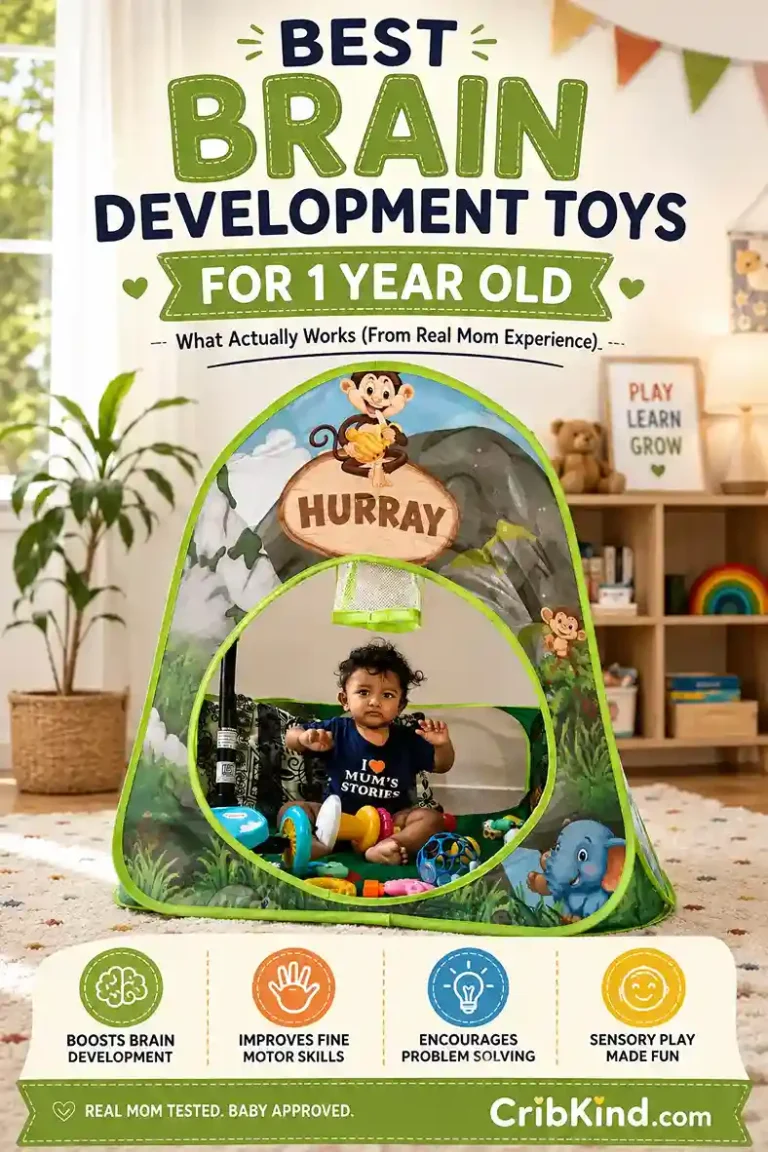
Related reading: sensory toys for toddlers 12 to 24 months, brain development toys for a 1 year old, fine and gross motor skills examples, and DIY busy board ideas for toddlers.
One Comment