Do babies sleep more when teething
The week Vihaan got his first bottom tooth, I was completely thrown off. He had been a decent sleeper then suddenly, nothing worked. Up twice, then three times. Short afternoon naps. Lots of drooling. And then one afternoon he just crashed and slept almost four hours straight. I sat there staring at the monitor genuinely wondering: do babies sleep more when teething, or is something else going on?
If you’re asking the same question right now, here’s what I wish someone had told me: both are real, and the answer depends on what else your baby has going on at the same time.
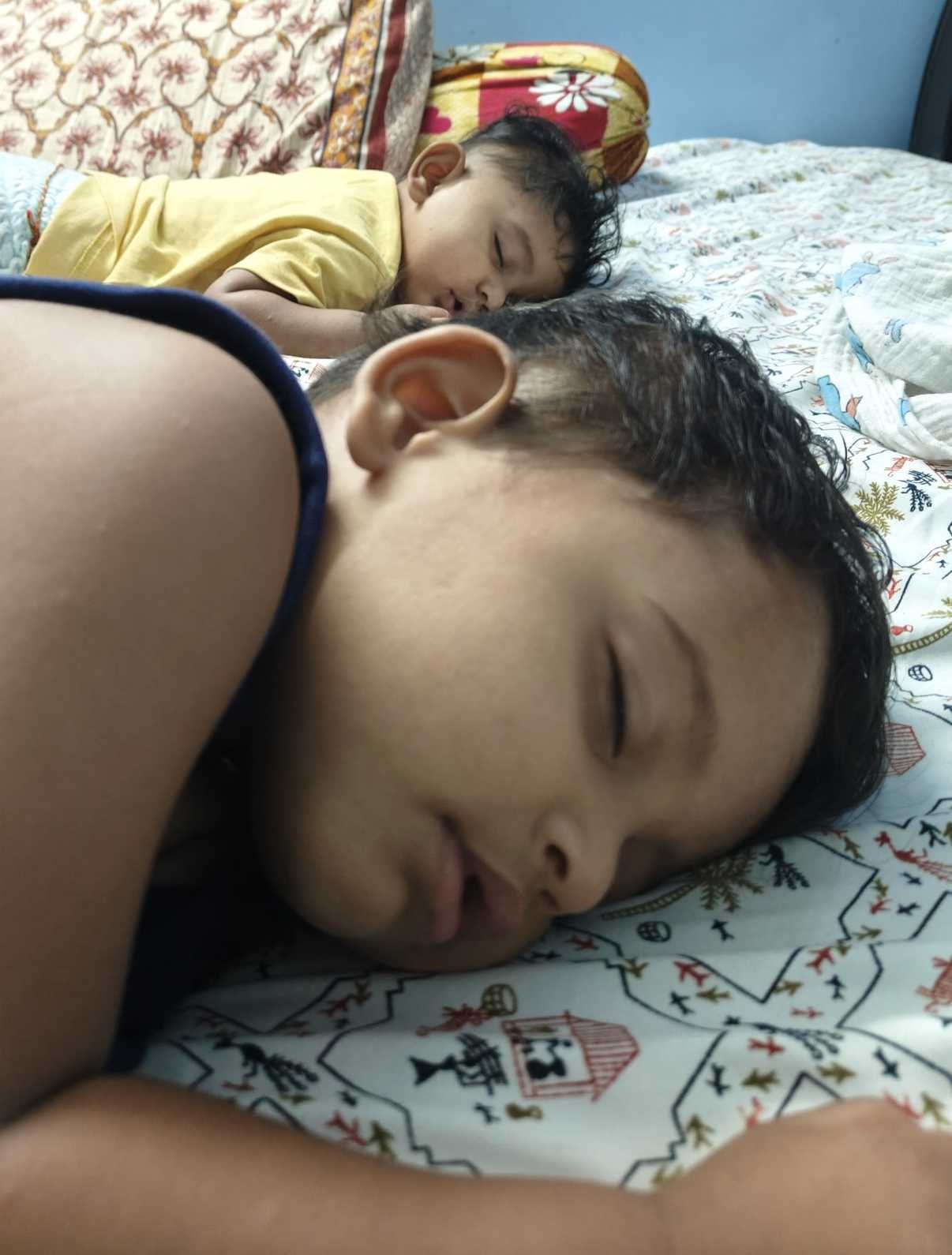
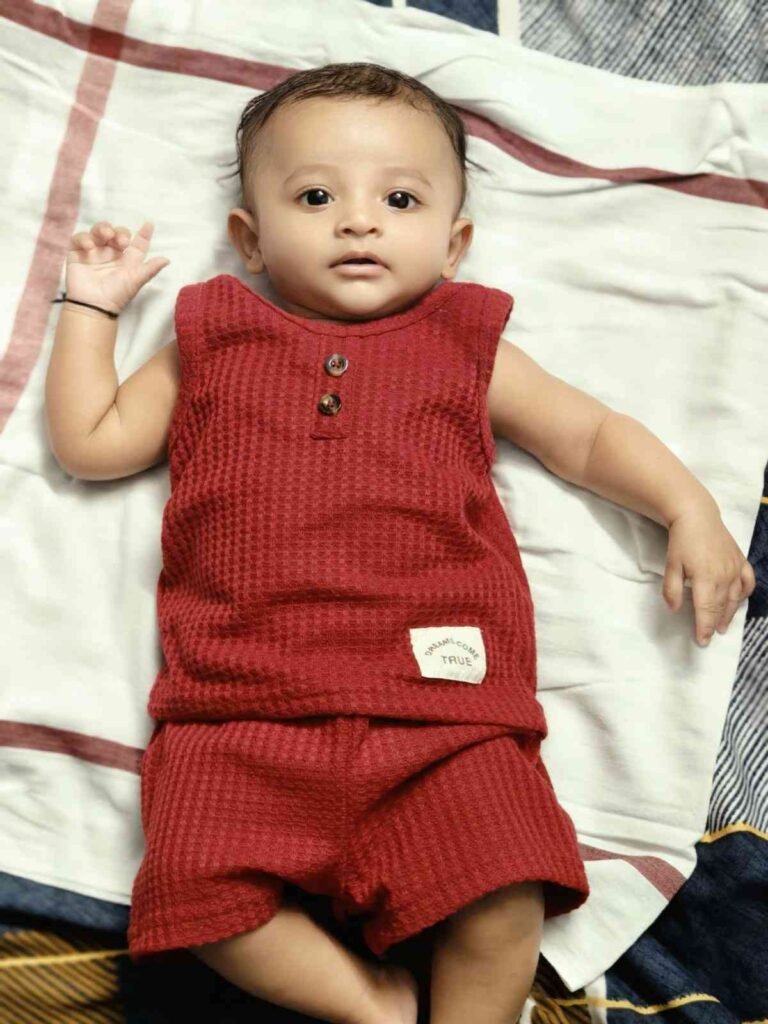
I actually have proof of this that photo of both boys knocked out on their tummies was taken during Vihaan’s canine week. He was exhausted from a full day of fussing and went down 40 minutes earlier than usual and slept straight through. Meanwhile Eeshan, who wasn’t teething, slept his normal stretch. Same crib time, completely different reason.
The Short Answer (It’s Not a Clean Yes or No)
Most teething posts will tell you definitively that teething disrupts sleep or that your baby definitely needs more sleep. The honest answer is more nuanced than either of those.
Scientific research shows more than 80% of babies experience sleep disruption during teething. That means the most common outcome is less sleep, not more more night wakings, shorter naps, and harder settling.
But here’s the part most posts miss: teething often overlaps with a growth spurt. And during a growth spurt, babies can sleep up to 4.5 extra hours per day. So if your baby is suddenly sleeping longer and deeper, it may be the growth spurt doing the work not the teething itself.
Do Babies Sleep More When Teething or Less?
Both happen. Here’s when each is more likely:
When teething babies sleep MORE
1. Growth spurt at the same time. Babies often cut teeth right as they’re going through a developmental leap or physical growth spurt. Sleep is how babies grow and the body simply demands more of it during those windows.
2. Emotional exhaustion from a long fussy day. Think about it from your baby’s perspective. They’ve been drooling, chewing on everything, and upset for hours. By naptime, they’re genuinely worn out. Not just from the gum pain from the emotional energy of being uncomfortable all day.
3. Mild illness happening at the same time. Teething doesn’t cause high fever or illness but babies can pick up bugs at the same time. If your baby is sleeping more AND has a temperature above 100.4°F, that’s illness, not teething. Call your pediatrician.
When teething babies sleep LESS (the more common scenario)
This was our reality with Vihaan’s molars at 14 months. Three weeks of broken nights. The front teeth came and went quietly but the first molars were brutal. Larger surface area, more gum inflammation, and no way for him to tell us exactly what hurt.
Common teething sleep disruptions to watch for:
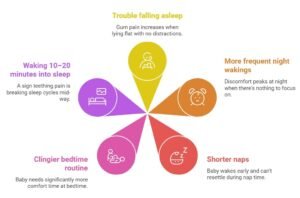
- Trouble falling asleep gum pain increases when lying flat with no distractions
- More frequent night wakings discomfort peaks at night when there’s nothing to focus on
- Shorter naps wakes early and can’t resettle
- Clingier bedtime routine needs significantly more comfort time
- Waking 10 to 20 minutes into sleep a sign teething pain is breaking sleep cycles mid-way
Here’s What Objective Sleep Data Actually Says
Nanit the baby monitor company actually analysed real sleep data from babies during teething vs. non teething nights. Their finding was surprising: there were no statistically significant differences in sleep metrics between teething and non-teething nights.
What does that mean practically? It means the dramatic sleep disruption many parents attribute to teething may sometimes be caused by other simultaneous factors a developmental leap, a growth spurt, or just normal sleep pattern variability. Teething can be a convenient explanation when the real driver is something else.
This isn’t to dismiss what you’re experiencing. Your baby’s discomfort is real. But it’s worth knowing that not every rough sleep week during teething age is caused by the teeth.
Do Infants Sleep More When Teething? (It Depends Which Teeth)
Here’s something most posts won’t tell you: the answer changes depending on which teeth are coming in. With Eeshan, the first two bottom teeth came and went almost without us noticing. Vihaan’s canines at 18 months? Completely different experience. The type of tooth matters enormously.
| Teeth Coming In | Typical Age | Sleep Impact | What Helped Us |
|---|---|---|---|
| Bottom front two | 6 to 10 months | Mild often barely noticeable | Cold teething ring before bath time |
| Top front four | 8 to 12 months | Moderate fussiness, some night waking | Earlier bedtime by 20–30 mins |
| First molars | 13 to 19 months | Hardest large surface area, most pain | Pediatrician-approved pain relief before bed |
| Canines | 16 to 23 months | High discomfort from pointed tip | Cold washcloth + extra gum massage |
| Second molars | 23 to 33 months | Sleep regression risk | Keep routine identical no new props |
I genuinely wish someone had warned me before Vihaan’s molars. The front teeth are manageable. The molars are a different level entirely and knowing that in advance would have helped us prepare instead of being blindsided at 2am.
Can Teething Cause Sleepiness? Signs It’s Teething vs. Something Else
Sleepiness can also mean illness, a developmental leap, or a growth spurt. Here’s how to tell if teething is the real driver:
Signs it IS teething:
- More drooling than usual
- Chewing on everything fingers, toys, your shoulder
- Red or swollen gum line where a tooth is pushing through
- Mild cheek flushing on one side of the face
- Fussier than normal, especially in the late afternoon and evening
- Low-grade temperature under 100.4°F very slight gum inflammation can cause a minor temp rise
Signs it is NOT just teething see your pediatrician:
- Fever above 100.4°F (38°C) teething does not cause high fever
- Vomiting or diarrhea not related to teething
- Refusing all liquids for more than 8 hours
- Unusual lethargy not just tired, but unresponsive or limp
- Deep purple bruising on the gum (may be an eruption cyst usually harmless but worth checking)
Do Babies Need More Sleep When Teething?
Technically, no their total sleep requirement doesn’t increase. But in practice, your baby may need more opportunity for sleep because the quality of sleep is being disrupted. Think of it this way: if you had a headache all day and barely slept the night before, you’d want an earlier bedtime too. The need hasn’t increased the ability to achieve quality sleep has been compromised.
Can Teething Cause a Sleep Regression?
Yes especially when teething coincides with the 4 month sleep regression. Around 3 to 4 months, babies’ sleep architecture matures and they start cycling through sleep stages more like adults. If teething pain happens at the same time, that brief awakening between sleep cycles becomes a full wake-up instead of a quiet resettle.
The pattern to watch for: baby waking 10 to 20 minutes after falling asleep rather than completing a full 45-minute sleep cycle. That early waking pattern is a strong signal that discomfort is interrupting sleep mid-cycle.
How to Help a Teething Baby Sleep
These are the things that genuinely worked for us not a copied list from a medical website:
Before bed:
- Chill a solid rubber teething ring (not gel-filled those can be hazardous if punctured) and give it 20–30 minutes before the bedtime routine starts
- Massage gums with a clean finger dipped in cool water just before the bedtime feed eases enough discomfort that baby feeds more fully and is less likely to wake from hunger
- Pediatrician-approved infant pain reliever on the worst nights always check dosing with your doctor first. For babies 6 months and older, infant ibuprofen can be more effective for teething pain than acetaminophen alone
During the routine:
- Keep the sleep routine identical. Adding extra rocking, feeding to sleep, or bedsharing when you hadn’t been creates sleep associations that outlast the teething phase by weeks
- Add 5 to 10 minutes of extra comfort within the routine an extra song, a longer cuddle in the chair. Contained and predictable. Not open-ended.
At night:
- Wait 2–3 minutes before going in. Teething discomfort comes in waves. Sometimes baby will resettle on their own if you give it a moment
- Quick comfort, then back down. Keep check-ins short lights off, quiet voice, brief gum rub if needed, back in the crib
Should You Pause Sleep Training During Teething?
If you’re in the middle of sleep training and teething hits a short pause is okay. But be careful about pausing too long. Most individual teeth cause disruption for 3–7 days. If you pause for three weeks, you’ve undone all your progress.
Better approach: offer slightly more comfort than usual, but keep the structure. Don’t introduce new sleep props. Don’t start bedsharing if you hadn’t been. Stick to your routine just with a bit more warmth in it. The goal is to get through the rough nights without creating new habits you’ll spend the next month breaking.
When to Call the Pediatrician
Teething is normal, but these symptoms need a doctor not a teething remedy:
- Fever above 100.4°F (38°C)
- Vomiting or diarrhea
- Refusing all fluids for more than 8 hours
- Extreme lethargy not just tired, but unusually unresponsive
- Deep purple or bruised-looking swelling on the gum
- Sleep disruption that is severe and lasting more than 2 to 3 weeks without improvement
Frequently Asked Questions
Do babies sleep more when teething?
Sometimes but it’s not the norm. Most babies sleep less due to gum discomfort. If yours is sleeping significantly more, look for a simultaneous growth spurt or mild illness as the more likely cause.
Do babies need more sleep when teething?
Their sleep requirement doesn’t increase, but teething pain can reduce sleep quality enough that an earlier bedtime and more comfort settling makes a real difference.
Do babies sleep more when they’re teething at night?
Night sleep is usually more disrupted during teething, not less. Gum pain peaks at night when there are no daytime distractions. Frequent night wakings and difficult settling are the most common teething sleep complaints.
Can teething cause sleepiness?
Yes especially if teething overlaps with a growth spurt, or if your baby has spent the day fussing and is emotionally exhausted. Physical and emotional fatigue from sustained discomfort is real, even for babies.
How long does teething sleep disruption last?
Most individual teeth cause disruption for 3 to 7 days. First molars can stretch to 2 weeks. The second molars at 2+ years can trigger a sleep regression. But it always passes.
Is it okay to give Tylenol every night during teething?
Talk to your pediatrician about frequency. Most doctors are comfortable with occasional use on the worst nights. Nightly use for more than a few days without checking in isn’t recommended.
Do babies sleep more when teething? Sometimes but usually the opposite is true. Expect disrupted nights, shorter naps, and a fussier baby. If your little one is sleeping more than usual, check whether a growth spurt is running at the same time.
The best thing you can do is protect the routine, offer a little extra comfort, use safe remedies before bed, and remember every tooth that comes through is one fewer left to cut.