Baby Registry Must Haves and Checklist
Everyone told us to register for everything. Two babies later, half those registry items are still in original packaging in a closet. The sleep sack, the nasal aspirator, the white noise machine those saw daily use. The wipes warmer, the bottle sterilizer, the dedicated diaper pail were expensive mistakes in polished boxes. This list has what we actually used with both Eeshan and Vihaan, what changed the second time around, and what I’d tell any first-time parent to skip completely.
Before using this as your checklist, read our nursery essentials checklist separately. That post covers what goes in the room itself, not what goes on the registry. This one is the complete list of what you need across all categories, what to ask for as gifts, and what to buy yourself before the baby arrives.
The honest registry breakdown: must have vs. skip
| Item | Verdict | Why |
|---|---|---|
| Swaddle blankets (muslin) | Must have | Used multiple times daily, both babies |
| Sleep sack | Must have | Daily use from month 2 onward, safety standard |
| Bassinet | Must have | Bedside access first 4 months is genuinely useful |
| White noise machine | Must have | The item we use longest – still running at ages 4 and 7 |
| NoseFrida nasal aspirator | Must have | Sounds horrifying, works better than anything else |
| Infant car seat | Must have | Non-negotiable. Can’t leave the hospital without one. |
| Baby carrier | Must have | Frees both hands. Eeshan spent hours in ours. |
| Nursing pillow | Must have | Works for bottle feeding too. Worth the shelf space. |
| Diaper bag (backpack) | Must have | Backpack style. Not a purse. Not a tote. Backpack. |
| Bouncer seat | Conditional | Some babies love it. Some don’t. Borrow one first. |
| Swing | Conditional | Same as above. Our first loved it. Second didn’t. |
| Baby monitor | Conditional | Audio is enough unless you have a large home |
| Wipes warmer | Skip | Room-temp wipes work identically |
| Bottle sterilizer | Skip | Top rack dishwasher does the same job |
| Diaper Genie | Skip | Regular trash can with grocery bags works fine |
| Dedicated changing table | Skip | Any flat surface with a pad = a changing table |
| Baby shoes | Skip | They can’t walk. They don’t need shoes. |
| Baby food maker | Skip | A regular blender does the same thing at 4+ months |
Sleep must haves for baby registry
The sleep category is where the registry wins or loses. These are the items that affect whether anyone in your house sleeps. Getting them right matters more than any other category. The items below are the ones both Eeshan and Vihaan used from week one.
Muslin swaddle blankets [Must Have]
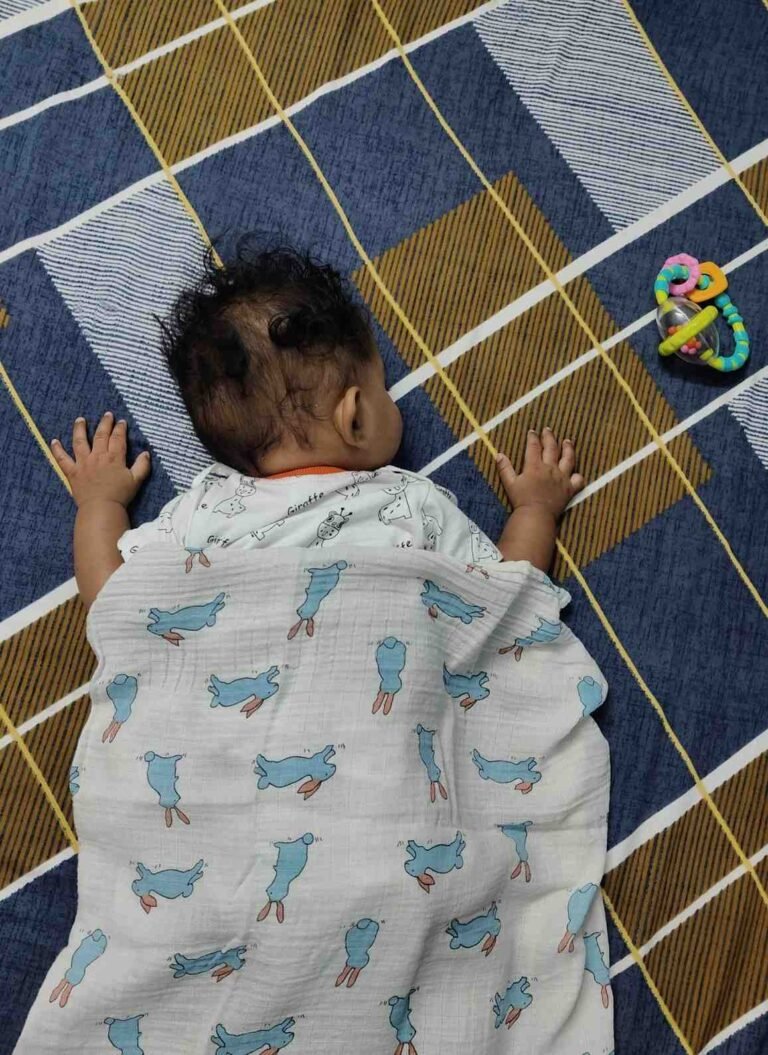
Thin, breathable, large-format swaddle blankets used for everything in the first six months: swaddling, nursing cover, burp cloth backup, stroller shade, tummy time mat. The muslin weave gets softer with every wash. Register for at least six. You will use all of them.
Eeshan was swaddled for the first eight weeks of his life. Vihaan rejected swaddling at three weeks and switched to a sleep sack early. Both used these blankets in every other function for months afterward. The versatility is the point – when a single item has twelve uses, it earns its shelf space.
Honest downside: cheap versions pill after a few washes. Spend slightly more on a brand that holds up through two years of daily washing. The per-use cost works out the same.
Sleep sack
A wearable blanket that replaces loose blankets in the crib, which the AAP recommends keeping out of the sleep space until twelve months. According to the American Academy of Pediatrics, a clear sleep environment reduces SIDS risk significantly – a sleep sack is the practical solution. Register for two per size (newborn and 3-6 month at minimum).
Both boys used sleep sacks from around month two until they started kicking them off at two-plus years. Eeshan wore his until he was almost three. At some point it just becomes a comfort object. We let it be that.
Honest downside: babies grow fast. Newborn size lasts maybe six to eight weeks. Register for multiple sizes or ask for gift cards specifically for sleep sacks at each size stage.
White noise machine and nightlight [Must Have – the one that lasts longest]
The item that gets used the longest of anything on this list. Both our boys still sleep with white noise at ages four and seven. A combined sound machine and nightlight (the Hatch Rest is the standard) means one device handles the sleep environment from newborn through school age. Register for one quality unit rather than a cheap one that gets replaced twice.
The specific way Eeshan uses his now – he controls the color and sound himself at bedtime – is something we didn’t anticipate when we registered for it. The fact that it grows with the child rather than becoming obsolete is its real value.
Honest downside: the popular smart versions require an app and a subscription. The device works without the subscription for basic functions. Decide that before buying.
Bassinet or bedside co sleeper
A bassinet gives you bedside access for the first four months without bed-sharing. The AAP recommends room-sharing (not bed-sharing) for at least the first six months to reduce SIDS risk. A bassinet makes that practical at 3 AM when the alternative is a full walk to the nursery.
We used ours every single night until Eeshan transitioned to the crib at four months. With Vihaan it was five months. The price-per-night math on a bassinet comes out to very little when you count those sleepless first months.
Honest downside: bassinets have a weight limit, usually 15-20 pounds. Some babies outgrow them by three months. Factor that in when choosing between a bedside sleeper and a full crib from the start.
Feeding must haves for baby registry
Register fewer bottles than you think. Every baby has a bottle preference and you won’t know yours until they arrive and refuse the six bottles you bought in advance. The right approach: register for one of two or three different brands, see which one they accept, then buy more of that one.
Nursing or feeding pillow [Must Have]
Works for both breastfeeding and bottle feeding. Takes the strain off your arms and wrists during the six to twelve times a day you’re feeding a newborn. The Boppy is the standard; the My Brest Friend has a firmer profile that some parents prefer for breastfeeding positioning. Both are genuinely useful.
Eeshan was breastfed. Vihaan was a mix of breast and bottle. The pillow was used identically for both. It also served as a tummy time support for the first three months and as a prop for early sitting at around five months. Another item that earns its space through versatility.
Honest downside: the Boppy covers need washing frequently and the slipcovers are sold separately. Factor that in when registering – add two covers alongside the pillow.
Silicone pump (Haakaa or similar) [Must Have if breastfeeding]
A passive silicone pump that attaches to the opposite breast during nursing and collects letdown without any effort. It replaces one nursing pad completely and saves several ounces per session. No motor, no electricity, no setup. Costs around $15.
This was the item neither of us knew about before Eeshan, found in a Reddit thread at 2 AM during week two of breastfeeding. The silicone pump alone collected more usable milk in Eeshan’s first three months than the electric pump did. Worth registering for even if you’re undecided about breastfeeding.
Honest downside: it can slip if not latched correctly, especially early on when positioning is harder. It has a small learning curve. That’s the whole downside.
Diapering must haves
The diapering category has two genuinely essential items and several things the industry has convinced parents they need. The two items: a backpack diaper bag and a NoseFrida nasal aspirator. Everything else is optional.
Backpack diaper bag
A backpack allows both parents to carry it, frees your hands when you’re also managing a stroller, and distributes the weight of what quickly becomes a five to eight pound bag of supplies. Register for a backpack, not a tote. The tote looks better in photographs. The backpack survives real life better.
Saidesh carried the backpack. That’s the other reason backpack wins: it’s genuinely neutral and both parents can wear it without it feeling like the bag belongs to one of them. This matters more in practice than it sounds on paper.
Honest downside: backpacks are less accessible when you set them down in a restaurant or on a changing table. The organizational pockets vary wildly by brand – try one in person if possible before registering.
NoseFrida nasal aspirator
A tube-based nasal aspirator where the parent creates suction with their own mouth, filtered through two hygiene barriers. The description sounds alarming. The pediatrician recommended it for both boys at their first sick visit. It clears congestion more effectively than any bulb syringe or battery-powered version and babies tolerate it better because the suction is more controlled.
Both boys had their first cold at around six weeks. The NoseFrida made the difference between a baby who could sleep with a stuffy nose and one who couldn’t. We have bought replacement filters approximately forty times over the life of two boys. That is the endorsement.
Honest downside: if the concept troubles you, the electric Frida Baby version does the same job with a motor. It’s less effective but easier for parents who can’t get past the manual version.
Bath and skin care must haves
- Baby tub with newborn insert – a tub that grows from sponge bath to supported bath to regular tub is worth the modest price. The single-stage ones become useless at two months. Register for one that adapts.
- Hooded bath towels – the one category where spending more is worth it. Thin ones feel fine on a baby and fall apart by month six. Better quality towels last three years and stay soft. Register for three.
- Fragrance-free baby wash and shampoo fragrance is the primary skin irritant for newborns. Register for fragrance-free regardless of which brand. Buy more than you think you need because you’ll use it for everything.
- Baby nail file or electric nail trimmer – newborn nails are paper-thin and sharp. The electric trimmer is gentler than scissors and more forgiving than traditional clippers for parents who haven’t done this before. Eeshan’s first nail trim with regular clippers did not go smoothly. The file did.
Gear and transport must haves for baby registry
Infant car seat
The one item on this list that has no conditional: you cannot leave the hospital without a car seat installed in your vehicle. The hospital discharge nurse will check. This is the item to research most carefully, install professionally (many fire stations offer free installation checks), and register for at your highest-priority level.
Register for the car seat. Don’t wait. Don’t borrow one from a family member whose history you don’t know. Car seats expire, are affected by accidents even without visible damage, and have installation requirements that vary by vehicle. Buy new or confirm the full history if buying used.
Honest downside: infant car seats convert to the toddler stage with a separate base or require a convertible seat at around 30-35 pounds. Research your model’s weight limit before registering and decide whether you want a two-seat or a convertible from the start.
Baby carrier or wrap
A baby carrier frees both hands, keeps the baby calm through contact, and makes navigating stairs, restaurants, and grocery stores possible in the first months when a stroller is impractical. The wrap style (Solly Baby, Boba) is gentler for newborns; the structured carrier (Ergobaby, Baby Bjorn) is easier to use as the baby gets heavier.
Saidesh wore Eeshan in the carrier for roughly three hours a day for the first four months. Vihaan less so because we had a toddler to chase by then, but the carrier was still essential for hands-free moments. Both boys fell asleep in the carrier in circumstances where nothing else would have worked.
Honest downside: carriers have a learning curve. Plan to practice putting it on before the baby arrives. Some wraps require fifteen minutes to figure out the first time and thirty seconds once you’ve done it two hundred times.
Stroller
A stroller is essential. Which stroller is something you should not decide from a website. Go to a store, unfold and fold multiple models, put them in your car, decide what fits and what doesn’t. Stroller weight, folding mechanism, and trunk fit vary enough that a model that’s perfect for one family is wrong for another. Use the registry for the brand and model you’ve actually tested.
We went through two strollers. The first was a research decision. The second was a decision made after the first one proved wrong for our car. Test first.
Play mat
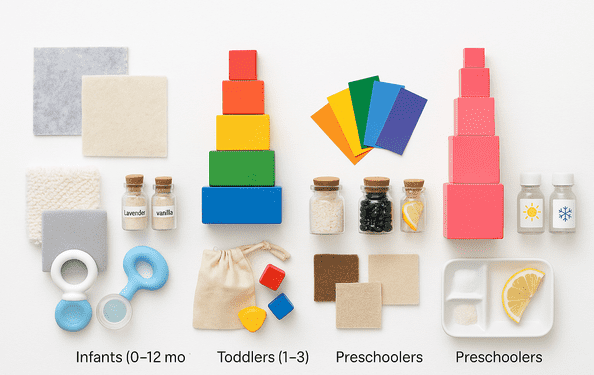
A padded play mat with an arch overhead serves as the primary activity space from month one through approximately month eight. It supports tummy time, early reaching and grasping, and eventually rolling. The developmental value is genuine – it’s where infants do most of their early motor learning when they’re awake and on the floor. Our sensory toys for infants post covers what to add to the mat at each stage.
Honest downside: play mats take up floor space. In a small apartment this matters. The round style takes slightly less room than rectangular. If space is limited, an interlocking foam tile floor works as a substitute and can be configured to any size.
For what to add to the registry that specifically supports sensory and developmental growth, our newborn sensory activities post covers the first weeks, and our baby shower greetings post has what to write in the cards that come with those gifts.
Frequently asked questions about baby registry must haves
What are the absolute must haves for a baby registry?
The must haves that every baby needs regardless of temperament are: an infant car seat (hospital discharge requires one), swaddle blankets, a sleep sack, a bassinet or bedside co-sleeper, a white noise machine, a nursing or feeding pillow, a diaper bag backpack, a NoseFrida nasal aspirator, a baby carrier, and a play mat. Everything else is conditional on your specific baby’s preferences, your home setup, and whether you’re breastfeeding. Register for these ten first and build from there.
What should a first-time mom put on her baby registry checklist?
For first-time parents, the baby registry checklist should prioritize the sleep, feeding, and diapering categories above everything else, because those three cover every hour of the first three months. Within sleep: bassinet, swaddles, sleep sack, white noise. Within feeding: nursing pillow, silicone pump if breastfeeding, one or two bottle styles to test. Within diapering: backpack diaper bag, portable changing pad, NoseFrida. Hold back on the gear and transport category until after the shower so you can test strollers in person before committing.
How many items should be on a baby registry?
Most registry guidance says 70-100 items to give guests a range of price points and choices. From a practical standpoint, what matters is that your core need items are covered and priced in a range guests can actually purchase. Include a few higher-ticket items (car seat, stroller, bassinet) and many smaller items (burp cloths, swaddles, play mat toys, nursing pads) at the $10-30 range. A registry of 50 well-chosen items beats a registry of 150 items where half are things you don’t actually need.
What baby registry items are not worth it?
The items most consistently not worth registering for: wipes warmers, bottle sterilizers, dedicated diaper pails, baby shoes for pre-walkers, dedicated changing tables (a portable changing pad on any flat surface works), and specialty baby food makers. The common pattern in all of these is that a simpler, cheaper alternative already exists in most homes and performs identically. The registry dollars are better spent on items with no adequate substitute, like a quality bassinet or a baby carrier.
What is the difference between a baby registry checklist and a baby registry must haves list?
A baby registry checklist is a comprehensive category-by-category list of everything you might need, used to make sure you haven’t missed a category. A must haves list is the subset of those items that are genuinely essential rather than optional or brand-driven. This post combines both: the must-have column tells you what to prioritize, and the full category breakdown gives you the checklist structure to make sure nothing gets forgotten. Use the must-have vs. skip table at the top to filter the categories below it.
Eeshan’s registry was built from fear. We registered for everything anyone had ever mentioned. Vihaan’s registry was built from experience. It was half the length, better quality per item, and we actually used everything on it.
That’s the trade new parents can’t make because they haven’t been there yet. This list is an attempt to give you that second-time advantage on your first try.
What ended up being your most-used registry item? What did you register for that never left the packaging? Leave it in the comments – those specifics help future parents more than any list.
Saidesh is a dad of two, Eeshan and Vihaan, writing about what he actually tried, tested, and learned the hard way. CribKind covers baby development, sensory play, and real parenting for the first two years.