10 Best Baby Play Gyms That Actually Earn Their Floor Space
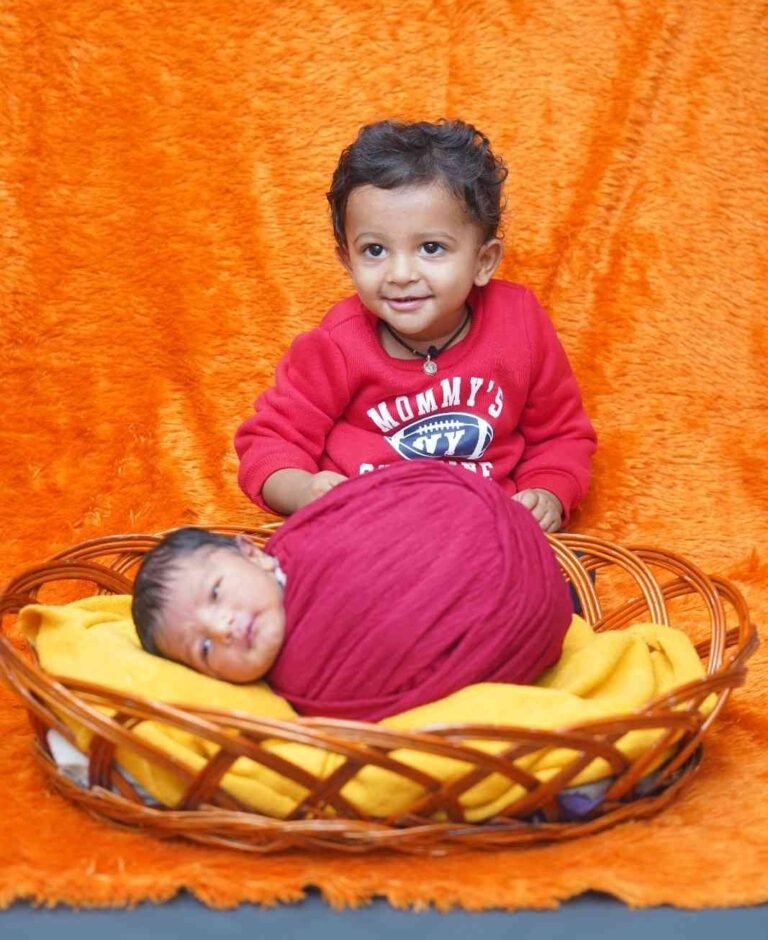
The play gym was the first big purchase I made before Eeshan arrived. I spent more time on it than anything else we bought in those pre-baby weeks because every list I read gave me a different answer. By the time Vihaan came along I knew exactly what I was looking for, because I had watched Eeshan use three different gyms across his first year and learned what actually mattered versus what looked good in product photos.
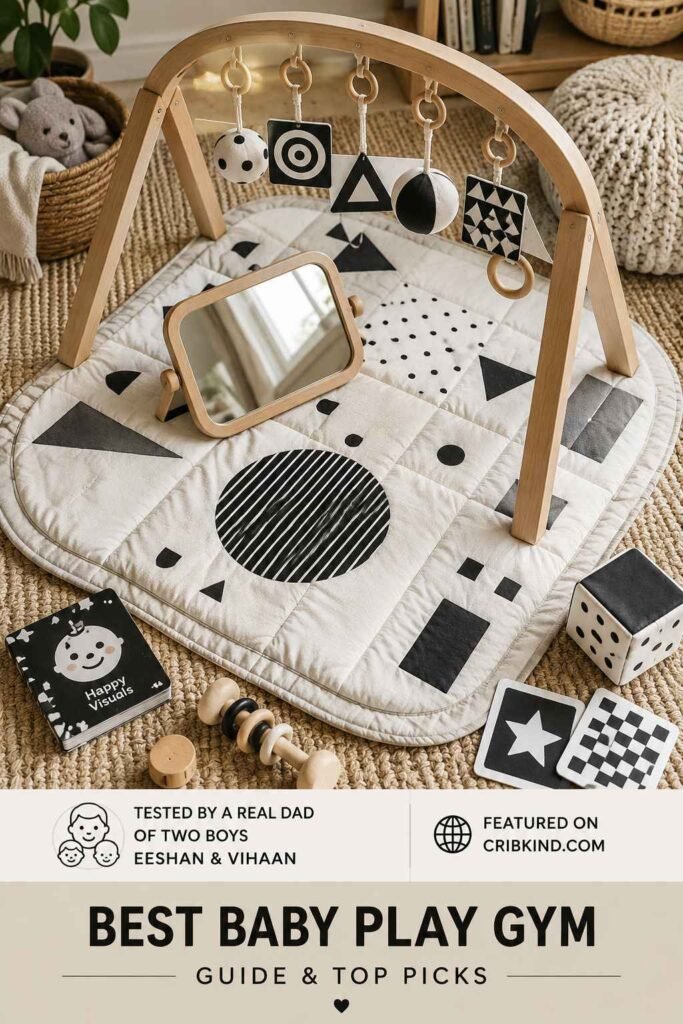
A baby play gym is not just a toy. It is a developmental setup your baby will spend hours on every day for the first six months of their life. Getting the wrong one is an expensive mistake. Here is what I actually used, what held up, and what I would tell any new parent making this decision today.
What actually makes a good baby play gym
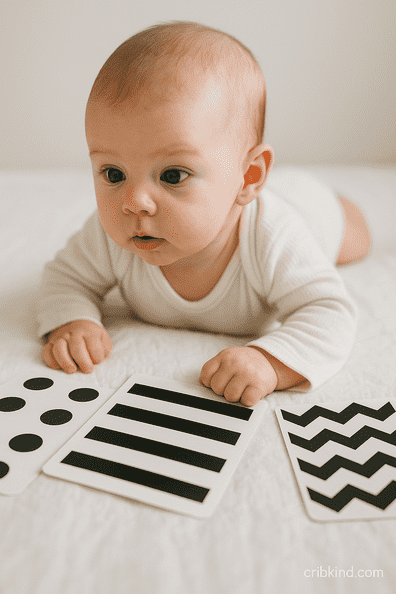
The job of a play gym changes significantly across the first six months. In the first eight weeks your baby is doing visual work, tracking objects and building connections through high contrast patterns and face-level stimulation. From about ten weeks batting begins. By four to five months reaching, grasping, and active tummy time sessions are the focus.
A good gym serves all three stages. Mat size and padding matter more than most parents realise before they buy , you cannot change those after purchase. Hanging elements need at least one mirror and something that responds when touched. The arch needs enough loops to reposition toys for tummy time. Machine washable is not optional with a newborn.
Quick comparison: 8 best baby play gyms at a glance
| Play gym | Arch type | Folds | Machine washable | Price | Best for |
|---|---|---|---|---|---|
| Lovevery Play Gym | Wood | No | Yes | $$$ | Best overall |
| Skip Hop Farmstand | Fabric | Yes | Yes (lay flat) | $$ | Best folding gym |
| Baby Einstein 4-in-1 | Fabric | Partial | Yes (air dry) | $ | Best budget |
| Infantino Twist and Fold | Fabric | Yes | Spot clean only | $ | Best compact fold |
| B. toys Starry Sky | Wood | No | Yes | $ | Best wooden budget |
| Melissa and Doug Ocean | Wood | No | Yes | $$ | Best wooden with full mat |
| Fisher-Price Rainforest | Fabric | Yes | Yes (tumble dry low) | $$ | Best for stimulation |
| Skip Hop Discoverosity | Fabric | Yes | Yes | $$ | Best Montessori |
8 best baby play gyms reviewed
1. Lovevery Play Gym (best overall baby play gym)
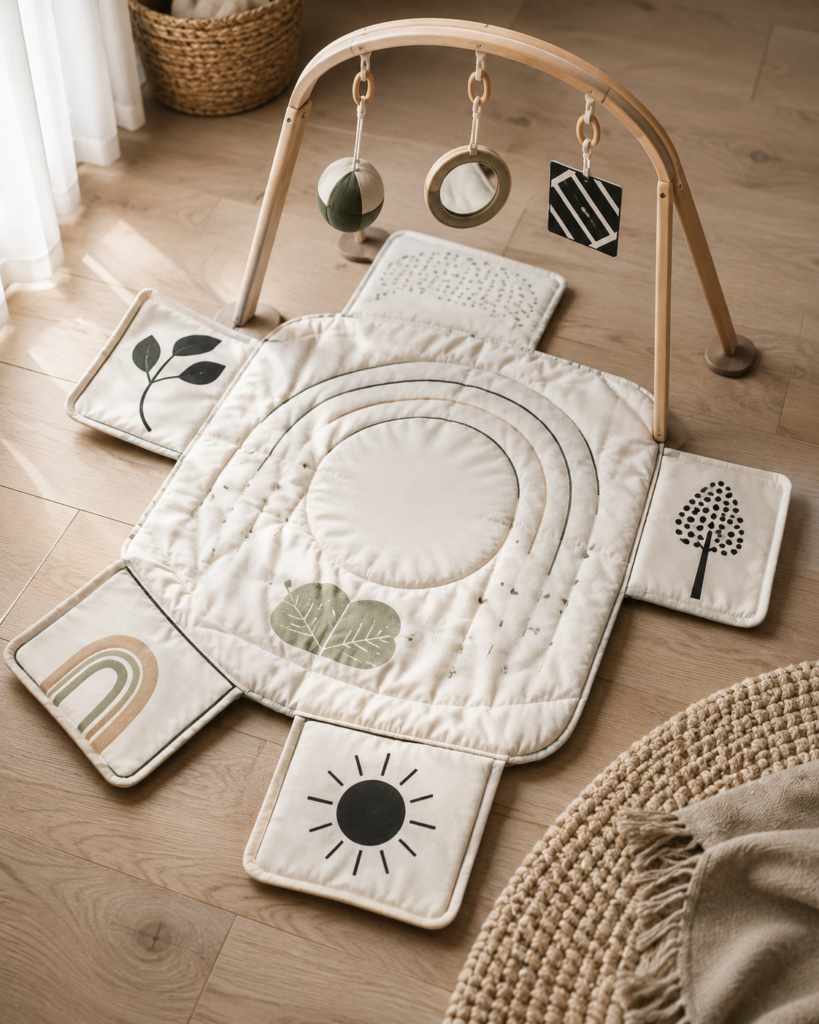
Designed by child development experts with five zones that unfold as your baby grows. The mat is organic cotton, the arch is sustainably sourced wood, all finishes are non-toxic, and the entire thing is machine washable. A booklet comes with it explaining what each element does developmentally and when to introduce it. That detail alone is what separates this from every other gym on this list. For a first-time dad with no idea what he was doing, a guide that said “this is what your baby’s brain is doing right now and this is how to support it” was genuinely useful. Eeshan used his from day one through his first birthday without any signs of wear. Once he started crawling the arch converted into a tent which he used well into his second year.
The honest downsides: $150, does not fold, and becomes a semi-permanent floor fixture. If budget is a barrier the Baby Einstein below does the core developmental job at a third of the cost. But if budget allows this is the one I would buy again without hesitation.
2. Skip Hop Farmstand Grow and Play (best folding baby play gym)
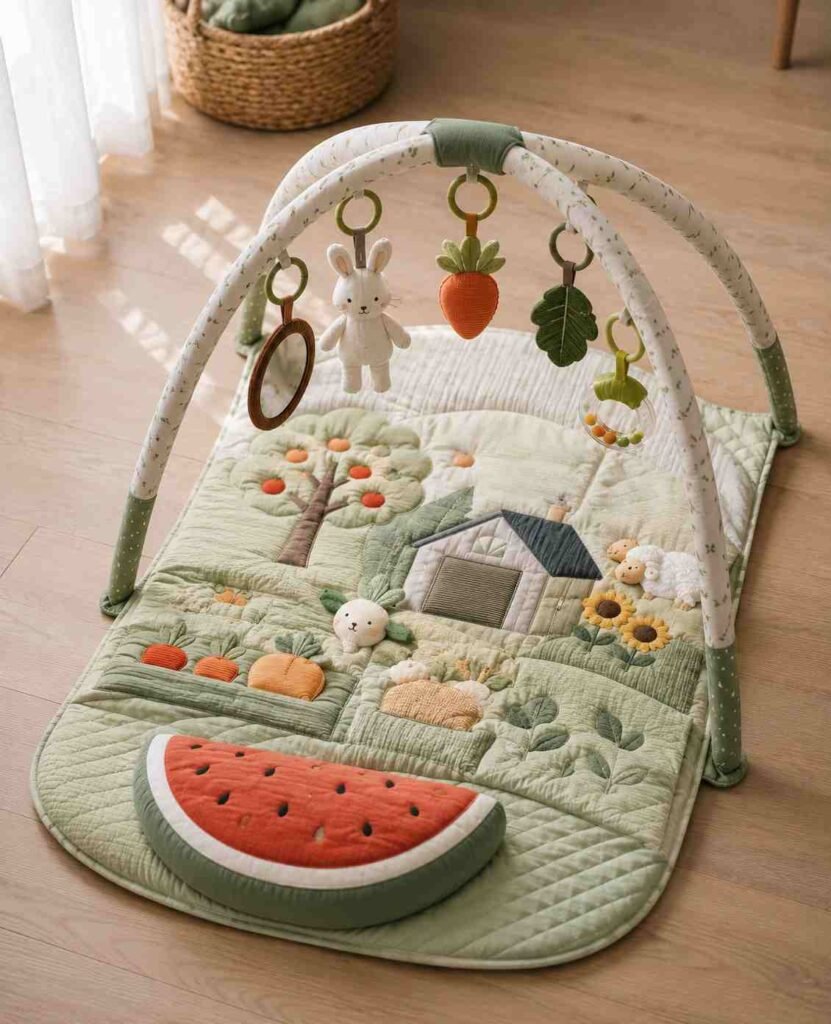
The best choice if floor space is limited or you want a gym you can set up and fold away daily. The fabric arches fold flat in about thirty seconds and the whole thing fits behind a sofa. The mat is large and well-padded for a folding gym with genuinely varied textures. It also has the best tummy time setup on this list , the included watermelon-shaped wedge elevates your baby’s chest correctly, and the hanging toys reposition to mat level easily, which most other gyms do not allow. The arch converts to a growth chart after the gym stage, which is a practical bonus.
Vihaan used this as his travel gym from about six weeks. It folded flat into his changing bag and survived months of being thrown in and out without any issues. The one inconvenience: mat must be laid flat to dry, not tumble dried. Worth knowing before you buy if laundry is already a daily negotiation in your house.
3. Baby Einstein 4-in-1 Kickin’ Tunes (best budget baby play gym)
At around $50 this covers the essential developmental jobs: high contrast patterns on the mat, hanging toys to bat at, a tummy time pillow, and a detachable kick-activated piano. That piano is more useful than it sounds. Foot kicking is one of the first deliberate large motor movements babies develop, and having something that responds to that kicking gives your baby their first experience of using their legs intentionally. I watched Vihaan kick the piano repeatedly for eight minutes at eleven weeks. The piano detaches for quieter sessions, which is a thoughtful feature.
The mat is smaller and thinner than the Lovevery or Skip Hop so use it on carpet rather than hard flooring. Machine washable but air dry only. If I was buying my first baby play gym on a tight budget this is what I would choose. It covers everything that matters in the first six months at a price that does not require a long conversation with yourself.
4. Infantino Twist and Fold Activity Gym (best compact folding gym)
The most satisfying folding mechanism of any gym on this list. Push down the circular component, twist the knob, and the entire arch collapses in one piece without dismantling into separate parts. It stays together for storage which matters when you are dealing with a newborn and have no patience for reassembly puzzles. The mat has a leaf-shaped design, the hanging toys include a spinning monkey that plays music and a detachable mirror that repositions for tummy time.
The honest downside is the mat is spot clean only rather than machine washable, which is a real inconvenience at this age. And the padding is thin. Use it on carpet or a rug. Eeshan would have found the monkey’s music overwhelming in his early weeks but Vihaan, who loved sound and stimulation from day one, would have been completely at home with it. Know your baby before choosing this one.
5. B. toys Starry Sky wooden baby play gym (best wooden gym under $50)
The best entry point into wooden baby play gyms if the Lovevery price is out of reach. The Starry Sky has a natural wood arch, a quilted circular mat with decent padding, and three hanging toys including a cloud mirror, a silicone bead ring, and a plush star. Calm, minimal, nothing flashing or making unprompted noise. The mat is machine washable and the arch is sturdy.
Two honest downsides: the mat is smaller than most competitors, and the arch dismantles into pieces for storage rather than folding. If you leave it set up permanently neither of those matters at all. If you plan to fold it away daily, the Skip Hop Farmstand is a better fit. For parents who want the wood aesthetic without the Lovevery price, this is the right call.
6. Melissa and Doug Ocean wooden play gym (best wooden baby play gym with full mat)
Addresses the main weakness of the B. toys above: the mat is larger and the ocean theme gives more visual variety. The wooden arch is natural and clean, the hanging toys include ocean creatures in bright colors with different textures, and one has a crinkle element and another rattles when touched. Sensory variety beyond just the visual appeal, which matters as your baby moves from passive looking to active batting from around ten weeks.
This is the wooden baby play gym I would choose if I wanted the wood aesthetic and also needed a mat large enough for comfortable extended tummy time. Machine washable mat. A solid midpoint between the Starry Sky’s budget simplicity and the Lovevery’s premium developmental design, and the ocean theme does not age out by month three the way some gym themes do.
7. Fisher-Price Rainforest Music and Lights Deluxe Gym (best for high-stimulation babies)
More happening in one place than any other gym on this list. Motion-activated toucan, bright rainforest colors, crinkle leaves, tactile ribbons, multiple sound modes. For babies who get bored quickly and need a lot going on to stay engaged, this delivers. For babies who overstimulate easily, it will be too much. Eeshan at four weeks would have hated it. Vihaan at four weeks would have loved it. You need to know which kind of baby you have before choosing this one.
The mat is thin so use it on carpet. The removable toucan becomes a standalone toy once the gym stage is over, which extends the value. Machine washable and tumble dry on low, which is the most convenient cleaning option of any gym on this list and a genuine selling point at three in the morning.
8. Skip Hop Discoverosity Montessori-inspired gym (best Montessori baby play gym)
No electronic sounds, no motion-activated features, no flashing lights. Natural materials, calm colors, simple hanging elements that invite open-ended exploration. If the Fisher-Price above is one end of the spectrum, this is the other. The design philosophy is Montessori: give your baby something interesting to explore on their own terms rather than programming a response for them. The mat is well padded, machine washable, and the arch folds flat for storage.
Eeshan overstimulated easily in his first two months. This gym is exactly what he needed at that stage. I did not know that about him until week eight, by which point we had already gone through one wrong gym. If you already suspect your baby leans toward calm and sensory-sensitive, start here rather than learning the hard way the way I did.
How to set up your play gym for maximum developmental benefit
Most parents unbox the gym, hang all the toys from the center of the arch, and call it done. That setup works but it is not optimal. Here is what I learned after two rounds of daily gym use.
Position hanging toys at different heights rather than all at the same level. At eight weeks your baby’s arms are shorter and their reach is limited. Toys hanging too high will be frustrating rather than motivating. As their reach extends over the following weeks, move toys gradually higher. One toy close enough to graze with a fist, one slightly higher to reach for deliberately, one at the edge of reach to give them something to aim at.
Move the mirror to tummy time position. Most gyms come with a mirror intended to hang overhead. A mirror at floor level during tummy time is far more useful. Your baby is hardwired to be interested in faces, including their own reflection, and a face-level mirror during tummy time gives them a compelling reason to hold their head up longer.
Rotate toys every few days rather than leaving the same set up for weeks. Novelty extends engagement. Three fresh toys on Monday hold attention longer than the same five toys that have been there since birth.
Wooden baby play gym versus fabric arch gym
Personal preference more than a developmental difference. Both do the same job. Wooden arches look cleaner and more minimal in a nursery. They do not fold, meaning they stay set up permanently or get dismantled into pieces. They tend to have fewer built-in features. Fabric arch gyms fold flat, come with more hanging toys and mat features, and are usually better value at lower price points. Choose based on your space, your aesthetic, and whether foldability matters to your daily routine.
When your baby is done with the play gym
Most babies start showing signs they are outgrowing the lying-down gym format around five to six months when sitting with support becomes possible. The signs are clear: they try to roll off the mat, they reach past the hanging toys and grab the arch instead, they get fussy after thirty seconds of lying on their back when they were previously content for ten minutes.
This is not a failure of the gym. It is a developmental success. Your baby has grown past what lying-down play can offer them. At this point the gym either converts to a sitting-play setup if it has that feature, like the Lovevery tent, or you retire it and move to floor play with toys suited to a sitting baby. Our guide to the best toys for 6 month olds covers exactly what comes next.
Frequently asked questions
Are baby play gyms worth buying?
Yes if you use one from birth. A play gym supports visual development, batting and reaching practice, tummy time, and floor play across the first five to six months. The value per use across that window is high compared to most baby gear purchases.
What age do babies use play gyms?
Birth to approximately five to six months for the standard lying-down gym function. Some gyms extend to crawling and sitting age with convertible features. The Lovevery converts to a tent at crawling age.
What is the best wooden baby play gym?
For budget: B. toys Starry Sky at around $40. For a larger mat with more sensory features: Melissa and Doug Ocean Wooden Gym. For the best wooden gym regardless of price: Lovevery Play Gym, which is also the best overall gym on this list.
How do I make tummy time easier with a play gym?
Move one hanging toy and the mirror to mat level so your baby has something at eye level to look at. Add a tummy time wedge if your gym includes one. Keep sessions short at first, two to three minutes, and build gradually. A baby with something interesting to look at during tummy time will hold their head up longer than one staring at a plain floor.
From one dad to another
The right gym depends on three things: how much floor space you have, whether foldability matters to your daily routine, and whether the wood aesthetic is worth paying for. Get those three questions answered honestly and the right gym on this list becomes obvious.
The Lovevery is the best if budget allows. The Skip Hop Farmstand is the best if space is the constraint. The Baby Einstein is the best if you want to spend responsibly without compromising on what the gym actually needs to do. And if you already know your baby is calm and sensory-sensitive, start with the Discoverosity rather than learning the same lesson I did with Eeshan at week eight.
Saidesh is a dad of two, Eeshan and Vihaan, writing about what he actually tried, tested, and learned the hard way. CribKind covers baby development, sensory play, and real parenting for the first two years.