
Toddler Molars: When They Come In, Symptoms and How to Help
Your toddler has been a little off lately. Clingy, not sleeping well, drooling like they did back at four months, and shoving their whole fist into the back of their mouth every chance they get. You’ve checked everything you can think of, and then it hits you. Toddler Molars. The big ones. In the back.

Toddler molars are not like those cute little front teeth that snuck in quietly. They’re bigger, they push through more gum tissue, and they tend to make their presence known for weeks at a time. The good news is that what you’re seeing is completely normal, and once you understand what’s happening and why, you’ll feel a lot more confident about how to help.
When Do Toddler Molars Come In?
This is the question most parents are searching at midnight while their toddler fusses next to them. The answer depends on which molars you’re talking about, because toddlers actually get two separate sets.
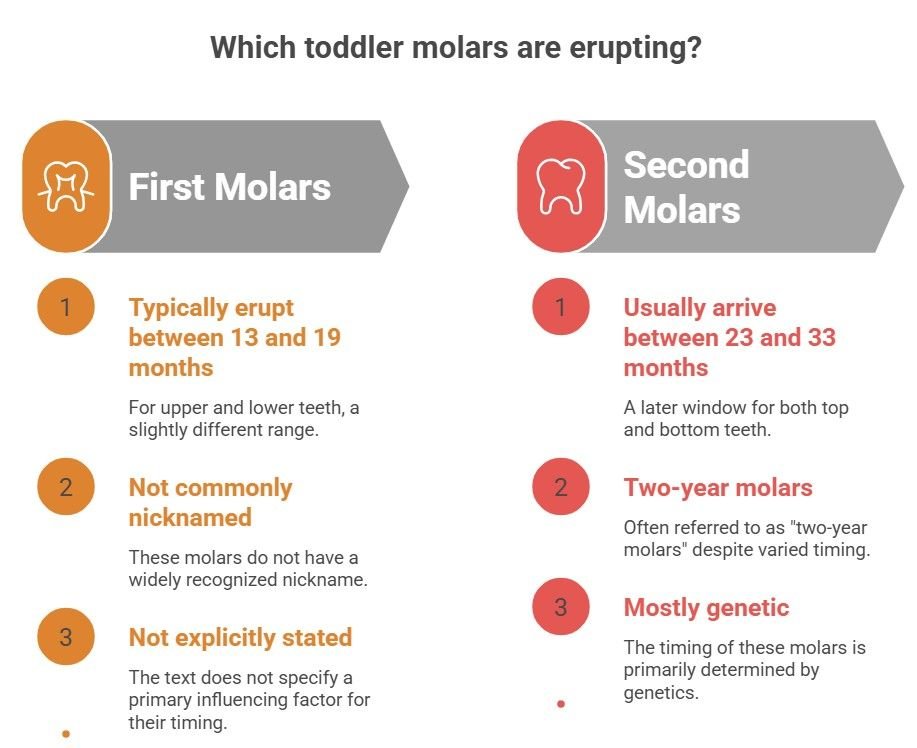
The first molars typically come in between 13 and 19 months for the upper teeth and 14 to 18 months for the lower teeth. Then, after a bit of a break, the second molars arrive, usually between 23 and 31 months on the bottom and 25 to 33 months on top. So when parents talk about the toddler molars age range, they’re really describing a window that stretches from just after the first birthday all the way to nearly age three.
The second molars are the ones that earn their nickname. Most people call them the two-year molars, but a lot of kids start showing signs earlier than that, and some finish closer to their third birthday. The timing is mostly genetic, and early or late within that range is completely normal. If your child’s pediatric dentist isn’t concerned, you don’t need to be either.
Signs of Toddler Teething Molars
Molar teething has a different feel to it than the front teeth did. The signs tend to linger longer, come and go in waves, and sometimes show up in places you wouldn’t expect.
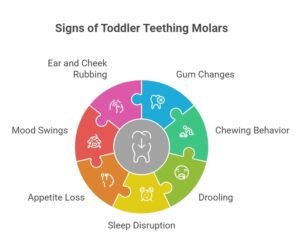
- The most visible sign is swollen, red gum tissue at the back of the mouth. If you gently look inside your toddler’s mouth, you might see a raised, puffy area where the molar is starting to push through. Some kids also get a small, fluid-filled bump called an eruption cyst right over the spot.
- These can sometimes look dark blue or purple, which can genuinely look alarming the first time you see it. But it’s just fluid sitting close to the surface and it resolves on its own once the tooth breaks through. No treatment needed, and no reason to panic.
- Beyond the gums, you’ll likely notice your toddler chewing on absolutely everything. Fingers, toys, the edge of the table, anything they can get back there. Drooling picks back up, sometimes heavily. Sleep gets disrupted. Appetite drops because chewing hurts. And the mood shifts. Toddlers don’t have the words to tell you their back gums are killing them, so what comes out instead is clinginess, frustration, and a lot more crying than usual.
- One sign that surprises parents is ear and cheek rubbing. The nerves that run through the jaw travel close to the ear canal, so molar pain often radiates upward. Your toddler isn’t necessarily saying their ear hurts. They might just be feeling discomfort in that whole region and rubbing whatever is closest.
Toddler Molars Symptoms You Might Be Seeing
Let’s break down the most common toddler molars symptoms more specifically, because knowing what’s normal helps you figure out when something might actually need attention.
Drooling is almost universal. Even toddlers who hadn’t drooled since infancy can suddenly soak through two bibs a day during a molar eruption. That extra saliva can also cause a mild rash around the mouth and chin. Keeping the skin dry and applying a gentle barrier cream helps.
Disrupted sleep is one of the harder symptoms to deal with, mostly because it affects you as much as it affects your toddler. Here’s the “aha” moment that makes it make sense: during the day, your toddler is busy. Playing, exploring, chasing the dog. There’s no mental space left to notice a dull throb in the back of their mouth. But at night, when the lights go out and the room goes quiet, that throbbing gum is suddenly the only thing in their entire world. There are no distractions to push it to the background, swallowing slows during deep sleep, and lying down can slightly increase pressure in the gum tissue. That’s why a toddler who seemed perfectly fine at dinner can be up three times before midnight. It usually gets better within a few days of the tooth actually breaking through the surface.
Loose stools sometimes accompany molar teething, though experts debate the direct link. The most likely explanation is that toddlers chew on so many things during this phase that they swallow more bacteria and drool, which can mildly affect digestion. A few days of softer stools is not unusual. Diarrhea that lasts more than two days or is accompanied by vomiting warrants a call to your pediatrician.
Toddler Molars Fever: What’s Normal and What’s Not
Here is what the medical community actually says about toddler molars fever.
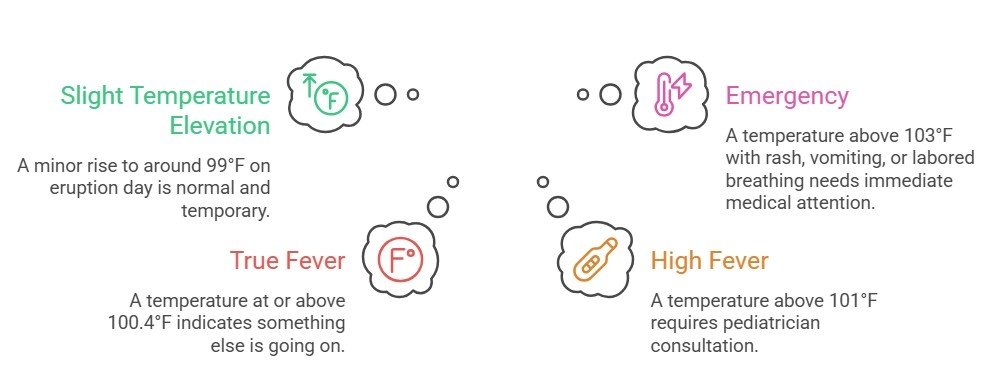
A very slight temperature elevation can happen on the specific day a tooth breaks through the gum surface. Some studies have documented a minor rise, think 99°F territory, on eruption day itself. That is not the same thing as a fever, and it does not last.
A true fever is defined as a temperature at or above 100.4°F (38°C). Cleveland Clinic, the American Academy of Pediatrics, and virtually every major pediatric medical organization are clear on this: teething does not cause real fevers. If your toddler has a fever above that threshold, something else is going on alongside the teething, a virus, a cold, an ear infection, and it needs to be treated on its own terms.
This distinction matters because the teething phase for molars can stretch for weeks. It is easy to blame every symptom on the molars that are clearly coming in. But a toddler with a true fever during a teething phase still needs their temperature evaluated, not dismissed. If the fever is over 101°F, call your pediatrician the same day. If it’s above 103°F or comes with a rash, vomiting, or labored breathing, call immediately.
Second Molars Toddler: Why These Are the Hardest
If you’ve already been through the first molars and you’re now in second molar territory, you might be wondering why this round feels worse. You’re not imagining it. The second molars toddler experience is genuinely harder for most kids, and there are real reasons for it.
Second molars are physically larger than first molars. They push through a bigger area of gum tissue and take longer to fully erupt. They also arrive during what is already a challenging developmental window, somewhere between 23 and 33 months, right in the middle of the infamous toddler years when kids are asserting independence, language is exploding, emotions run high, and sleep is already a battleground for a lot of families.
The good news about second molars is also the best news: they’re the last ones. Once your toddler’s second molars are fully in, all 20 primary teeth are present. The primary teething chapter is officially closed. Whatever you’re going through right now has an end point, and it’s closer than it feels at 3 a.m.
How to Help a Toddler With Molars Coming In
You can’t make the teeth come in faster, but you can make the process a lot more comfortable. Here are the things that actually work.
Cold and Pressure on the Gums
Cold numbs the tissue and pressure gives the gum something to push against, which is exactly what your toddler is already trying to do when they chew on everything. A chilled (not frozen) silicone teether is ideal, particularly one designed for back teeth access. A clean frozen washcloth works well too. For toddlers eating solid food, cold soft foods like chilled yogurt, refrigerated applesauce, or a cold banana can be both soothing and nourishing when appetite is low.
Gentle gum massage before bed helps some toddlers settle. Use a clean finger and apply light circular pressure to the swollen area. Some kids love it, some push your hand away. Try it once and let them tell you.
Pain Relief When It’s Needed
When your toddler is genuinely struggling, not sleeping, not eating, visibly in pain, children’s pain relief medication is appropriate and effective. Children’s acetaminophen (Tylenol) or children’s ibuprofen (for toddlers over 6 months) can make a real difference. Always follow the weight-based dosing on the package and check with your pediatrician if you’re unsure about the right dose.
Avoid benzocaine-based teething gels. The FDA advises against them for children under 2 due to a risk of a serious condition called methemoglobinemia. Homeopathic teething tablets and amber teething necklaces are also not recommended. The necklaces are a choking and strangulation hazard, and the tablets have been flagged for inconsistent ingredient levels.
A Calmer Bedtime Routine
If nighttime is the worst of it, which it usually is, a more intentional wind-down in the hour before bed can take some of the edge off. Warm bath, dimmed lights, a little quiet time together before sleep. It won’t stop the molars from hurting, but it lowers the overall stimulation level going into the night and often means fewer wake-ups.
When to Call the Dentist
Most toddler molar teething is a wait-it-out situation. But there are specific signs that mean it’s time to pick up the phone.
Call your pediatric dentist if:
- The molar doesn’t seem to be making any progress after a few months of symptoms
- Your toddler seems to be in persistent jaw or tooth pain rather than just general fussiness
- A tooth looks visibly chipped
- The gum tissue around the eruption site looks very dark, swollen, or has any sign of infection like pus
The American Academy of Pediatric Dentistry recommends dental visits every six months starting from your child’s first birthday. If molars are actively coming in during one of those visits, mention everything you’ve observed. Your dentist can check the eruption progress, assess for any unusual wear, and give you personalized guidance based on what they actually see.
| Molar Type | Toddler Molars Age | Common Symptoms | What Helps |
|---|---|---|---|
| First Molars (Upper) | 13-19 months | Drooling, gum swelling, chewing, fussiness | Chilled teether, gum massage, children’s Tylenol if needed |
| First Molars (Lower) | 14-18 months | Drooling, sleep disruption, reduced appetite | Cold soft foods, warm bath before bed, pain relief if needed |
| Second Molars (Lower) | 23-31 months | Intense fussiness, cheek rubbing, sleep regression | Calmer bedtime routine, chilled teether, call pediatrician if fever |
| Second Molars (Upper) | 25-33 months | Same as lower second molars, often more intense | Same as above and remind yourself these are the last ones |
Frequently Asked Questions
When do toddler molars come in exactly?
First molars typically arrive between 13 and 19 months for upper teeth and 14 to 18 months for lower teeth. Second molars follow between 23 and 33 months depending on the position and your child’s individual timing. Both sets are part of the 20 primary baby teeth your child gets before their permanent teeth start coming in around age 6.
What are the main symptoms of molars coming in toddler parents should watch for?
The most common signs are swollen red gums at the back of the mouth, intense chewing on objects, heavy drooling, disrupted sleep, reduced appetite, and general irritability. Some toddlers also rub their cheeks or pull at their ears because molar pain can radiate toward the jaw and ear area. Symptoms tend to come and go over several weeks rather than resolving in a few days.
Can toddler molars cause a fever?
A true fever, 100.4°F (38°C) or higher, is not caused by teething. Major pediatric health organizations including the American Academy of Pediatrics are clear on this. A very slight temperature rise may occur on the exact day a tooth breaks through, but anything that registers as a real fever means something else is going on and your pediatrician should know about it.
How long does it take for toddler molars to fully come in?
The full eruption process for a single molar can take several weeks. You’ll often see the tooth partially break through the surface and then seem to stall before completing its eruption. This stop-and-start pattern is normal. Symptoms may ease and then flare again before the tooth is fully in.
Are second molars worse than first molars?
For most toddlers, yes. Second molars are physically larger, push through more gum tissue, and arrive during an already emotionally and developmentally intense stage of toddlerhood. The good news is that they’re also the last of the baby teeth, so whatever you’re managing right now is the final stretch of primary teething.
Is it normal for a 2-year-old to start getting molars?
Completely normal. The two-year molars is a widely used nickname for the second molars precisely because so many kids start cutting them right around their second birthday. Some start a few months earlier, some a few months later. As long as your child’s overall development is on track, a slight variation in timing is nothing to worry about.
This post is meant to give you a solid, well-researched starting point, not to replace the advice of your child’s dentist or pediatrician. Every toddler is different, and if something about your child’s molar teething feels off to you, trust that instinct. A quick call to your pediatrician is always the right move.
One Comment