Can Babies Be Born With Teeth?
When Vihaan was born, the family in the room right next to ours in the maternity ward had a baby boy about six hours before us. I remember because the dad came out into the corridor looking slightly pale, and when I asked if everything was okay he said and I still remember this exactly “the nurse just told us our son has a tooth. He’s six hours old and he has a tooth.”
I genuinely laughed because I thought he was joking or had misunderstood something. He was not joking. Later that evening our nurse confirmed it the baby next door had been born with a natal tooth on his lower gum. The whole ward was quietly talking about it. It was the first time I had ever heard of a baby being born with teeth.
Then, when Eeshan was born two years later and went in for his first checkup, our pediatrician mentioned it casually “some babies even arrive with a tooth already through.” I thought back to that corridor conversation immediately. So can babies be born with teeth? Yes, they absolutely can. It is rare, it has a name, and in most cases it is completely fine. Here is everything that dad in the corridor wished someone had told him before that nurse walked out of the delivery room.
Can Babies Be Born With Teeth? Yes Here’s How Common It Is
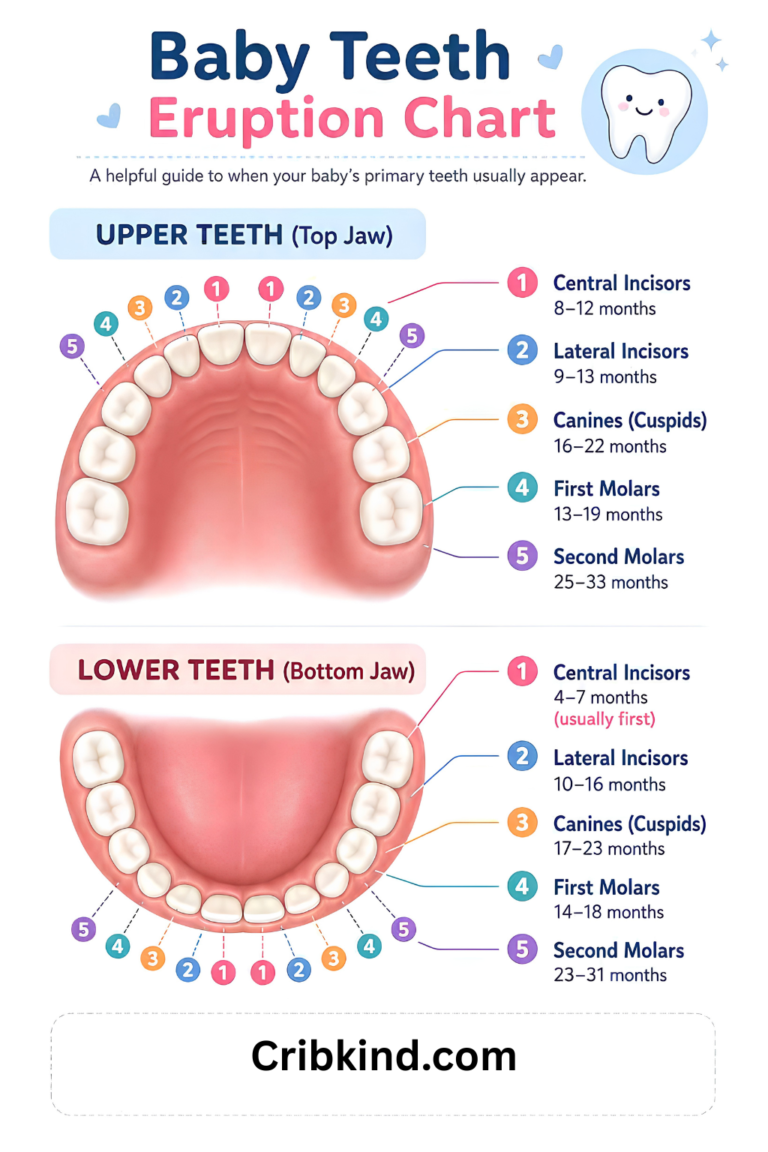
Teeth present at birth are called natal teeth. They are not a defect and they are not a sign that something went wrong during pregnancy. They are baby teeth that erupted earlier than usual sometimes months ahead of the typical 4–6 month mark.
About 1 in every 2,000 to 3,500 newborns is born with at least one tooth. That makes it rare but not unheard of your OB and pediatrician have almost certainly seen it before, even if this is the first time you have.
Natal Teeth vs. Neonatal Teeth What Is the Difference?
These two terms get mixed up everywhere including on most of the posts that rank for this topic. Here is the actual difference:
| Type | When | How Common | What It Looks Like |
|---|---|---|---|
| Natal teeth | Present at birth | 1 in 2,000–3,500 births | Small, yellowish or semi-transparent, often wobbly |
| Neonatal teeth | Erupt within first 30 days after birth | Even rarer than natal teeth | Similar small, shallow roots, often loose |
Both types are handled the same way clinically. The distinction matters mostly for timing records. If your baby was born with a tooth or grew one in the first few weeks of life, the follow-up steps are the same for both.
What Do Natal Teeth Actually Look Like?
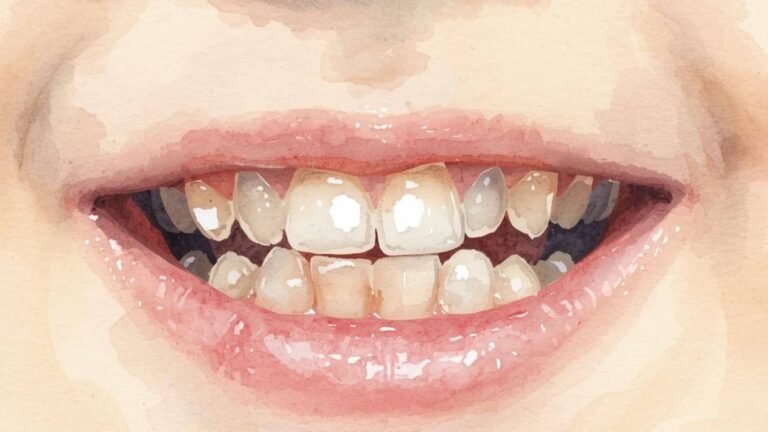
The nurse who told our ward neighbor about his son’s tooth described it to us later when we asked she said it looked more like a raised yellowish-white ridge than an actual tooth. Not a full erupted tooth sitting proud of the gum. More like a tooth that was halfway through, softer-looking than you’d expect, slightly translucent, and wobbling a little when she pressed on it gently with a gloved finger. By the next morning it was more visibly tooth-shaped but still tiny. Our nurse said natal teeth often look underdeveloped because the root formation that normally happens inside the gum over months gets cut short when the tooth erupts this early.
That appearance small, yellowish or whitish, loosely rooted, positioned almost always on the lower front gum is the typical presentation. A natal tooth located anywhere else in the mouth or one that is deeply firm and fully formed would be worth asking about specifically, but the common version looks exactly as the nurse described.
Are Natal Teeth Dangerous?
This was the first thing our neighbor dad asked in that corridor, and the honest answer is: usually not but there are three specific things to watch for.
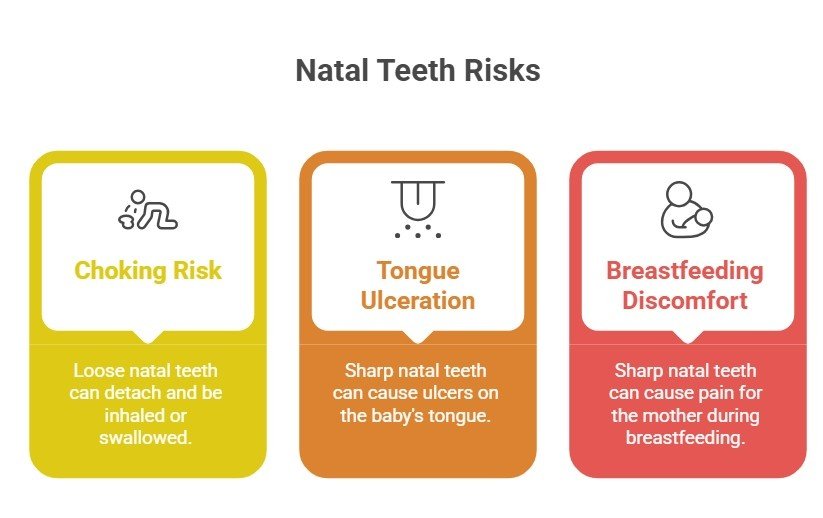
- Choking risk if the tooth is very loose. Natal teeth with almost no root can detach. If the tooth is very wobbly what dentists describe as Grade 3 mobility, moving more than 1mm in any direction removal is often recommended to prevent the baby inhaling or swallowing it. Mobility grading is the first thing a pediatric dentist will check. Grade 1 or 2 is usually monitor-and-watch. Grade 3 is a removal conversation.
- Tongue ulceration Riga-Fede disease. The sharp edge of a natal tooth can rub against the underside of the baby’s tongue during feeding and cause an ulcer. Your dentist can smooth the edge slightly in a short appointment if this is happening. Watch for a sore-looking patch on the underside of the tongue if your baby seems uncomfortable during or after feeds.
- Breastfeeding discomfort for mom. A sharp natal tooth edge can cause real pain during nursing described by one mom in our ward as feeling like a small paper cut on every feed, not normal latch soreness. A quick edge smoothing at the dentist can resolve this within a day. If you are nursing and something feels specifically sharp rather than generally sore, mention it at the next appointment rather than pushing through it.
Can Babies Be Born With a Full Set of Teeth?
No. There has never been a documented medical case of a baby born with a full set of teeth. The most teeth any newborn has been recorded with is a small number almost always just 1 or 2. A “full set at birth” story is a myth and occasionally a viral misidentification of something else entirely.
All 20 of your baby’s primary teeth are already formed inside the gums before birth. But erupting fully through the gum surface takes time the whole first set takes until around age 3 to finish coming in. A natal tooth is just one or two of those teeth whose eruption timeline ran unusually early. A full set at birth has simply never happened.
Why Did My Baby Come Out With a Tooth?
The first thing that dad in the corridor wanted to know was whether his wife had done something during pregnancy to cause it. I remember him saying that. Our nurse was very clear with him: no. Natal teeth are not caused by anything a parent does or doesn’t do during pregnancy. That is important to hear clearly because when something unexpected happens with a newborn, the mind goes straight to blame, and it shouldn’t here.
For most babies with natal teeth, the cause is simply a tooth bud that sat very close to the gum surface and pushed through early with no identifiable trigger. In some cases it runs in families. If a parent or sibling was also born with a tooth, the chances increase slightly. A handful of rare syndromes are loosely associated with natal teeth including Ellis-van Creveld syndrome and Sotos syndrome but your pediatrician will know if there are other signs worth investigating. Natal teeth in an otherwise healthy newborn do not indicate any syndrome on their own.
Do Natal Teeth Need to Be Removed?
Not automatically. The pediatric dentist who saw our neighbor’s baby we ran into the family at a 6-week checkup at the same clinic, small world explained it this way: “We only remove natal teeth when leaving them causes a bigger problem than taking them out.” The three things she checked were mobility, the tongue, and the X-ray.
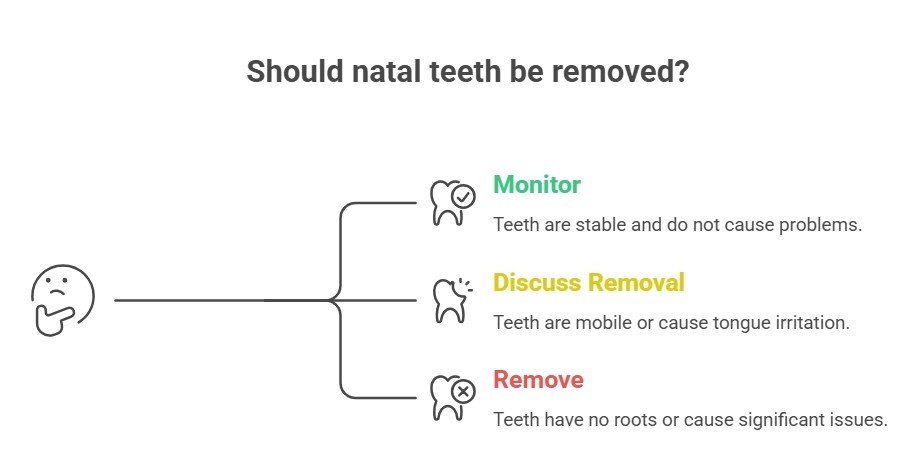
- Mobility: Grade 1 or 2 monitor. Grade 3 discuss removal.
- Tongue: Any ulceration or Riga-Fede signs smooth the edge or remove depending on severity.
- X-ray: Some root present keep and monitor. No root at all removal more likely recommended.
Their baby’s tooth was Grade 1, tongue was fine, and the X-ray showed a small but present root. The call was watch and wait. By the time Eeshan and their son were both around 4 months old, their natal tooth had fully settled in and looked like any other first tooth. That is the most common outcome no intervention, normal development from there.
Does a Baby Born With Teeth Still Go Through Teething?
Yes completely normally. A natal tooth does not mean teething is over. Your baby still has 18 or 19 more teeth to cut over the next three years. The natal tooth was just first in line.
The family from our ward messaged us when their son was around 6 months old his second bottom tooth came in right next to the natal tooth, completely standard teething phase. Drooling, chewing everything, rough nights, the whole thing. The presence of the first tooth made no difference to how the second one arrived.
Can a Baby Be Born With Teeth and Still Breastfeed?
Yes many moms do successfully. It depends on whether the tooth edge is sharp and how it sits during nursing. The mom from our ward found the first two weeks uncomfortable that paper-cut feeling on every feed rather than normal latch adjustment soreness. Her lactation consultant initially suspected a latch issue but the positioning was fine. It was the tooth edge. After the dentist smoothed it at the two-week visit, nursing was normal from the very next feed.
If you are breastfeeding and something feels specifically sharp rather than generally sore, do not assume it is just the normal first-few-weeks discomfort. Mention the tooth at your next appointment. It is a five-minute fix if the tooth edge is the cause.
Frequently Asked Questions
Can babies be born with teeth?
Yes about 1 in every 2,000 to 3,500 newborns is born with at least one tooth. These are called natal teeth and are almost always on the lower front gum. Most cases need no treatment beyond monitoring by a pediatric dentist.
Can a baby be born with teeth and it be completely normal?
Yes. The majority of natal teeth cases involve a completely healthy newborn with no underlying condition. They are simply baby teeth that erupted earlier than usual. Your pediatrician and pediatric dentist will confirm this at the first checkup.
Can baby be born with teeth that need to be removed?
Sometimes if the tooth is very loose and poses a choking risk, causes tongue ulceration that won’t heal, or significantly interferes with feeding. Firm natal teeth with some root development are almost always left in place and monitored.
Can babies be born with a full set of teeth?
No. There is no documented medical case of a baby born with a full set of teeth. Most natal teeth cases involve just 1 or 2 teeth on the lower front gum.
Are natal teeth the same as regular baby teeth?
Usually yes they are the regular primary teeth arriving early. In some cases they are extra teeth called supernumerary teeth, which a dentist will identify on X-ray. Supernumerary natal teeth are more likely to be recommended for removal to prevent crowding later.
When should I see a dentist if my baby is born with a tooth?
Within the first week especially if the tooth looks very loose, is causing feeding pain, or seems to be irritating the tongue. If it appears firm and is not causing issues, at minimum raise it at the 2-week pediatrician visit and get a referral to a pediatric dentist.
Can babies be born with teeth? Yes and watching that dad in the corridor absorb the news taught me something. The panic is instant, but the outcome is almost always fine. One tooth that arrived early, one dentist visit to confirm it is stable, and a completely normal first year from there.
If you are reading this in a maternity ward right now on your phone take a breath. It has a name, it is rarely a problem, and there are three simple things your pediatric dentist will check. You have everything you need to walk back into that room calm.
Was your baby born with a tooth, or did you witness it like I did? Drop a comment I would genuinely love to hear your story. 💛