
Top 10 Winter Sensory Bin Ideas for Babies and Toddlers
Vihaan was 9 months old when we built his first winter sensory bin, and I’d already ruled out half the ideas I found online because they called for shaving cream, borax-based slime, or insta-snow powder with ingredients I didn’t want near a baby who puts everything straight into his mouth. So we figured out what actually worked for his age, then expanded as he got closer to Eeshan’s toddler stage. This is that list.
Why most winter sensory bin lists don’t work for babies
Most of the content you’ll find on winter sensory bins targets preschoolers. The classic setups, shaving cream snow, insta-snow powder, slime with liquid starch, are fine for a 4-year-old who isn’t mouthing things anymore. For a baby under 12 months, or even a toddler in the 12 to 18 month window who still mouths regularly, they’re not safe bases.
The version of “fake snow” you can actually make for a baby is different: two parts baking soda to one part hair conditioner or white shaving foam (the unscented kind), mixed until it holds together and feels cold and crumbly. It’s not perfectly taste-safe but it’s significantly better than the store-bought powder version. For anything younger than 8 or 9 months, we stuck to fully edible bases and skipped the snow angle altogether.
The good news is that white and pale materials photograph just as well as the commercial fake snow, and a lot of them are already in your pantry.
Winter sensory bin ideas for babies 0 to 12 months
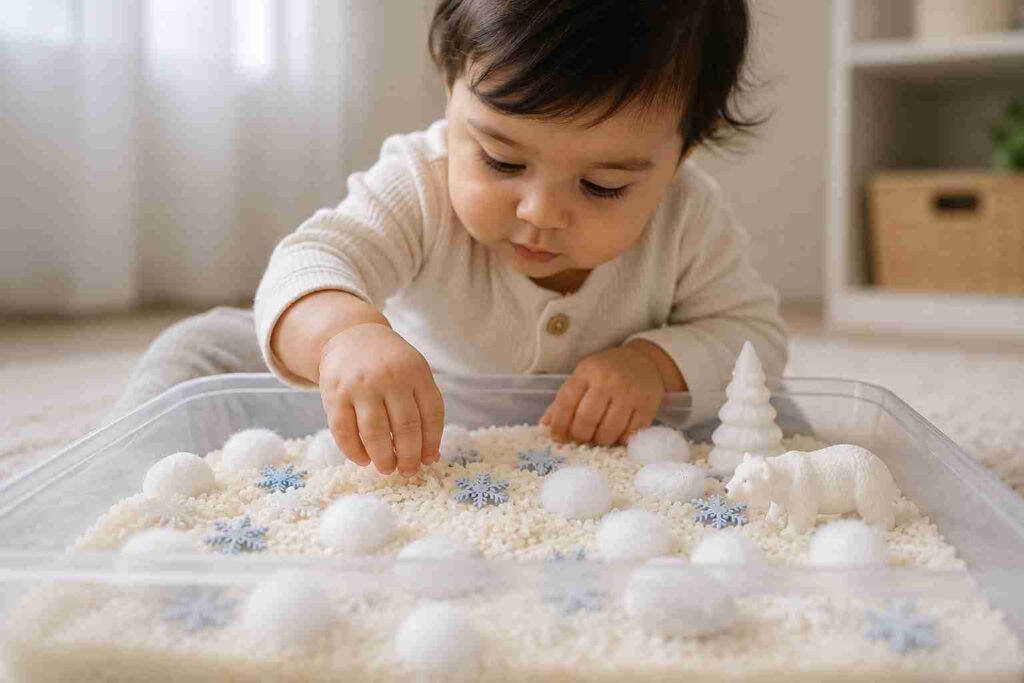
White and pale fillers are the theme here because they photograph beautifully and feel genuinely wintry without requiring anything unsafe. Vihaan responded to the texture contrast between cold and soft more than any specific filler, so we kept bases simple and varied the temperature and tools instead. If you want to go beyond the bin itself, our sensory activities for infants post covers age-by-age ideas for awake time play alongside these setups.
1. White rice snow bin (0 to 12 months)
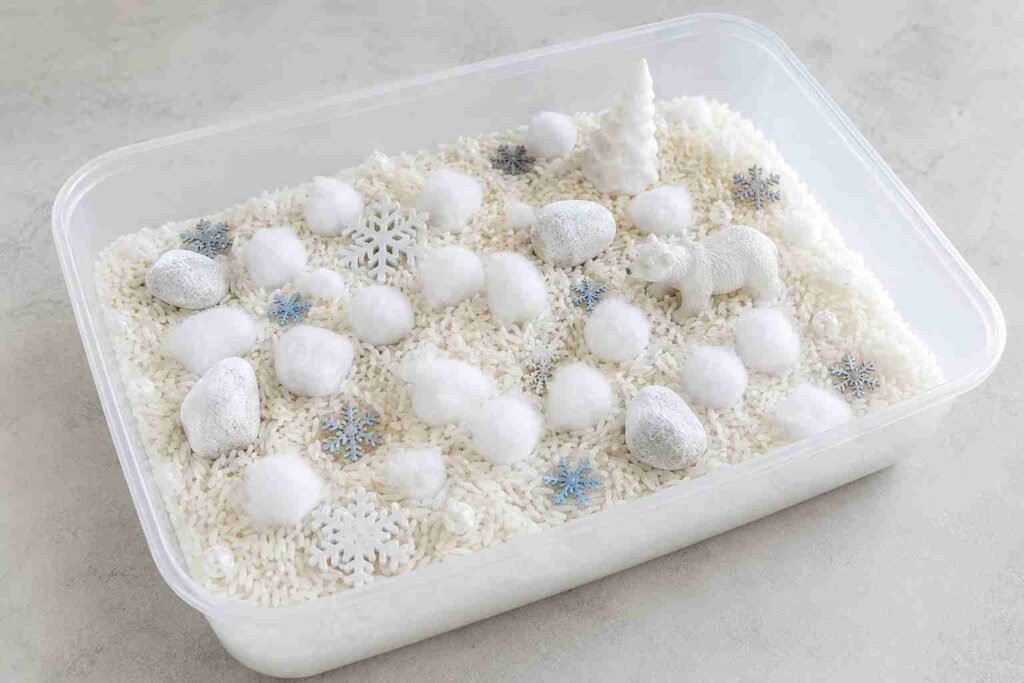
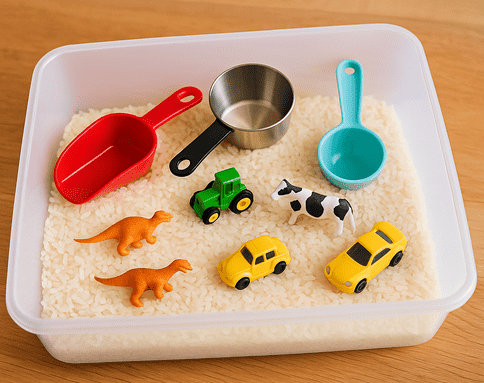
Plain white rice as the base, a wooden spoon and a measuring cup for tools. The visual effect is genuinely snow-like, especially if you add a few small white pom poms on top for older babies approaching 12 months (supervise, remove if mouthing starts). White rice is taste-safe, easy to clean up, and produces exactly the kind of pouring and scooping sound that holds a baby’s attention. We ran this one all through January and February with Vihaan.
2. Oat cloud dough winter bin (6 to 12 months)
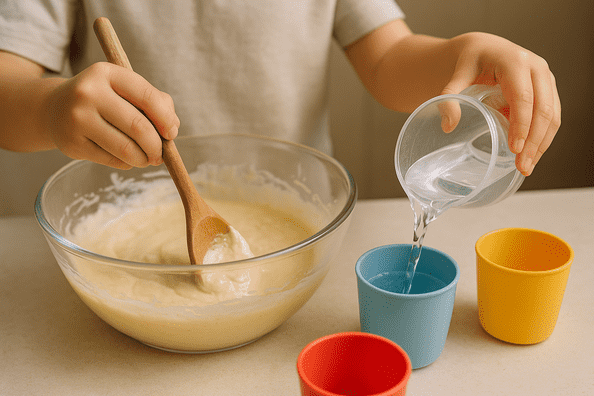
Mix 2 cups plain oats with 1 cup plain flour and enough water to form a soft, mouldable dough that holds its shape loosely and crumbles when squeezed. It has a similar feel to damp sand or soft snow, and the texture change between loose dough and compacted shapes is genuinely interesting at this stage. Add a small star or snowflake cookie cutter for babies who can grip and press. Fully taste-safe.
3. Frozen orange sensory bin (6 to 12 months)
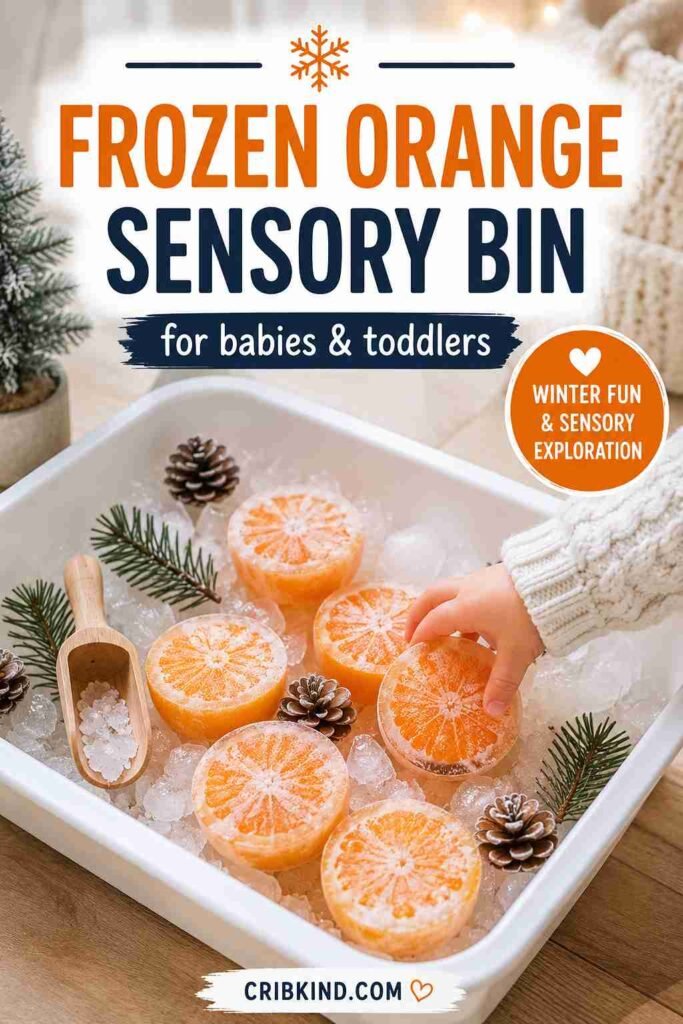
Fill a bin with water and freeze it with a few whole oranges suspended in the ice. Let it thaw at the edges for 10 minutes before serving so it’s not solid throughout. The combination of cold, smooth ice, and the round orange shapes underneath holds attention at the 6 to 9 month stage when object permanence is developing. The melting water creates a sensory element that changes over time, which keeps engagement longer than a static bin.
4. Taste-safe “snow” dough bin (8 to 12 months)
Two parts baking soda, one part cornstarch, mixed dry, then add just enough water to form a crumbly moldable texture. It feels cold, looks white and powdery, and is fully taste-safe. Pack it into a small bowl and turn it out for the baby to break apart. Vihaan was deeply suspicious of this one for about two minutes before deciding it was worth investigating more thoroughly.
5. Cotton ball sensory bin (6 to 12 months)
A shallow bin filled with large cotton balls, too big to be a choking hazard for babies at the sitting-and-reaching stage. The soft, cloud-like texture is genuinely different from anything else in a typical baby’s day, and the visual effect is strongly wintry without any prep at all. Add a pair of small tongs for babies approaching 12 months to practice early fine motor transfer.
Winter sensory bin ideas for toddlers 12 to 24 months
Once mouthing slows down reliably, the winter palette opens up considerably. Eeshan at 18 months was completely focused on the cause-and-effect elements: ice melting, snow compressing into shapes, arctic animals being “rescued” from frozen water. The narrative frame kept him going well past what a purely tactile bin would have managed.
6. Fake snow bin (18 to 24 months)
Two parts baking soda, one part unscented white hair conditioner, mixed until it forms a cold, crumbly texture that packs loosely like real snow. Add small arctic animal figurines, a plastic shovel, and a small cup for packing. This is the closest thing to real snow play for a child who doesn’t have access to actual snow, and Eeshan stayed with it for longer than almost anything else we set up that winter.
The conditioner version is not fully taste-safe, so this one needs to wait until mouthing is reliably done. Wash hands after play.
7. Arctic animals ice rescue bin (15 to 24 months)
Freeze small plastic arctic animals (polar bear, penguin, seal, walrus) in a layer of water overnight. Put the frozen block in a bin and give the toddler a spray bottle of warm water, a dropper, and salt to “rescue” the animals as the ice melts. This is one of the strongest narrative-frame bins we found for toddlers in the 18 to 24 month window because it gives the play a clear goal, find and free each animal, which keeps engagement going for 20 to 30 minutes rather than the 5 to 10 minutes a static filler bin gets.
8. Pom pom winter bin (12 to 24 months)
White, grey, and pale blue pom poms as the base, a muffin tin for sorting by size, and kitchen tongs for the 18 months and up crowd. The sorting element is the key: pom poms in three sizes give a toddler a genuine classification task rather than pure sensory exploration. Eeshan sorted by colour, then by size, then mixed them back together and started again. Not a particularly wintery bin in isolation, but add a few snowflake foam stickers to stick on a tray beside it and it connects to the season visually.
9. Real snow bin (all toddler ages, when available)
If you have access to actual clean snow, bring a tray of it inside for a supervised short play session. Real snow has a texture and temperature that no artificial version truly replicates, and for a toddler who’s never touched it, the sensory experience is genuinely novel. Keep sessions short as noted in the safety banner above. Add small coloured cups for scooping and packing.
We live in India where snow isn’t an option, so everything else on this list was our actual alternative. If you do have snow outside, bring a bowl of it in before setting up anything else. It’s worth it just for the face they make.
10. Winter woodland small world bin (18 to 24 months)
White rice or fake snow as the base, small pine cones or fake trees, woodland animal figurines, and a small mirror tile as a frozen pond. This is the most elaborate setup on the list, but it also generates the longest engagement for toddlers approaching 2 years because small-world play at this stage is genuinely imaginative rather than purely sensory. Eeshan would set up the animals, knock everything over, and start again about seven times before finally abandoning it.
| Bin Idea | Best Age | Taste-Safe | Mess Level | What We Saw |
|---|---|---|---|---|
| White rice snow bin | 0 to 12 months | Yes | Low | Vihaan at 9 months, stayed engaged through two whole measuring cup cycles |
| Oat cloud dough bin | 6 to 12 months | Yes | Medium | Longer engagement than loose oats, especially once he could press the cutter |
| Frozen orange bin | 6 to 12 months | Yes | Medium (water) | The melting element kept it interesting longer than a static bin |
| Taste-safe snow dough | 8 to 12 months | Yes | Low | Vihaan was suspicious then fascinated, the cold temperature was the draw |
| Cotton ball bin | 6 to 12 months | Supervised | Very low | Softest texture in any bin we’ve tried, genuinely calming rather than stimulating |
| Fake snow bin | 18 to 24 months | No | Medium | Eeshan’s longest winter session, packing and unpacking for 25+ minutes |
| Arctic ice rescue | 15 to 24 months | Yes (ice) | High (water) | Best narrative bin we’ve done, the goal kept Eeshan going much longer |
| Pom pom sort bin | 12 to 24 months | No | Very low | Eeshan sorted by size then colour then mixed and repeated, very focused |
| Winter woodland world | 18 to 24 months | No | Low | Most replayable setup on the list, rearranged animals multiple sessions |
What to put in a winter sensory bin (fillers and tools)
The taste-safe / not-taste-safe line is the most useful organising principle for a baby and toddler home, not the typical age brackets most lists use.
Always taste-safe (safe for all ages including under 12 months)
- White rice (plain or cooked and cooled)
- Plain oats
- Baking soda and cornstarch dough
- Real ice or frozen water
- Large cotton balls (supervise, don’t let babies tear into pieces)
Safe once mouthing reliably slows (generally 15 to 18 months)
- Baking soda and conditioner fake snow
- Pom poms in large sizes
- Fake small trees and figurines
- Foam snowflakes
- Salt (for ice melting only, supervise, don’t let toddlers eat it directly)
Tools that work across ages
- Measuring cups and spoons (scooping and pouring)
- Small bowls for sorting and transferring
- Spray bottle of warm water (for ice play, from 15 months)
- Dropper for water (fine motor, from 18 months)
- Tongs for pom pom transfer (from 18 months)
Our fall sensory bin guide covers the same taste-safe vs not-taste-safe split for autumn materials if you want to run these seasonally back to back. And if you’re looking for the companion toys to keep near the bin during awake time, our sensory toys for infants guide covers what’s worth having on hand at each age stage.
Frequently Asked Questions
What do you put in a winter sensory bin for babies?
For babies under 12 months, stick to taste-safe bases: white rice, plain oats, baking soda and cornstarch dough, large cotton balls, or real ice. The shaving cream and insta-snow powder common in most winter sensory bin lists are not appropriate for babies who are still mouthing everything.
How do you make fake snow for a baby sensory bin?
Mix two parts baking soda with one part cornstarch and add just enough water to form a cold, crumbly texture. This version is fully taste-safe. For toddlers 18 months and up who have stopped mouthing, you can use two parts baking soda with one part unscented hair conditioner instead, which has a more realistic snow texture but is not fully taste-safe.
Are winter sensory bins safe for toddlers?
Yes, with age-appropriate materials. The key division is whether your toddler is still mouthing. If yes, use only the taste-safe bases listed above. If mouthing has reliably slowed, the full range of materials opens up. Pom poms, fake snow with conditioner, and small figurines are all fine for toddlers past the regular mouthing stage with supervision.
What is the easiest winter sensory bin to set up?
The white rice snow bin or the cotton ball bin. Both take under two minutes to set up, cost almost nothing, and work from around 6 months. Add a measuring cup and you’re done.
Can babies touch real snow?
Brief supervised snow play is fine for babies who are old enough to sit independently, generally around 6 months and up. Keep sessions short, 5 to 10 minutes maximum, and watch for obvious signs of cold discomfort. Bringing a small amount of clean snow inside for a warm indoor session is actually the gentler option for young babies.
What worked best for us
The most reliable pattern we found across both boys: simple bases hold attention longer than elaborate setups, and adding one cold element, real ice, snow dough, or frozen oranges, changes the sensory experience enough that winter bins feel genuinely different from the fall and summer versions rather than just a re-theme.
The arctic ice rescue bin was the single biggest hit with Eeshan across all the seasonal bins we’ve built. The goal gave it a direction. Everything else was exploration, and exploration is great, but a toddler with a mission will stay with something twice as long.
What’s worked in your house this winter? Drop it in the comments.
Saidesh is a dad of two, Eeshan and Vihaan, writing about what he actually tried, tested, and learned the hard way. CribKind covers baby development, sensory play, and real parenting for the first two years.
2 Comments