12 Best Sensory Toys for Toddlers
Eeshan turned two in March, and somewhere around eighteen months I stopped buying toys that beeped and started buying toys that felt like something. Textures, weights, sounds he had to make happen himself. That shift wasn’t planned. It happened because I noticed he’d ignore a flashing musical thing within a week but go back to a bag of textured balls for a month straight.
Why sensory play matters more than people think at this age
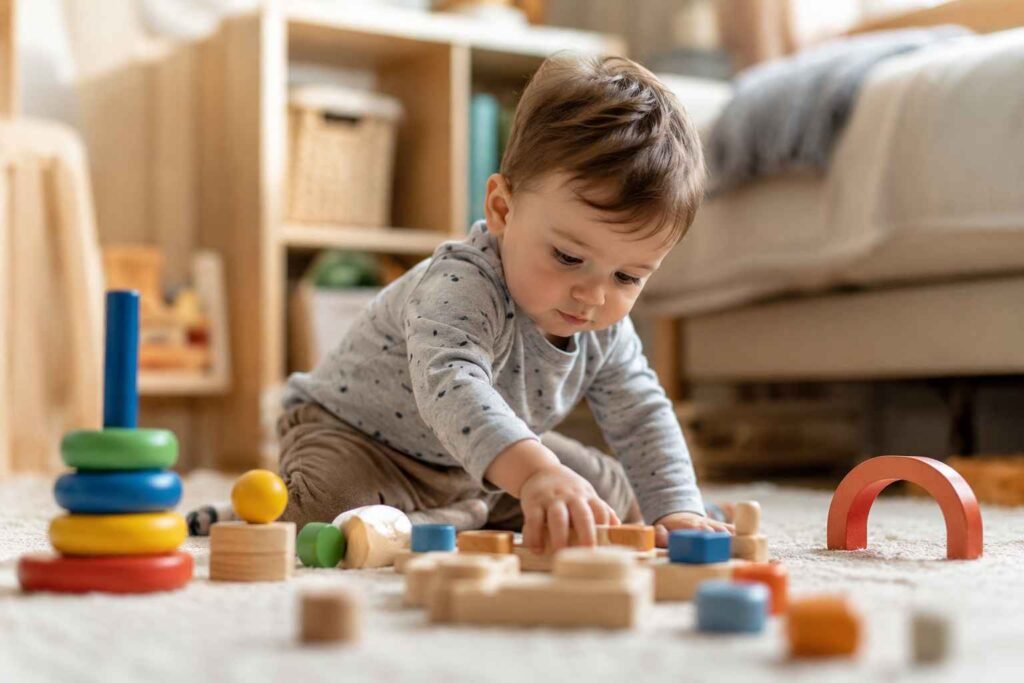
Vihaan is nine months now, watching his brother from the floor like he’s studying for a test. He’s not there yet, but I already know what’s coming. Somewhere around twelve months, toddlers shift from passively experiencing their world to actively seeking specific kinds of input. They want to squeeze, bang, shake, and mouth things on purpose.
The American Academy of Pediatrics frames this stage as one where play directly supports brain structure, executive function, and language. Not in an abstract way. Every time Eeshan stacked a wobbly tower and watched it fall, he was building cause-and-effect reasoning before he could say the words for it.
What surprised me is how much of this happens through ordinary objects, not flashy toys. A toy that lights up when you press a button teaches one thing: press button, get light. A textured ball that feels different in each hand teaches a dozen things at once, and the toddler is the one driving it. That distinction shaped almost every pick on this list, and it’s the same thing that shaped our sensory bottle ideas for younger babies before Eeshan hit this stage.
Tactile exploration toys
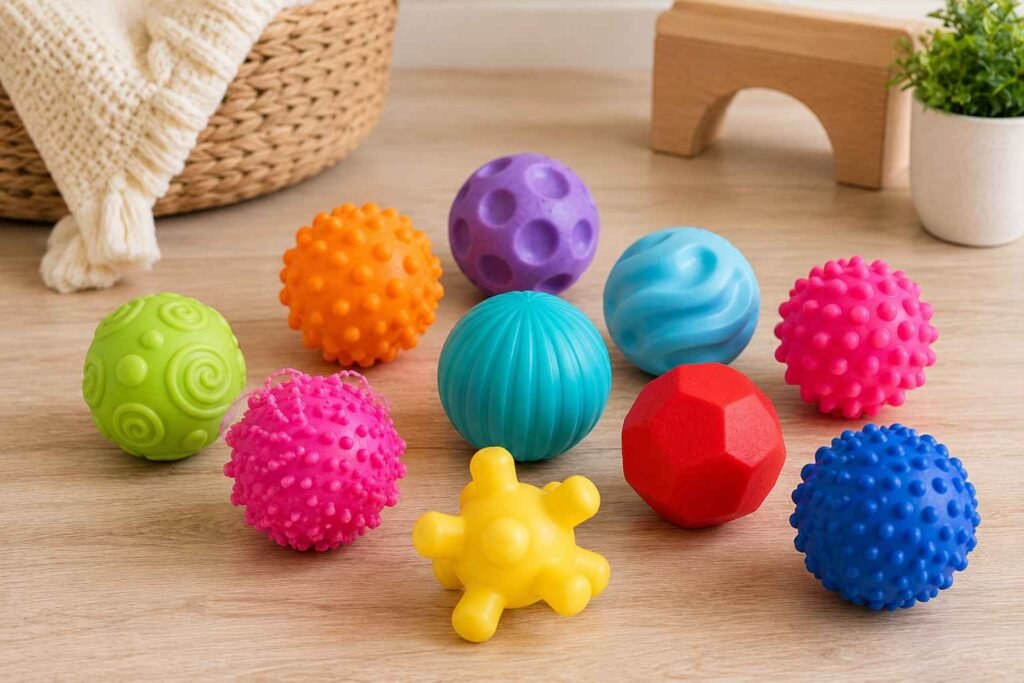
Edushape Sensory Mini Balls (12-Pack) [Best for daily tactile variety]
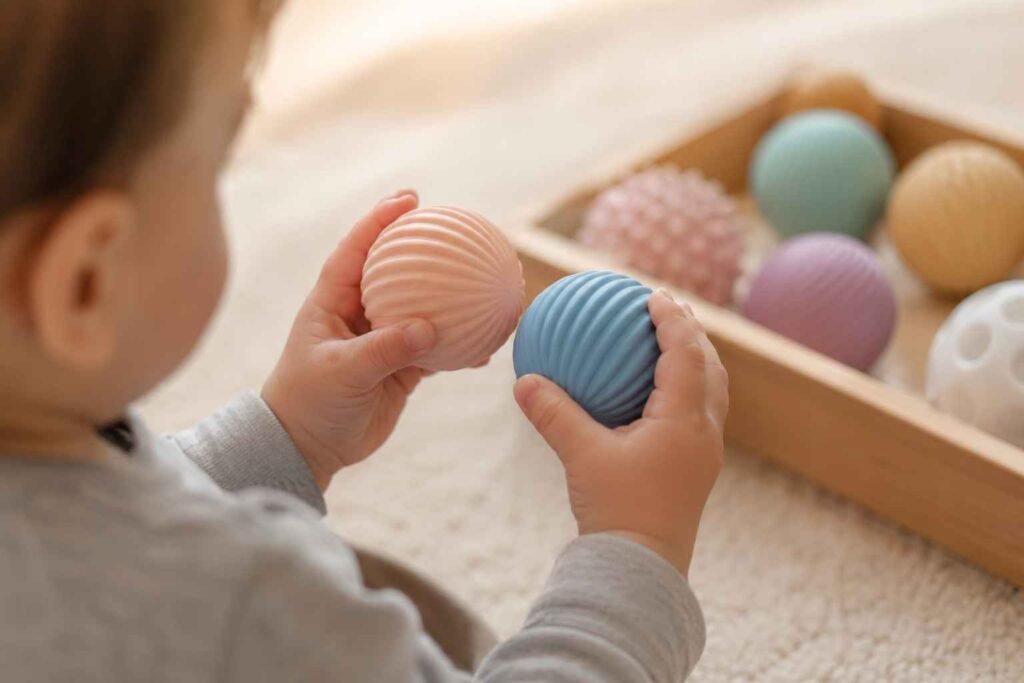
These are twelve balls, each a different texture and color, sized for a toddler’s grip. Nothing complicated. Eeshan went through a phase where he’d line them up by color before scattering them across the living room, which, fine, that’s also a skill.
The point of a set like this isn’t any single ball. It’s the variety. Toddlers at this age are building a mental library of “what does this feel like,” and having twelve different answers in one pack beats a single fancy toy that only teaches one texture. BPA and phthalate-free, which matters since plenty still go straight in the mouth at this stage.
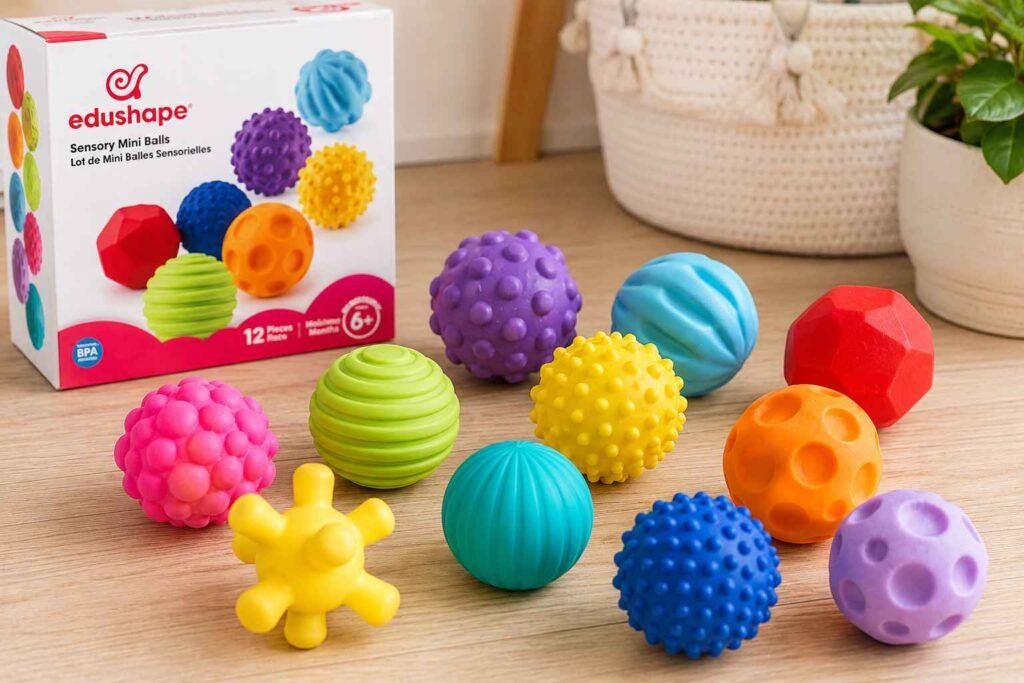
Downside: they’re light and bouncy enough to roll under furniture constantly. We’ve fished one out from behind the bookshelf more times than I’d like to admit.
Edushape Texture-iffic Sensory Ball [Best single tactile ball]
If twelve balls feels like too much clutter, this one ball does a version of the same job. It’s a 7-inch inflatable ball split into eight sections, each with a different tactile pattern. Bumpy, ridged, smooth, dotted.
What I like about this one specifically is the size. It’s big enough for rolling games and gross motor play, not just hand exploration. We use it on the floor with Eeshan for simple roll-it-back games, which doubles as a sensory toy and a basic turn-taking exercise.
It does need to be inflated with the included pump, and the seams can develop a slight grip-resistant texture over time that some toddlers find less interesting after a few months. Still a solid pick if you want one toy that does double duty.
Skip Hop Discoverosity 3-in-1 Toddler Sensory Table [Best for open-ended sensory bins]
This one is built specifically for the 18-month mark, which lines up almost exactly with where Eeshan is now compared to where he was when we started this list. It comes with 13 nature-inspired tools, wooden tongs, rollers, scoops, a shovel rake, and converts from floor play into an actual table as your toddler grows.
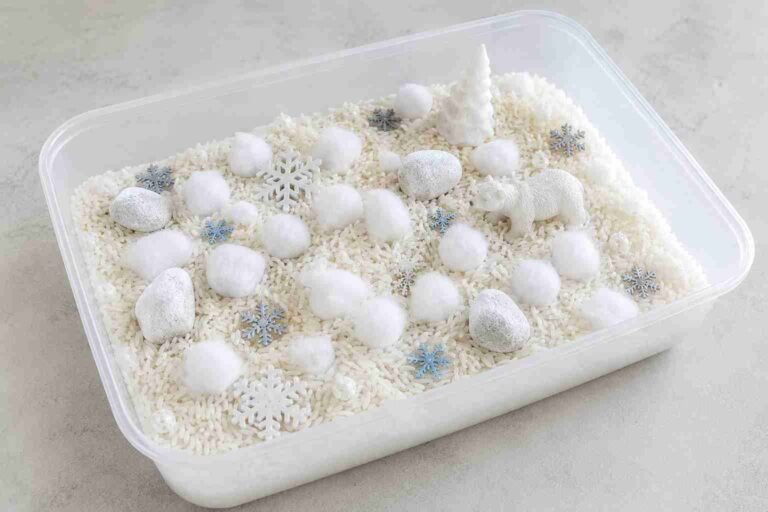
The real value here is that it’s not a single sensory experience. It’s a setup for sensory bin play with whatever filler you choose, rice, dry pasta, water, sand. You’re not locked into the included material once your toddler’s interest in that one specific feel runs out, which is a problem we hit with simpler sensory toys.
Honest downside: assembly takes a bit of patience, and the floor-play mode (18m+) versus table mode (24m+) means you’re not getting full functionality immediately if you buy it right at 18 months. We started with floor play and that was enough engagement on its own.
Fine motor and building toys
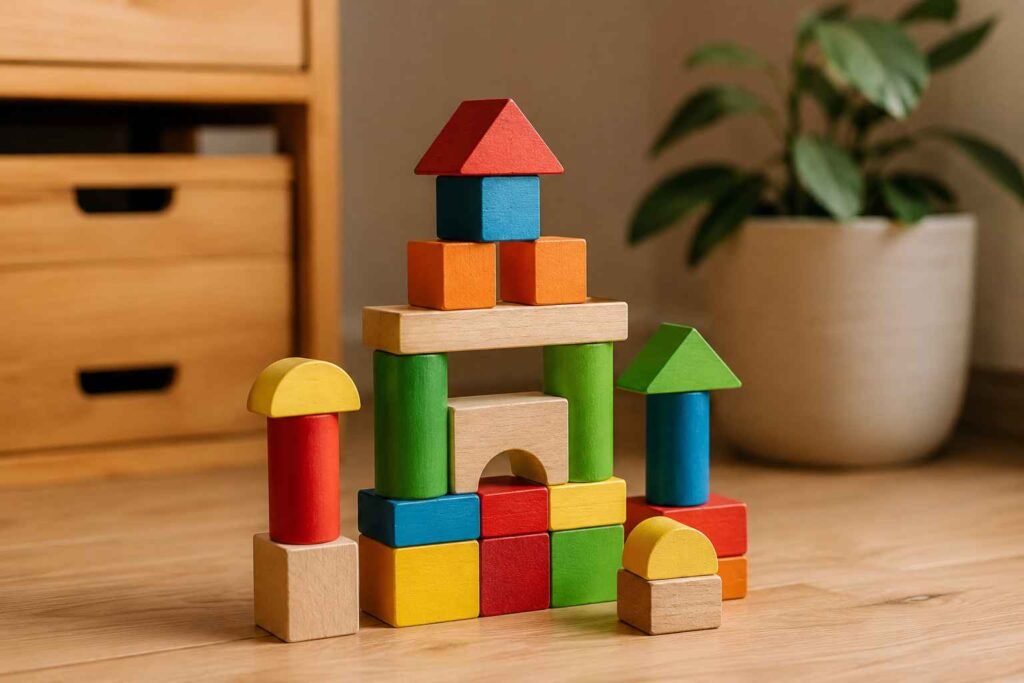
Building and stacking toys do double duty here, sensory feedback through texture and weight, plus the fine motor groundwork covered in our guide to fine and gross motor skill examples by age.
Infantino Press & Stay Sensory Blocks (24-Piece) [Best starter building set]
These are the blocks I’d recommend first if your toddler is just past their first birthday and you haven’t introduced building toys yet. The interlocking design doesn’t require perfect alignment, so a frustrated twelve-month-old isn’t fighting the toy to make it work.
Twenty-four pieces in different colors and textures, soft enough to mouth without worry, and they genuinely do connect in any direction. Eeshan started with these around fourteen months and could build small towers within a couple weeks of regular play.
The downside is durability past the toddler stage. Once a child develops the hand strength for harder snap-together blocks, these start to feel a little too soft and forgiving. That’s fine here, since this list is specifically for 12 to 24 months, but don’t expect them to hold a four-year-old’s attention.
LOVEVERY The Block Set [Best long-term investment]
This is the priciest item on the list at around $90, and I want to be upfront that the price point is a real conversation to have before buying. Seventy solid wood pieces, eighteen colors, and over twenty stage-based activities built into one wooden storage box that doubles as a shape sorter and converts into a pull car.
What pushed this onto the list despite the cost is how it scales. It’s rated from 18 months through roughly four years, which means it’s not a toy you’ll be donating in six months. Parents who’ve used it consistently report their kids returning to it for entirely different kinds of play as they age into it, which lines up with what I’ve read and what makes sense given the design.
The honest downside, and this shows up again and again in other parents’ reviews, not just ours: the wooden storage box is heavy for a toddler to carry, around 3.3 pounds fully loaded, and getting every piece to fit back in perfectly for storage takes more patience than a toddler has. We solved this by keeping a portion of the set in the included cotton bag instead of forcing everything back in the box every time.
Fisher-Price Busy Activity Sensory Blocks [Best for younger end of the range]
Rated from six months and up, these five textured blocks are the toy I’d hand to Vihaan once he’s a little further along, before he’s ready for anything with small interlocking parts. Each block twists, rattles, and stacks, introducing colors, shapes, and sounds without requiring any fine motor precision yet.
I haven’t used these with Vihaan directly yet since he’s still nine months, but watching Eeshan’s friends at that age play with similar Fisher-Price sets, the appeal is obvious. Low frustration, immediate sensory feedback, sturdy enough for a baby who’s still figuring out hand strength.
These are genuinely a younger-end pick. If your toddler is already 18 to 24 months and building actual towers, this will likely feel too simple, too quickly.
Cause-and-effect and fidget toys
Fisher-Price My First Fidget Cube [Best for cause-and-effect learning]
Rubber and metal buttons to click, a toggle switch, spinning rollers, a joystick, a fingertip spinner. Rated from nine months, this is a toy built entirely around the idea that pressing, spinning, and toggling something should produce an immediate, obvious result.
Eeshan went through a stretch around fifteen months where this was his go-to car-seat toy, mostly because it’s compact and doesn’t have pieces that fall and disappear under the seat the way blocks do. The variety of actions on one toy means it holds attention longer than a single-function fidget would.
The trade-off is durability of the moving parts. After heavy use, the spinning roller on ours developed a bit of a sticky catch. Still functional, just not as smooth as day one.
Melissa & Doug Farm Animals Sound Puzzle [Best for auditory and matching skills]
This is an eight-piece wooden peg puzzle where each animal makes its actual sound when placed correctly on the board. Rated from twelve months through about three years, it does double duty: matching and puzzle skills, plus the auditory payoff of hearing a real cow moo or pig oink when the piece goes in.
The light-activated sensor is a small detail that matters in practice. It only triggers in a reasonably bright room, which we didn’t realize at first and assumed the puzzle was defective. Worth knowing before you assume something’s broken.
Eeshan’s favorite part isn’t the puzzle-solving, honestly. It’s just pulling pieces out and replacing them over and over to hear the sounds again, which defeats the matching purpose but still counts as legitimate auditory and fine motor practice.
Sound and music toys
Hape Junior Percussion Set [Best first instrument set]
A tambourine, a maraca, and a clapper, all sized for small hands and rated from twelve months. This isn’t a toy that produces sound on its own. The toddler has to shake, tap, or clap it themselves, which is exactly the kind of self-directed auditory input that matters most at this stage.
We picked this up around the same time as the rainmaker below, and the two get rotated depending on Eeshan’s mood. Some days he wants something loud and percussive. Other days he wants the quieter trickling sound of the rainmaker. Having both gives him a choice, which sounds small but actually cuts down on frustration compared to having only one sound option available.
A few reviewers note the pieces run small and feel a bit delicate for a toddler nearing two who plays rough. That tracked for us too. These are better suited to the younger half of this age range.
Hape Beaded Raindrops Rainmaker [Best calming sound toy]
A small wooden rainmaker filled with beads that trickle and rattle when tilted or shaken. Rated twelve months and up. Unlike most sensory toys on this list, this one leans calming rather than stimulating, which matters more than people expect.
We started reaching for this one specifically during the wind-down part of the evening, not as a primary play toy but as something quieter to hand Eeshan when the rest of the day’s energy needed to come down a notch. It became a small, repeatable part of a bedtime routine almost by accident.
It’s a one-trick toy, tilt and listen, so don’t expect long independent play sessions out of it. That’s not really its job.
Mess-free art and visual sensory toys
Crayola Light Up Activity Board [Best visual sensory toy]
Rated from one year, this is a light box with twelve light-up colors, washable markers, shape clings, and transparency sheets for building simple scenes. The visual feedback, pressing a button and watching colors shift, is its own kind of sensory input, separate from texture or sound.
Eeshan’s interest in this one came later than I expected, closer to twenty months, before that he mostly mashed buttons without much intent behind it. Around twenty months the cause-and-effect clicked and he started actually choosing colors on purpose.
It does run on three AA batteries not included, which is a minor annoyance worth knowing before you wrap it as a gift and realize you need batteries at 8pm.
Crayola Toddler Touch Lights Musical Doodle Pad [Best for the older end of the range]
This one’s rated two years and up, so it sits right at the top edge of our 12 to 24 month window. A sealed gel surface lights up in twelve colors as a toddler doodles with their finger, with six songs playing alongside.
We haven’t tried this one with Eeshan yet since he’s only just approaching the age rating, but the combination of touch, light, and music in a single mess-free surface is the kind of multi-sensory input that tends to hold attention longer than single-sense toys. Worth having on the radar as your toddler approaches two, even if it’s not quite ready-to-use at fourteen or fifteen months.
The honest caveat here is straightforward: if your toddler is on the younger half of this range, this one will sit unused for a while. Buy it closer to the two-year mark.
| Toy | Age Rating | Best For |
|---|---|---|
| Edushape Sensory Mini Balls | 6m+ | Daily tactile variety |
| Edushape Texture-iffic Ball | 6m+ | Single tactile ball plus rolling games |
| Skip Hop Discoverosity Table | 18m+ | Open-ended sensory bins |
| Infantino Press & Stay Blocks | 12m+ | First building set, what we used with Eeshan around 14 months |
| LOVEVERY The Block Set | 18m+ | Long-term, scales for years |
| Fisher-Price Sensory Blocks | 6m+ | Younger end of the range, future pick for Vihaan |
| Fisher-Price Fidget Cube | 9m+ | Cause-and-effect, portable |
| Melissa & Doug Sound Puzzle | 12m-3yr | Auditory and matching skills |
| Hape Junior Percussion Set | 12m+ | Self-directed sound, active play |
| Hape Raindrops Rainmaker | 12m+ | Calming, bedtime wind-down |
| Crayola Light Up Activity Board | 1yr+ | Visual sensory, cause-and-effect |
| Crayola Touch Lights Doodle Pad | 2yr+ | Older end of range, light plus music plus touch |
Frequently Asked Questions
What age should toddlers start using sensory toys?
Most sensory toys on this list are rated from six to twelve months and continue being useful through age two and beyond. The specific toy matters more than a hard age cutoff. A toddler who’s mouthing everything at twelve months needs different sensory input than one who’s building towers at twenty months.
Are sensory toys different from regular toddler toys?
Not always in obvious ways. The distinction is more about what the toy asks the child to do. A sensory toy gives meaningful tactile, auditory, or visual feedback that the toddler controls directly, rather than passively watching lights or sounds happen on their own.
How many sensory toys does a toddler actually need?
Fewer than you’d think. We rotate two or three at a time rather than leaving all twelve from this list out simultaneously. Toddlers engage more deeply with a smaller, rotating set than an overwhelming pile of options.
Can sensory toys help with speech delays?
Sensory toys support general developmental engagement, but they aren’t a substitute for evaluation if you have specific speech concerns. If you’re watching for speech milestones specifically, our guide on what’s normal at 14 months and not talking covers that separately.
Are wooden sensory toys safer than plastic ones?
Both can be safe when they meet US toy safety standards and are BPA and phthalate-free, which every toy on this list is. Wood tends to last longer and shows wear differently, but it’s not inherently safer for a toddler who’s still mouthing objects.
What sensory toys are best for calming an overstimulated toddler?
Toys with repetitive, predictable sensory input work best for this, things like the rainmaker on this list rather than toys with bright lights or multiple sounds competing at once. We use the Hape Rainmaker specifically for this with Eeshan.
From one dad to another
If I had to pick just three from this list to start with, I’d go with the Edushape Sensory Mini Balls for variety, the Infantino blocks for fine motor, and one music toy, whichever sound your toddler responds to more. Everything else can come later as interest develops.
What I didn’t expect going into this stage with Eeshan was how much the simpler, more open-ended toys outlasted the flashier ones. The fidget cube and the light-up board both still get played with, but the sensory balls and the rainmaker have been in steady rotation for months without losing their pull. Watching Vihaan start to take an interest in the same bag of textured balls from the floor tells me we’re about to do this whole stretch again, and honestly, I’m looking forward to it.
What’s worked for your toddler? Drop it in the comments.
Saidesh is a dad of two, Eeshan and Vihaan, writing about what he actually tried, tested, and learned the hard way. CribKind covers baby development, sensory play, and real parenting for the first two years.