10 Fall Sensory Bin Ideas for Babies and Toddlers
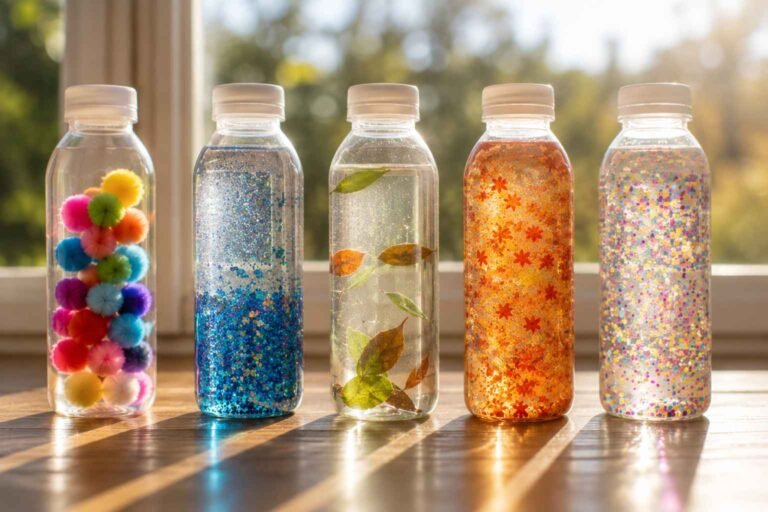
If your baby or toddler is about to spend another afternoon staring at the same four toys, a fall sensory bin will fix that for about $3 and fifteen minutes of your time. Vihaan discovered his first one at 8 months, around the same time we introduced the sensory bottles he loved, and spent longer on it than anything else we’d put in front of him that week.
Not because it was fancy. Because there were things to grab, squeeze, and dump, and the whole thing smelled like cinnamon.
What is a fall sensory bin and why babies and toddlers love them
- A sensory bin is a container filled with materials that engage touch, sight, and sometimes smell and sound. For babies and toddlers, the developmental case for them is real, and it connects to the same sensory principles we cover in our sensory activities for infants guide: according to the American Academy of Pediatrics, sensory-rich play supports neural development in ways that passive toy play doesn’t. They’re not a gimmick. They’re just a bin of interesting stuff that your baby can explore with their whole body.
- Fall makes sensory bins particularly good because the season gives you a natural theme that hits multiple senses at once. Orange and brown colours. Cinnamon and oats when you lift the lid. Dried leaves that crinkle, and the satisfying weight of a mini pumpkin that’s just the right size for a toddler to lift. You can build an entire bin from things already in your pantry and garden without spending anything.
- Vihaan’s first fall bin was a plastic storage container from the kitchen, about half full of plain oats with a couple of wooden spoons thrown in. That was it. He stayed engaged for almost 20 minutes, which was longer than any battery-operated toy had ever held his attention.
Fall sensory bin ideas for babies 0 to 12 months
Under 12 months everything goes straight into the mouth, so taste-safe is the only option. The good news is that oat-based and cooked-pasta bins hold a young baby’s attention just as well as the more elaborate toddler versions. The sensory input from texture and temperature matters more to them than the visual complexity at this stage.
Vihaan was 8 months when we started these, and what surprised me was that he stayed with the bin longer when we added a scent element, a cinnamon stick tucked into the oats that he couldn’t eat but could smell and mouth on the outside. That’s the kind of thing you only discover by watching your own baby.
1. Cinnamon oat bin (0 to 12 months)
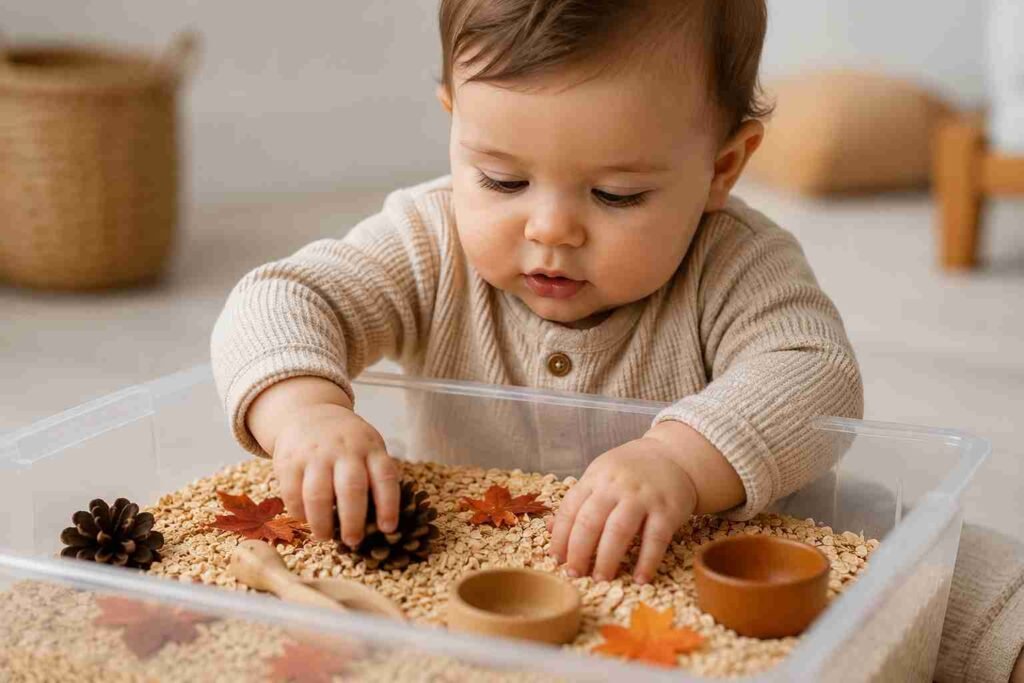
Plain oats as the base, a cinnamon stick on top, wooden spoon for scooping. That’s genuinely all it needs to be. The scent of cinnamon is strongly associated with fall and holds attention even for babies who can’t see the full colour palette yet. Oats are taste-safe and easy to clean up.
2. Pumpkin puree bin (6 to 12 months)
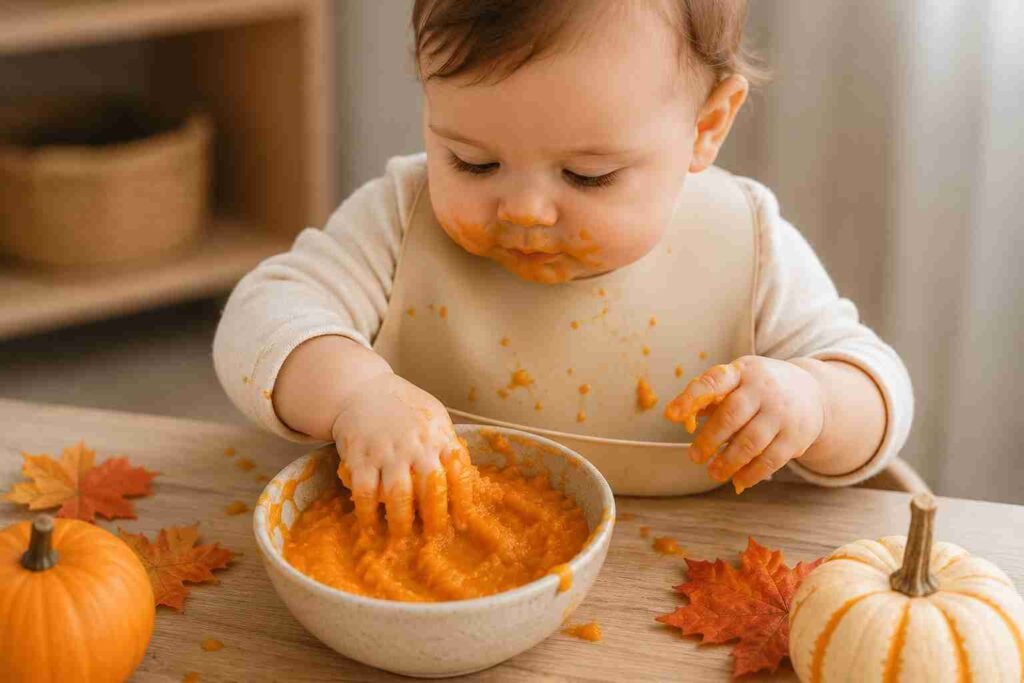
A shallow tray with a layer of plain pumpkin puree, let the baby drag their hands through it. Messy, genuinely developmentally appropriate for this stage, taste-safe. We added a few pieces of dry oat cereal on top for Vihaan to practice picking up, which turned it into a fine motor activity at the same time. Put the baby in a bib and accept that the onesie is a casualty.
3. Apple sensory bin (6 to 12 months)
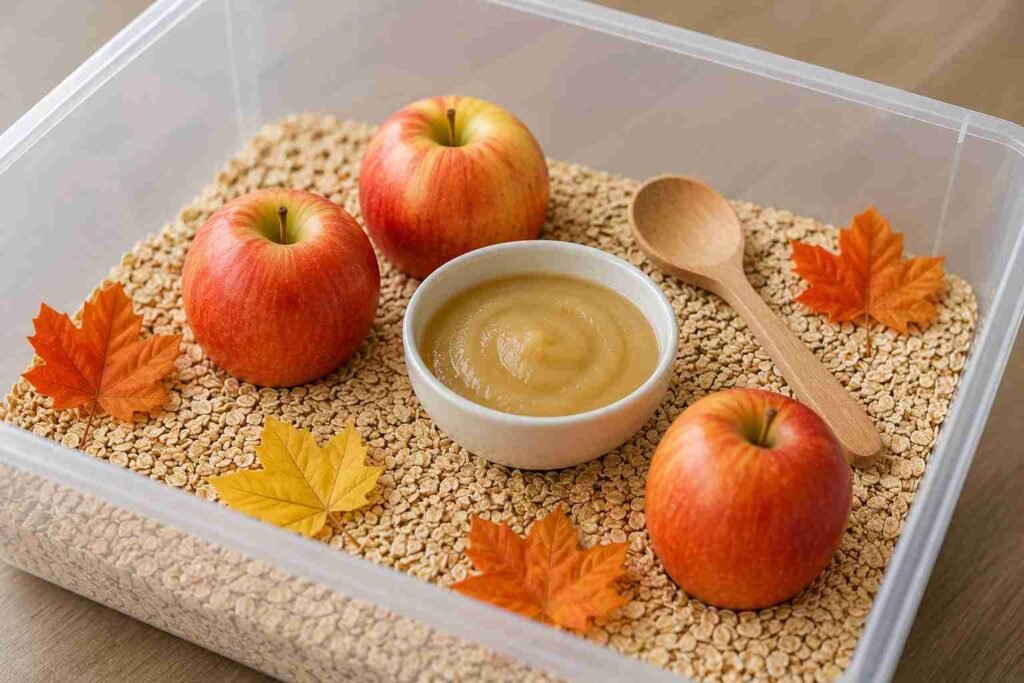
Small bowl of unsweetened applesauce, a few whole apples to handle (too large to swallow, smooth texture, natural fall scent), a wooden spoon. The visual contrast between the smooth apple skin and the soft sauce works well for babies in the 6 to 9 month window who are still developing visual discrimination.
4. Cooked pasta fall bin (6 to 12 months)
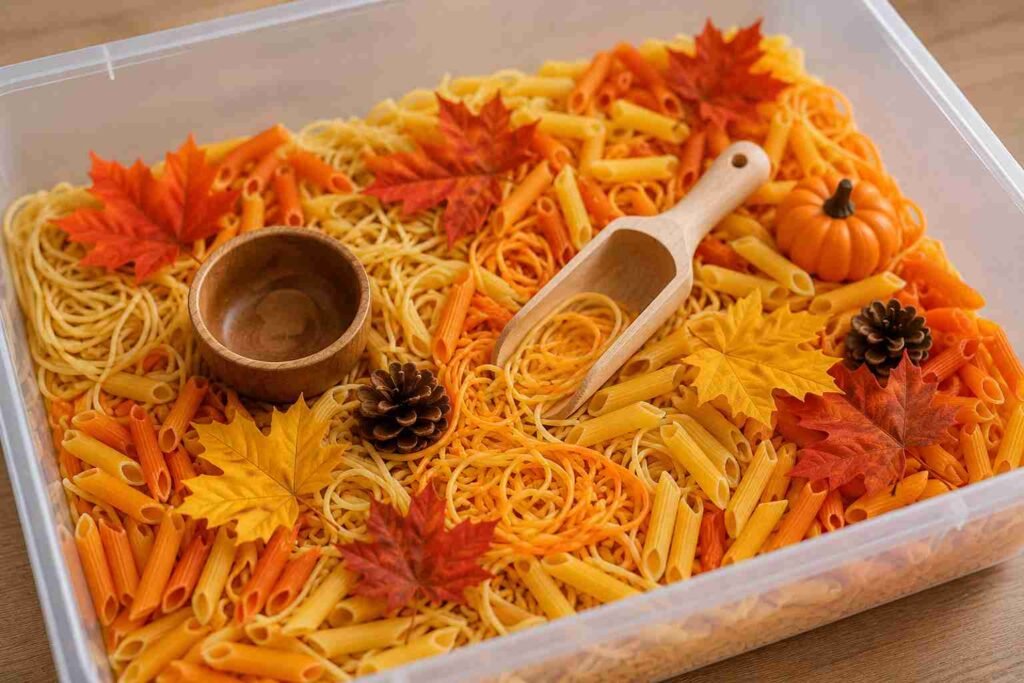
Cook spaghetti or penne, let it cool completely, spread in a bin. Add a drop of orange food colouring to some batches while cooking for a fall palette. Pasta is taste-safe, produces interesting sounds when scooped, and the different textures (smooth penne vs spaghetti) give multiple sensory inputs from one base. Refrigerate unused portions and discard after a day.
5. Oat dough bin (8 to 12 months)
Mix 2 cups oats with 1 cup plain flour and enough water to form a soft pliable dough. Taste-safe, mouldable, holds shapes slightly, entirely different sensory experience from loose oats alone. Add cinnamon to the mix for the fall scent. This one requires more prep but holds attention significantly longer for babies approaching the crawling and pulling-up stage.
Fall sensory bin ideas for toddlers 12 to 24 months
Once mouthing slows down, which tends to happen somewhere between 12 and 18 months but varies widely by child, the filler options expand significantly. The key shift is that toddlers in this window start engaging with cause and effect more deliberately. Dumping happens on purpose now. Pouring from one container to another becomes a game they repeat for its own sake. They hide objects and find them again. The bin stops being purely sensory and starts being genuinely playful.
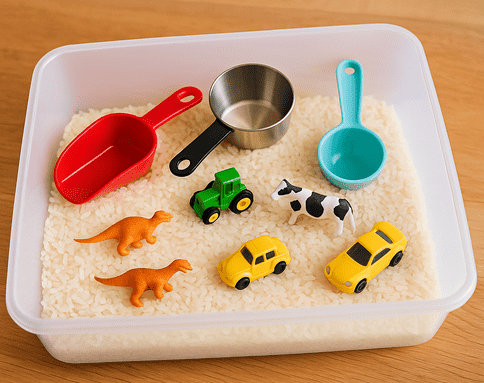
With Eeshan at this stage we started adding themed small-world elements, plastic animals hidden in the rice, small wooden numbers buried in the oats. It changed the engagement from passive sensory exploration to actual hunting and sorting, which kept him going considerably longer.
6. Coloured rice fall bin (12 to 24 months)
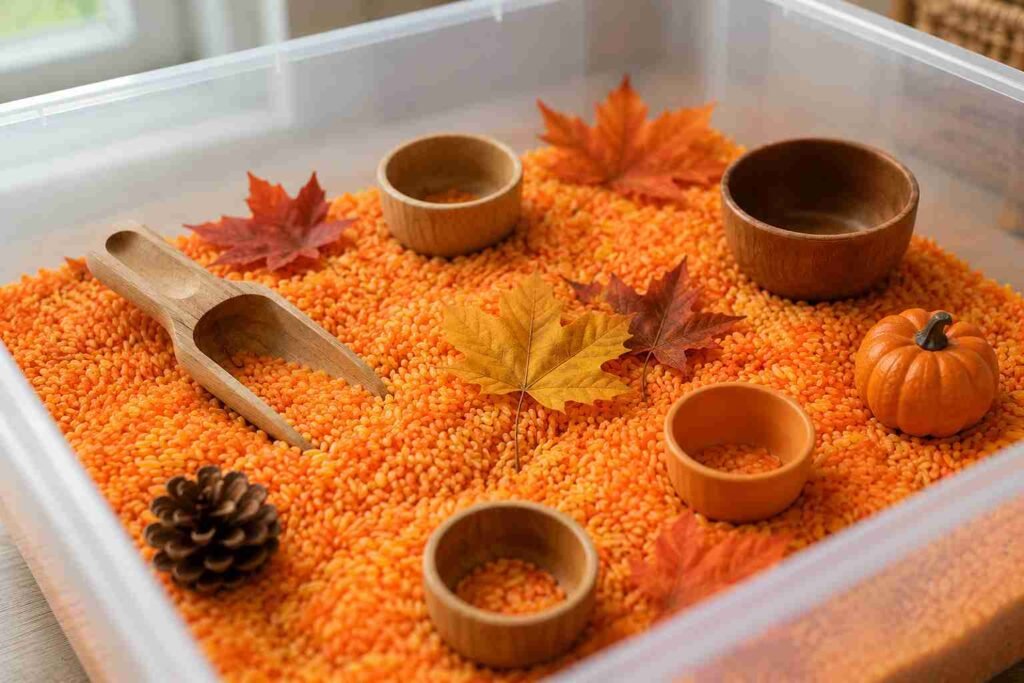
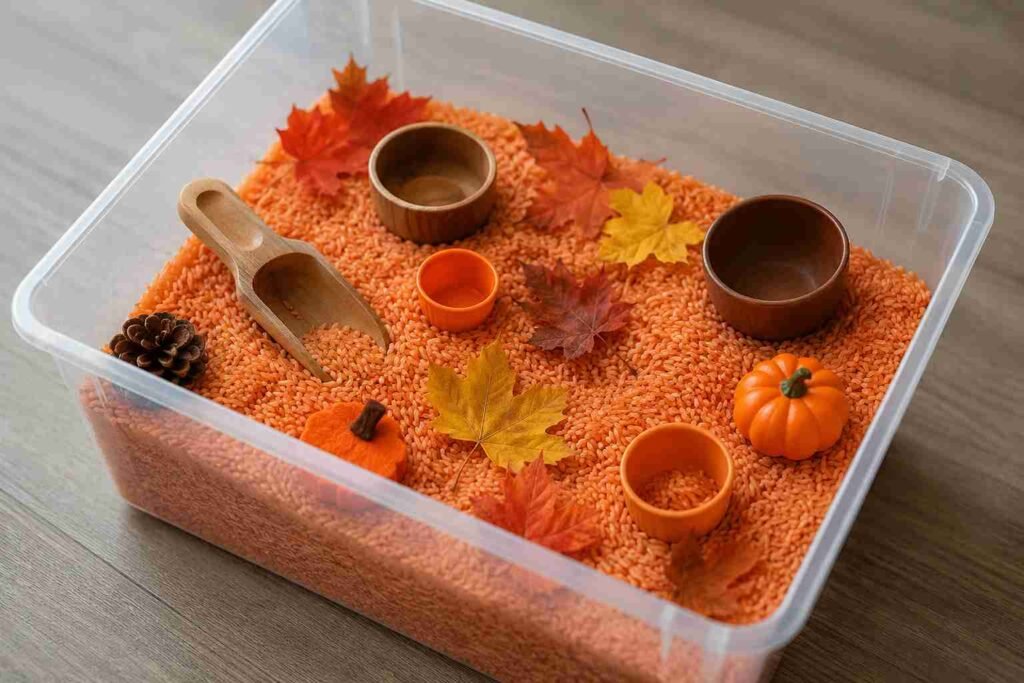
Dye rice in orange, yellow, and brown using food colouring and white vinegar, spread to dry on a baking sheet overnight. Add measuring cups, small bowls, and a funnel. The colour variety itself is the visual draw, and the sound of rice pouring is one of the more satisfying auditory elements you can put in a toddler’s hands. This is probably the most photographed fall sensory bin on Pinterest for good reason: it looks impressive, costs about $1, and keeps a toddler engaged for a genuine stretch of time.
7. Apple harvest bin (12 to 24 months)
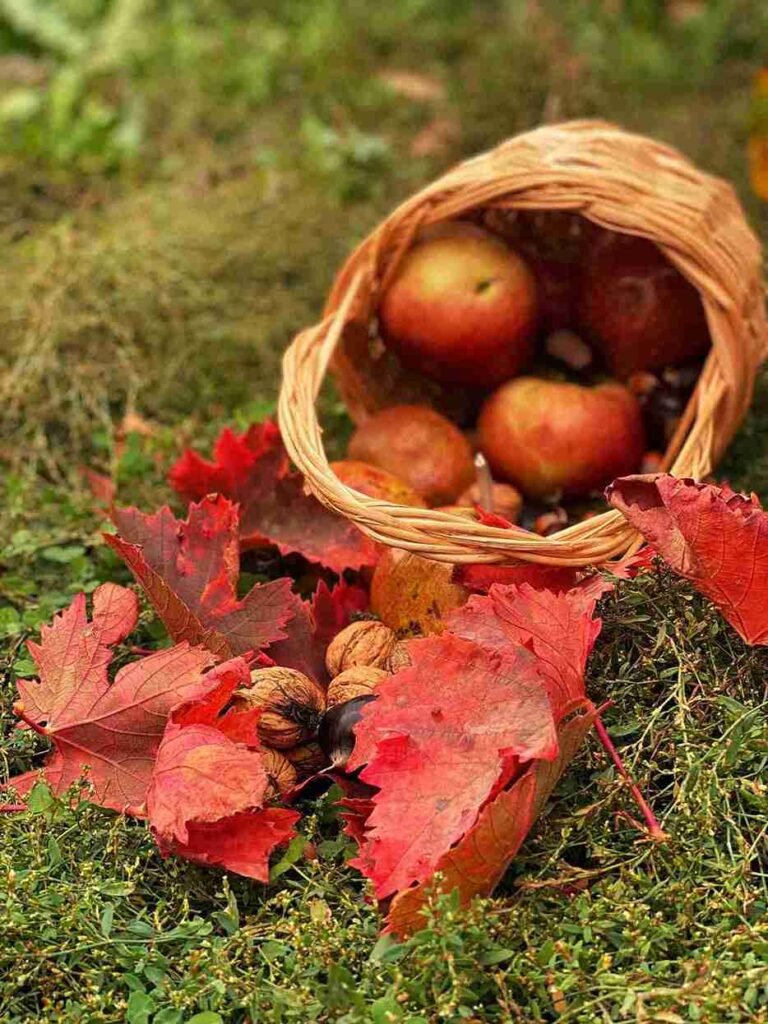
Red and green dyed oats as the base, plastic or foam apples hidden in the oats, a small basket for collecting. Toddlers at this age are developing the object permanence skills that make hiding-and-finding genuinely exciting rather than just confusing. The collecting element adds a goal to the play that extends engagement well beyond pure sensory exploration.
8. Corn and pumpkin bin (15 to 24 months)
Dried corn kernels as the base, a few mini pumpkins and small gourds, kitchen tongs for transferring. The weight and resistance of mini pumpkins gives a different tactile experience than loose fillers, and the tong challenge suits the 15 to 24 month window where fine motor coordination is developing quickly. Eeshan was obsessed with moving the pumpkins from one bowl to another and back again for about three weeks running.
9. Leaf pile bin (12 to 24 months)
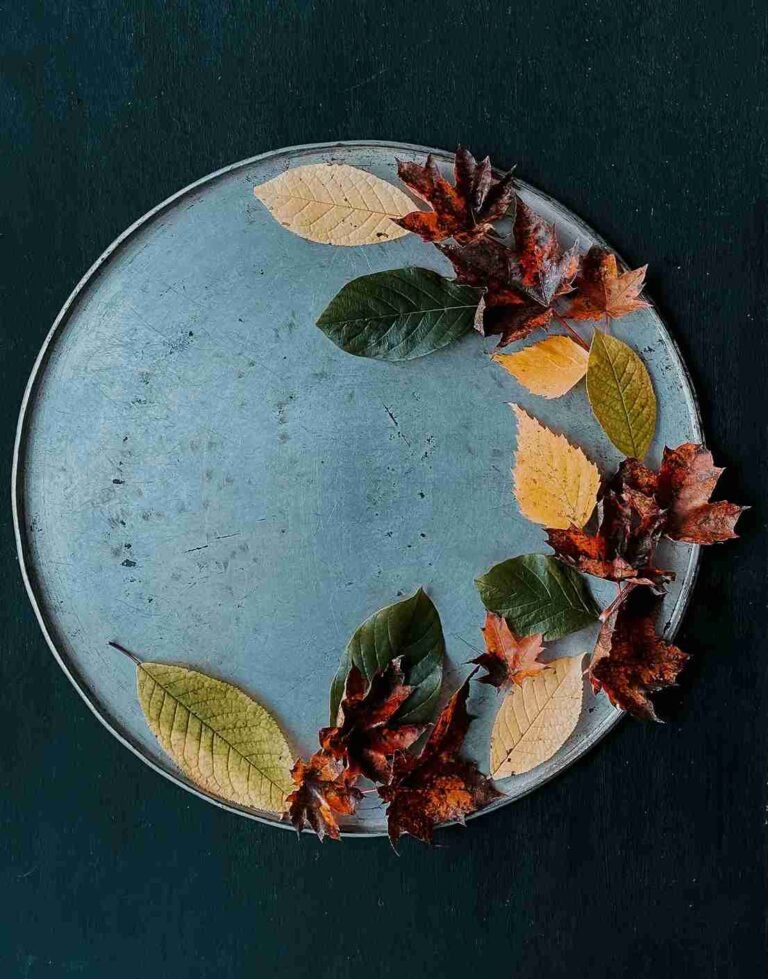
Real or artificial autumn leaves as the base, small plastic woodland animals or pumpkins hidden underneath, sensory tools for digging. Real leaves add authentic texture and the faint smell of autumn, though rinse them first if they came from outside. This one photographs beautifully and is probably the easiest to set up of any bin on this list: gather leaves, put them in a bin, done.
10. Pumpkin soup bin (18 to 24 months)
Water tinted orange with food colouring, a small ladle, plastic pumpkins and leaves floating in it, a strainer. Water play at this age is inherently engaging, and the soup-making frame gives it a narrative your toddler can follow independently. Set it up outside or on a towel. It will get everywhere. That’s fine.
| Bin Idea | Best Age | Taste-Safe | What We Saw |
|---|---|---|---|
| Cinnamon oat bin | 0 to 12 months | Yes | Vihaan at 8 months, 20 min engagement, kept going back to the cinnamon stick |
| Pumpkin puree bin | 6 to 12 months | Yes | Messy but genuinely held attention longer than most baby toys at this stage |
| Cooked pasta fall bin | 6 to 12 months | Yes | Sound of scooping was as engaging as the texture , worth the cooking time |
| Oat dough bin | 8 to 12 months | Yes | More prep but longer engagement than loose oats , worth it closer to 10 to 12 months |
| Coloured rice fall bin | 12 to 24 months | No | Eeshan’s most-returned-to bin at 14 months, the colour variety made it reusable for weeks |
| Apple harvest bin | 12 to 24 months | Partly | The hiding-finding element extended play beyond pure sensory exploration |
| Corn and pumpkin bin | 15 to 24 months | No | Eeshan moved pumpkins back and forth for weeks , one of the longest-running bins we built |
| Pumpkin soup bin | 18 to 24 months | No | Set up outside , the soup narrative that gave the play a direction that pure fillers didn’t |
What to put in a fall sensory bin (fillers, tools, and add-ins)
The age of your child determines the filler options more than anything else. Under 12 months, assume everything goes in the mouth. Over 12 months, you get more flexibility once you know your specific child’s mouthing habits.
Taste-safe fillers (safe for all ages including babies under 12 months)
- Plain oats or dyed oats (a few drops of food colouring in warm water, soak, dry overnight)
- Cooked and cooled spaghetti or pasta, plain or dyed
- Pumpkin puree (messy, genuinely enjoyable for babies, wash hands and baby after)
- Unsweetened applesauce in a small bowl for scooping
- Dried cereal like Cheerios (pincer grasp practice and taste-safe)
- Marshmallows (soft, safe, toddlers find these endlessly entertaining)
Add when mouthing slows (generally 12 months and up, know your child)
- Coloured rice (dyed with food colouring and vinegar, dried overnight)
- Dried corn kernels or corn on the cob
- Dried pasta (uncooked, various shapes)
- Dried beans or lentils
- Real or fake autumn leaves
- Mini pumpkins and small gourds
- Pinecones (supervise, sharp tips)
- Cinnamon sticks for scent
- Acorns (remove caps which can be a choking hazard)
Tools that make it better
- Measuring cups and spoons (scooping and pouring is the whole point)
- Wooden spoons or silicone spatulas
- Small bowls or muffin tin for sorting and transferring
- Kitchen tongs for toddlers 18 months and up (fine motor practice)
- Funnels for older toddlers
How to set up a fall sensory bin in 5 minutes
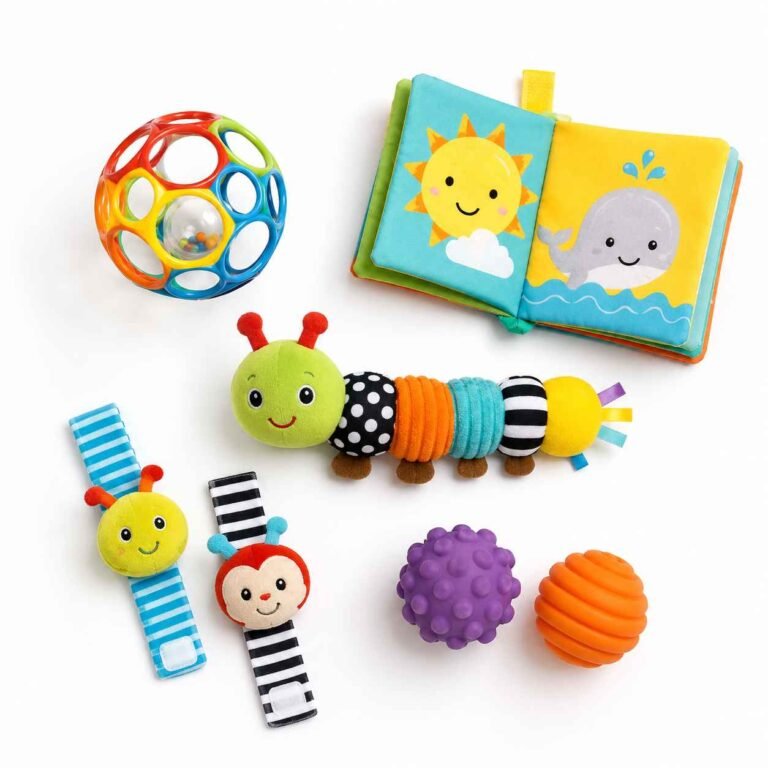
The barrier to starting is almost always overestimated. If you want to go beyond the bin itself, our guide to sensory toys for infants covers the companion toys worth keeping nearby during sensory play sessions. You don’t need a special bin, specific tools, or craft store supplies. Here’s the actual process.
- Find a container. A plastic storage box, a roasting pan, a cardboard box with a bin liner in it. The shape matters less than having sides tall enough that the filler stays mostly inside when a toddler is at work.
- Add your base. One material is enough. Oats, rice, leaves, pasta. Pick whatever you already have.
- Put in two or three tools. Measuring cups and a spoon is enough for most ages. You don’t need a kit.
- Add one or two fall themed items if you have them. A mini pumpkin, a cinnamon stick, a handful of leaves. Optional but adds the seasonal element.
- Set it on the floor or a low table, put the baby or toddler in front of it, and step back.
The whole process takes about five minutes. The cleanup depends on your filler choice. Oats and rice are the easiest, a dustpan handles most of it. Water bins and pumpkin puree bins require a towel and a quick change of clothes, but they’re worth it for the engagement they produce.
Dollar Tree fall sensory bin ideas
Every fall sensory bin on this list can be built for under $5 using Dollar Tree supplies. The things worth looking for specifically in the fall section:
- Mini pumpkins and gourds (plastic, usually in bags of 4 to 6)
- Artificial autumn leaves (a bag goes a long way and can be reused for years)
- Small plastic woodland animals or acorns
- Foam stickers in leaf and pumpkin shapes for older toddlers to sort
- Small plastic containers or cups for tools
The base fillers, oats, rice, and pasta, come from the grocery store, not the Dollar Tree, and cost less than $2 for enough to fill a bin multiple times. The craft store is genuinely optional for everything on this list.
Frequently Asked Questions
What do you put in a fall sensory bin?
For babies under 12 months, taste-safe bases like oats, cooked pasta, or pumpkin puree. For toddlers 12 months and up, the options expand to coloured rice, dried corn, dried beans, real autumn leaves, and mini pumpkins. Tools like measuring cups, wooden spoons, and small bowls turn any base into a full activity.
Are fall sensory bins safe for babies?
Yes, with age-appropriate materials. Under 12 months, everything should be taste-safe since babies mouth everything at this stage. Oats, cooked pasta, applesauce, and pumpkin puree are all safe base options. Dried rice, beans, corn, and uncooked pasta are choking hazards for babies and should wait until mouthing slows, typically around 12 to 18 months depending on the child.
How do you make a fall sensory bin for a 1 year old?
Start with coloured rice or dried oats as the base. Add measuring cups, a small bowl or muffin tin, and a couple of fall-themed add-ins like plastic pumpkins or artificial leaves. The combination of a pourable base plus containers gives a 12 to 18 month old everything they need for a solid play session. Keep it simple. One material and two tools is enough.
How long do toddlers play with sensory bins?
Anywhere from 10 minutes to 30 or more depending on the age and the filler. Younger babies tend to stay engaged for shorter stretches with simpler setups. Toddlers 18 months and up, especially with bins that include a task like hiding and finding objects, regularly go for 20 to 30 minutes. In our experience, bins with a narrative element, soup making, apple picking, pumpkin collecting, consistently outlast bins that are purely texture-based.
Can I reuse a fall sensory bin?
Yes, and they often get more interesting with reuse. Coloured rice bins can be reused for weeks by adding new small items to discover or changing the tools. Leaf bins last the whole season. Perishable bases like cooked pasta or pumpkin puree should be discarded after one session.
What fall bins have worked with your baby or toddler? Drop it in the comments.
Saidesh is a dad of two, Eeshan and Vihaan, writing about what he actually tried, tested, and learned the hard way. CribKind covers baby development, sensory play, and real parenting for the first two years.

5 Comments