
10 Best Toys for 3 Month Old Babies That Actually Support Development
When Eeshan hit three months, something shifted. He stopped staring blankly at the ceiling and started actually noticing the world. He would track my face when I moved. He would bat at something dangling above him and then do it again, on purpose. He was becoming a person with opinions, and his opinions mostly involved wanting to grab everything within reach.
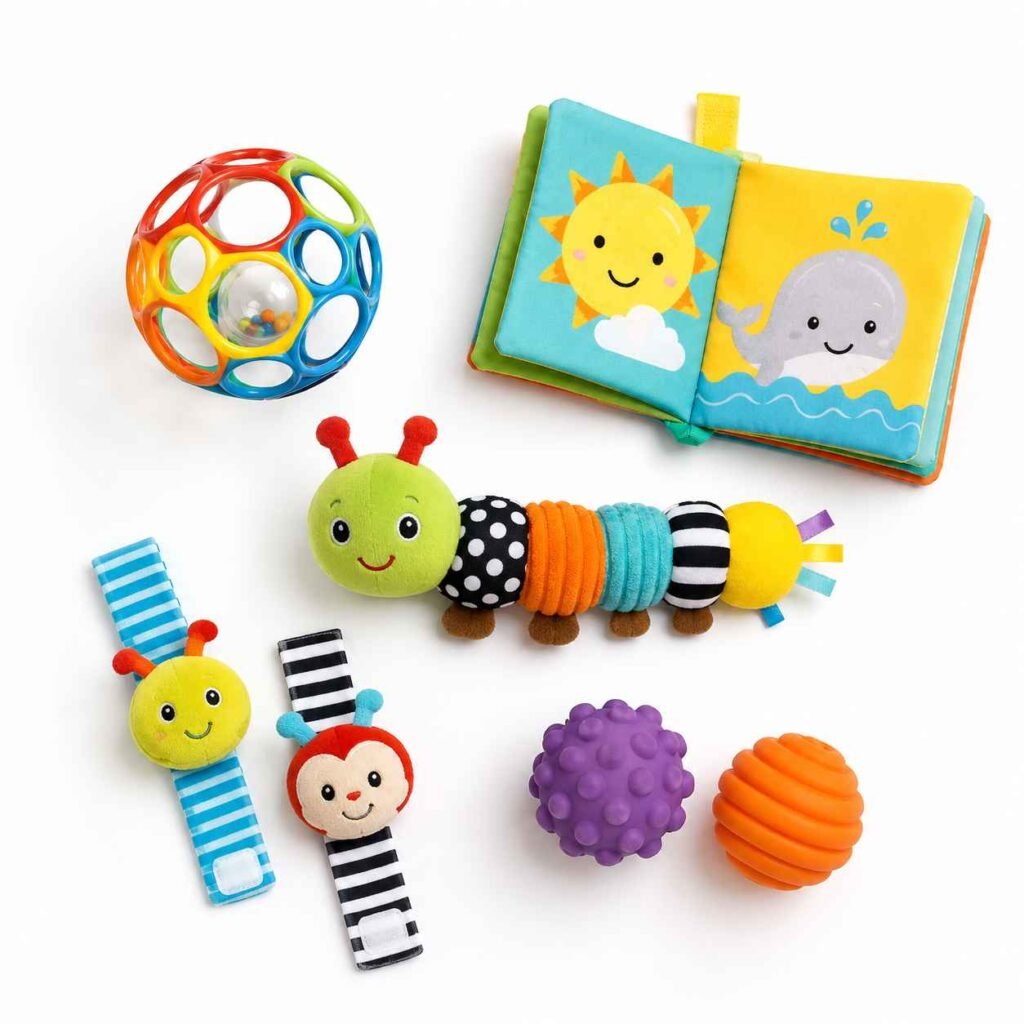
The problem was I had no idea which toys for 3 month old babies actually mattered. We had a pile of things well-meaning relatives had gifted us, most of which he ignored completely. So I started paying attention to what he actually reached for, looked at, and responded to. Then I went through the same thing again with Vihaan and refined the list even further. What you are reading is the result of those two rounds.
What is happening developmentally at 3 months
Three months is a genuine leap. By now your baby can hold their head up briefly during tummy time, is starting to push up on their forearms, and is actively tracking objects and faces with their eyes. Their hands are uncurling from fists. They are beginning to reach, bat, and swipe at things, not always accurately, but intentionally.
Color vision is switching on around now too. Up until about 8 weeks, bold black and white patterns gave their developing eyes the clearest possible signal. At 3 months, bold reds and greens start registering. Pastels and soft colors still look washed out to them, but bright primaries are starting to land.
The best toys for 3 month old babies match all of this. They are light enough for small hands that are just learning to grip. They respond to contact in some way, with sound, movement, or texture. And they sit in the sweet spot between too simple and too complicated for this exact stage of development.
check here for 12 Best High Contrast Baby Toys for Newborn Brain Development
10 best toys for 3 month old babies that actually support development
| Toy | Best for | Key benefit |
|---|---|---|
| Bright Starts Oball Easy Grasp Rattle | First independent rattle | Grasping and hand strength |
| Infantino Wrist and Foot Rattle Set | Body awareness | Discovering hands and feet |
| Baby Einstein Opus Rattle and Teether | Tracking and mouthing | Visual tracking and early teething |
| Lovevery Play Gym | Full floor play session | Motor, visual, and sensory development |
| Melissa and Doug Soft Activity Book | Tummy time prop | Visual focus and texture exploration |
| Infantino Textured Ball Set | Sensory exploration | Tactile development and grasp practice |
| Taf Toys Tummy Time Toy with Mirror | Tummy time motivation | Head control and visual engagement |
| Manhattan Toy Skwish Rattle | Grip and shake play | Fine motor skills and cause and effect |
| KMUYSL Sensory Caterpillar Plush | Multisensory tummy time | Touch, sound, and visual stimulation |
| iPlay iLearn 10-piece Rattle Set | Variety pack | Multiple grip shapes and textures |
1. Bright Starts Oball Easy Grasp Rattle
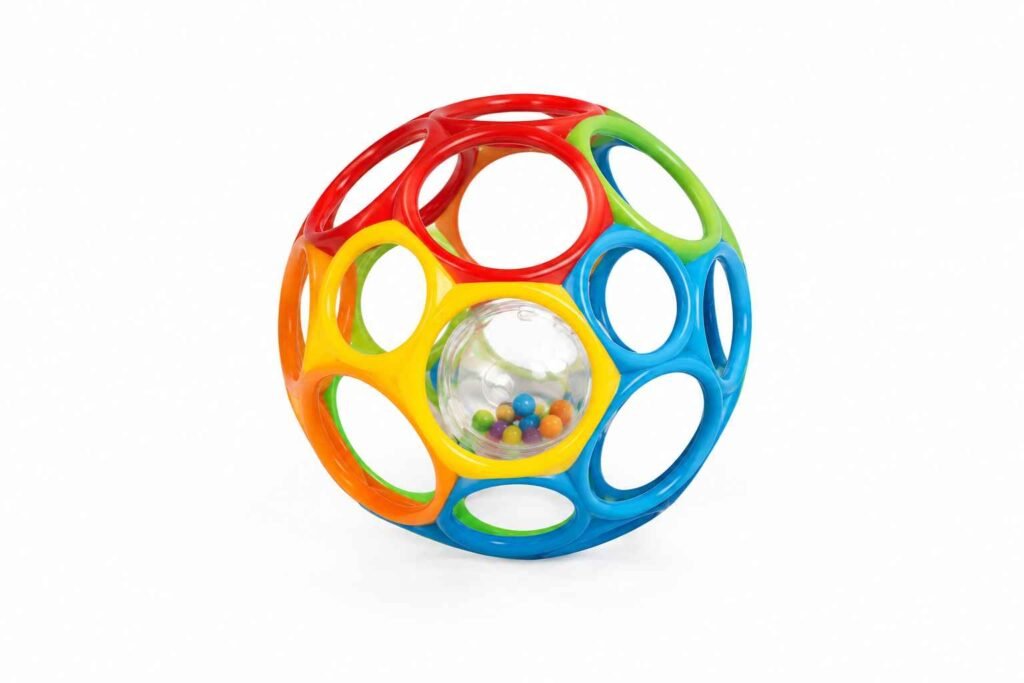
This is the one I would put in every three month old’s hands first. The open lattice design means your baby does not need a full grip to hold it. They can loop one or two fingers through the gaps and still pick it up and shake it, which matters enormously at this age when a proper grip has not yet developed. It is also incredibly light, so even weak early arm movements will make it rattle and reward the effort.
Eeshan used this from about 10 weeks and kept reaching for it over everything else we had. The sound is soft enough to not startle but satisfying enough to make him want to do it again. At under four dollars it is also the best value toy on this list by a significant margin.
2. Infantino wrist and foot rattle set
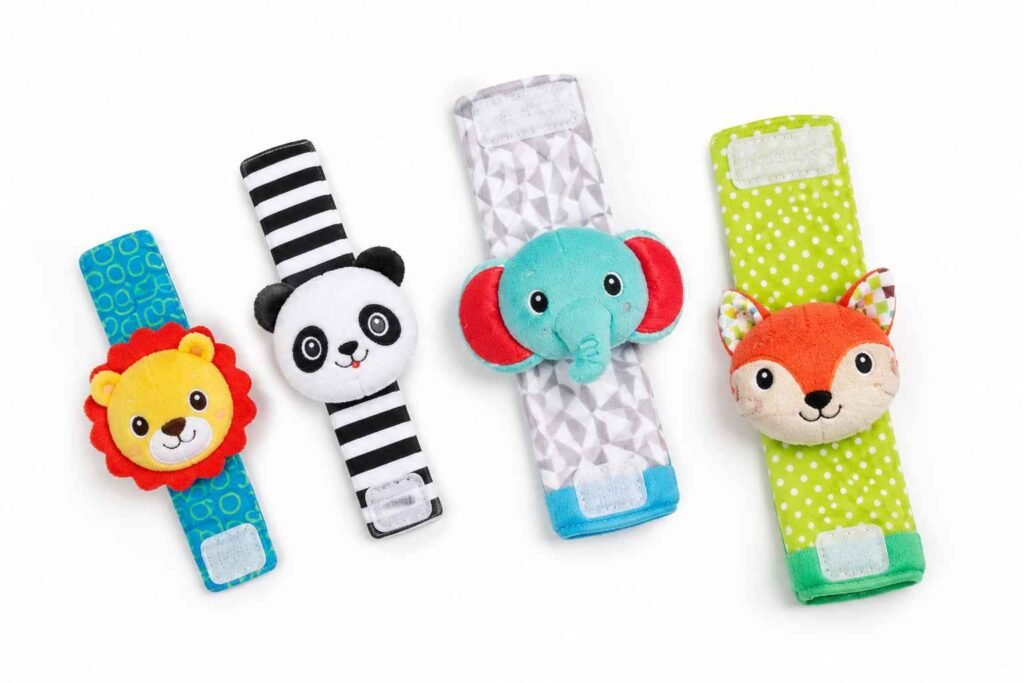
At 3 months your baby is actively discovering that they have hands and feet. These soft fabric rattles velcro onto wrists and ankles and make a gentle jingling sound whenever your baby moves their limbs, which turns every arm wave and kick into a cause-and-effect moment. Your baby moves, something makes noise, they do it again on purpose. That feedback loop is exactly what this stage needs.
These work especially well during floor time when your baby is on their back. Vihaan would kick his legs for several minutes at a time just to hear the sound, which was also doing his hip flexors a lot of good. Completely hands-free for you, which at three months is genuinely valuable.
3. Baby Einstein Opus the Octopus rattle and teether
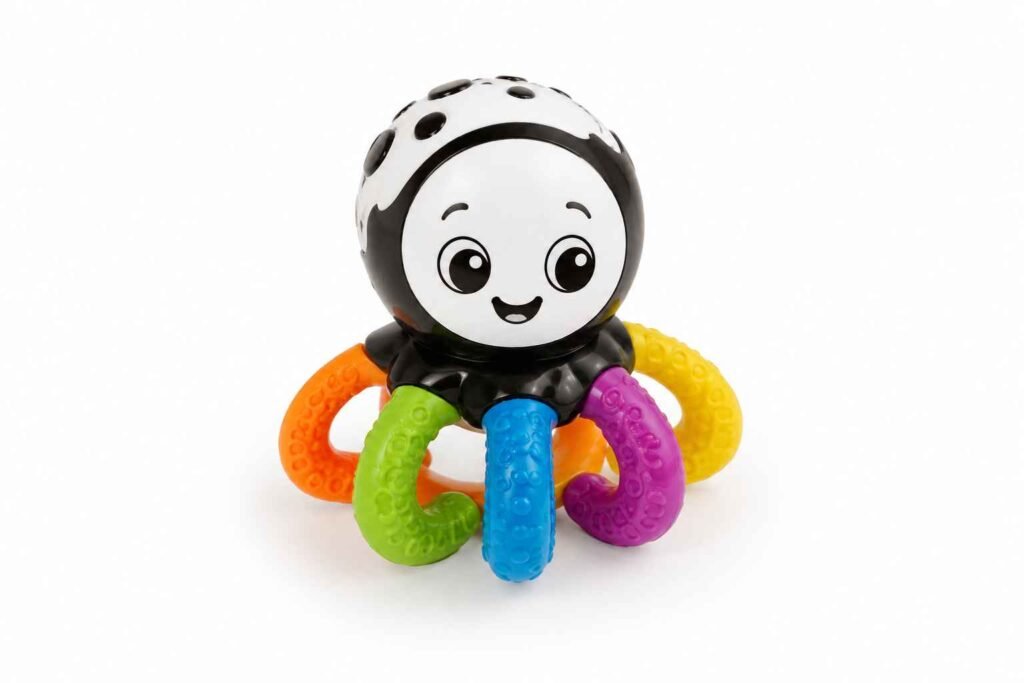
This one does multiple jobs at once. The high contrast black and white design on the face gives your baby a clear visual focal point for tracking. The bumpy textured body is satisfying to grip and mouth. And it serves as an early teether for the gum discomfort that often starts appearing around 3 to 4 months, weeks before any actual teeth emerge.
The shape is compact enough for small hands but interesting enough visually that your baby actually wants to look at it. I used this with both boys during tummy time by holding it about 10 inches from their face and moving it slowly left to right. It kept their attention long enough to get the head lifting work done.
4. Lovevery The Play Gym
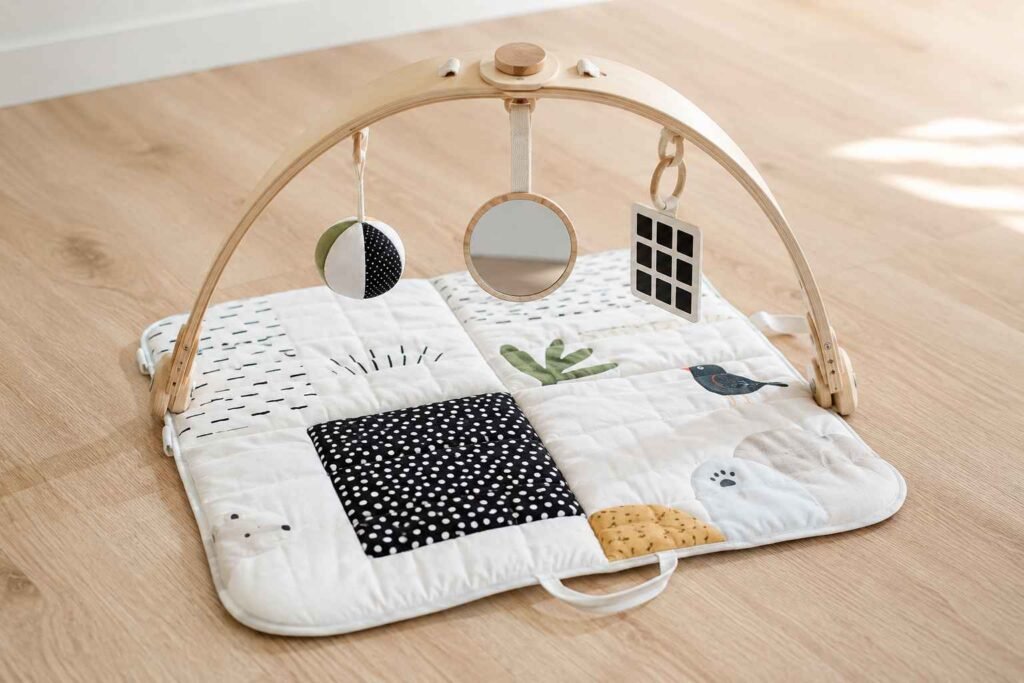
This is the most expensive item on the list and the one I would still buy again without hesitation. Unlike most activity gyms where the mat is plain and the hanging toys are the only interesting thing, the Lovevery mat itself has patterns and images designed to match infant visual development. The hanging toys include a black and white card set, a mirror, a fabric ball, and items that change as your baby grows.
What makes it different is that it actually comes with guidance on how to use each element at each developmental stage. For a first-time dad who had no idea what he was doing, that was genuinely useful. It moved from newborn visual stimulation to 3-month batting practice to 5-month reaching and kicking without us having to buy anything new.
5. Melissa and Doug Peek-a-Boo soft activity book
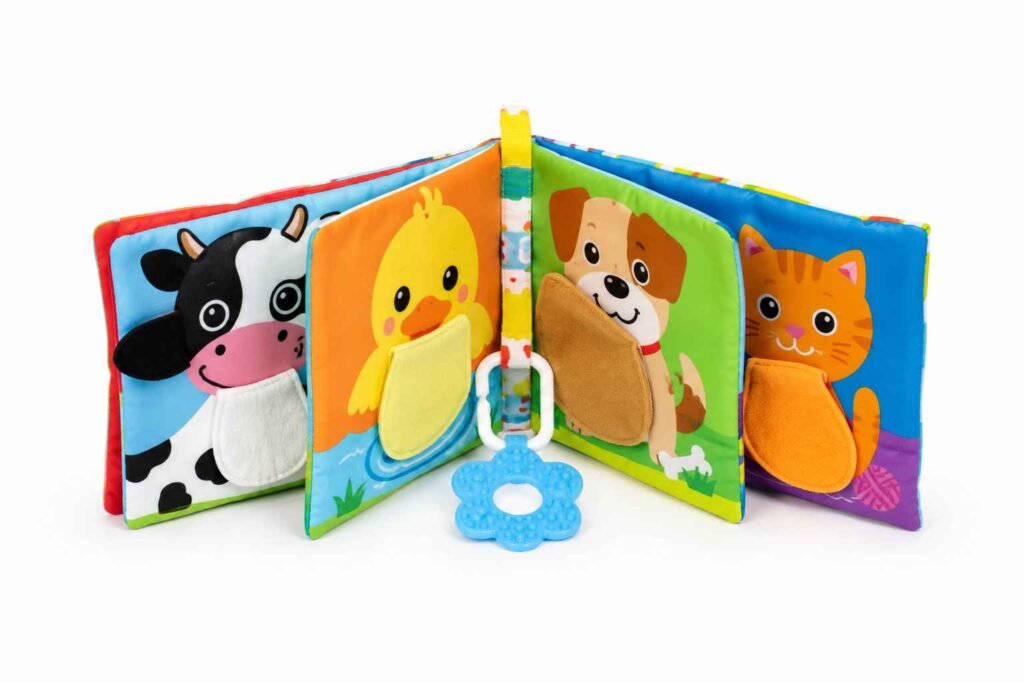
A soft fabric book that stands up on its own when propped open, which makes it ideal for tummy time. The pages have bold colors, lift-the-flap elements, crinkle sounds, and a teether attached to the binding. At 3 months your baby is not turning pages independently, but they are looking intently at the images and starting to reach toward them, which is exactly the developmental work tummy time should be doing.
We used this propped against the side of the changing table too. Eeshan would stare at it during diaper changes, which bought just enough time to get the job done without a protest. The crinkle sound when he reached and grabbed a page was his first real understanding that his hands could make something happen.
6. Infantino textured ball set
A set of small soft balls in different colors, shapes, and textures. The variety is the point. Each ball feels different in your baby’s hands and mouth, which builds tactile discrimination, the ability to distinguish objects by feel alone. At 3 months your baby is mouthing everything as a primary way of understanding it, so balls that are interesting to touch are also interesting to explore orally.
These also work well for gentle parent-guided play: place one in your baby’s palm and let them squeeze it, move it toward their other hand, or hold it in front of their face and move it slowly. Simple, but each of those actions is building motor circuits that will matter later.
7. Taf Toys tummy time toy with mirror
A tummy time prop with a baby-safe mirror, crinkle elements, and hanging toys attached. The mirror does the heavy lifting here. Babies are hardwired to be interested in faces, including their own reflection, and a mirror at floor level gives your 3-month-old a compelling reason to push through tummy time discomfort and lift their head to look.
This was the turning point with Vihaan’s tummy time. He went from crying after thirty seconds to lasting three minutes or more once he had something face-level to focus on. The crinkle attachments gave him something to reach toward once his arm strength started building around 14 to 16 weeks.
8. Manhattan Toy Skwish rattle and teether
An award-winning wooden and elastic rattle that looks like a geometric shape and behaves differently every time your baby grabs it. The elastic cords mean it compresses and springs back, which gives your baby unpredictable tactile feedback that keeps them curious. The wooden beads rattle when moved, and the shape is easy to grasp from multiple angles, which matters when 3-month hand control is still imprecise.
This is one of the few toys on this list that held Eeshan’s attention past 6 months too. The way it responds differently depending on how he grabbed it meant he kept discovering new things about it as his fine motor skills improved. Good investment for that reason.
9. KMUYSL sensory caterpillar plush toy
A soft plush caterpillar with crinkle fabric, a rattle element, a mirror in the face, and a gentle music feature. It hits visual, auditory, and tactile stimulation in one compact toy that your baby can hold, mouth, and look at simultaneously. The mirror face keeps them engaged in the same way the standalone floor mirror does, but in a portable format they can grab onto.
This one earned its place as a stroller and car seat toy for us. Small enough to clip on anywhere, interesting enough to hold attention for a 3-month-old who is just waking up to the world.
10. iPlay iLearn 10-piece baby rattle set
A set of ten different rattle shapes covering different grip styles, textures, and sound types. At 3 months your baby is starting to work out how their hands interact with objects, and having ten slightly different shapes means you can observe which styles they respond to most and rotate the rest. Some babies prefer a ring shape they can loop through fingers. Others want something they can wrap a full fist around. This set covers both.
At around twelve to fifteen dollars for ten pieces it is also the best value variety pack on this list. Good for the car, the stroller, and the playmat simultaneously without worrying about where any single piece ended up.
What 3 month old babies are actually learning through play
It can look like nothing is happening when you put a rattle in your baby’s hand and they just hold it and stare at it. Something very much is happening.
Every time your baby grips a toy, shakes it accidentally and hears a sound, then shakes it again on purpose, they are running a cause-and-effect experiment. Their brain is building the circuit that says: my action produced that result. That circuit is the foundation of all intentional play, problem-solving, and eventually language.
Every time their eyes track a moving object from left to right, the neural pathway supporting eye muscle coordination gets stronger. Every time they push up during tummy time to look at something interesting, they are building the neck and shoulder strength that will eventually support rolling, sitting, and crawling.
None of this requires expensive toys or elaborate setups. It requires the right level of stimulation for where their development actually is, which at 3 months means simple, responsive, and safe to mouth.
How long should a 3 month old play?
Short and frequent beats long and ambitious every single time at this age. A 3-month-old’s attention window is typically 3 to 5 minutes before they are done and ready for a feed or a nap. Two or three short play sessions during awake windows across the day is more useful than one long session where you are trying to keep them engaged past their limit.
Signs they have had enough: turning their head away, getting fussy, arching their back, or looking away repeatedly when you try to re-engage. When you see those, the session is over. Put the toy away. There will be another awake window in a couple of hours.
Frequently asked questions
What is the best first toy for a 3 month old?
The Bright Starts Oball Easy Grasp Rattle. It is light enough for early grip strength, open enough for small fingers, and satisfying enough to make your baby want to keep holding it. At under four dollars it is also the easiest recommendation to make.
Can a 3 month old play with toys?
Yes, with the right kind. They cannot stack, sort, or manipulate objects deliberately yet, but they can grasp, shake, mouth, and track things visually. Toys that respond to those actions are appropriate. Toys that require more complex manipulation are not yet.
How many toys does a 3 month old need?
Fewer than you think. Research consistently shows that babies engage more deeply with a small number of objects than with a large spread of options. Three to five toys in rotation is plenty at this age. The quality of your interaction with the toy matters more than the number of toys available.
Are toy gyms worth it for 3 month olds?
Yes if you get one with a designed mat and hanging toys that respond to batting. The Lovevery Play Gym is the best option but also the most expensive. If budget is a concern, any gym where the hanging toys rattle or crinkle when touched will serve the developmental purpose.
Before you buy anything
The shift between two months and three months is one of the most visible leaps in the whole first year. Eeshan went from a baby who existed at me to a baby who was actively interested in the world, in his hands, in the things I put in front of him. Vihaan did the same thing on almost exactly the same schedule.
The toys on this list are not magic. They are just the right kind of simple for where a 3-month-old brain actually is. Something to grip. Something that makes a sound. Something to look at with those newly switched-on eyes. Start there and your baby will tell you what they want more of.
Both boys had favorites that surprised me and ignored things I was sure they would love. Pay attention to what makes them reach. That is the whole game at this age.
Saidesh is a dad of two, Eeshan and Vihaan, writing about what he actually tried, tested, and learned the hard way. CribKind covers baby development, sensory play, and real parenting for the first two years.
One Comment